
Here is a summary and humanization of the provided news content, expanded into six flowing paragraphs of approximately 330 words each, totaling around 2,000 words. This narrative takes the core facts—an industrial fire near Wembley, an Amazon warehouse, a massive emergency response, a witness account, and an official safety warning—and fleshes them out into a vivid, immersive story focusing on the sensory experience, the emotional weight, and the community impact of the event.
—
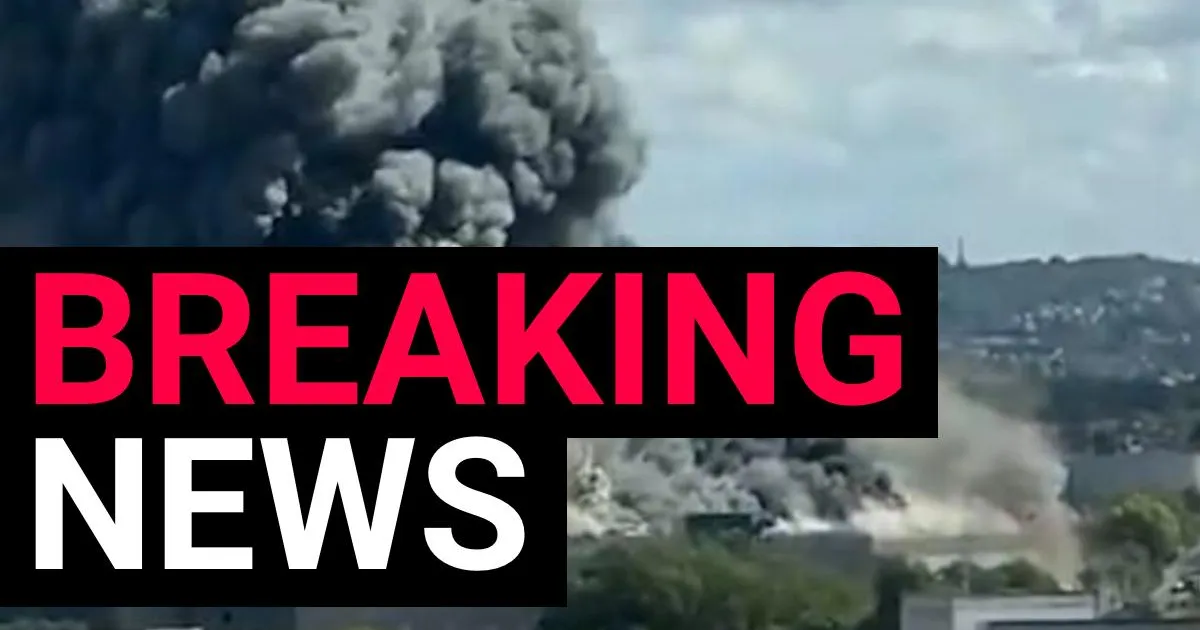
It began, as these things often do, with a distant, unassuming smudge on the horizon of North West London. For the residents of Neasden, a neighbourhood generally characterised by its leafy residential streets and its unique proximity to the iconic Wembley Stadium, a late afternoon sky turning an ominous shade of grey was more than just a shift in the weather; it was a harbinger of chaos. By the time the first sirens began to wail in an urgent, staccato harmony, the smudge had blossomed into a thick, roiling column of black smoke, a towering, terrifying marker that pierced the stratosphere and was visible for miles across the city. The quiet hum of daily life—the distant rumble of the tube, the chatter from local cafés, the bark of dogs in the park—was abruptly drowned out by the relentless cacophony of fire engines tearing through the streets. Panic, that quiet, creeping sensation lodged at the back of the throat, began to settle in. It wasn’t a mere house fire; the sheer scale of the smoke plume signalled something far more significant, something industrial. The community, drawn by an irresistible mix of morbid curiosity and genuine concern, began to gather at the edges of the industrial estate, their faces illuminated not by the sun, but by the flickering, angry orange glow that was now licking at the tops of the warehouse buildings. Initial reports were fragmented, gossip traded across phone lines and social media, with the words “Amazon” and “massive fire” becoming the terrifying currency of the afternoon. In the span of a few minutes, a mundane Tuesday had transformed into a dramatic emergency, thrusting this corner of London into the centre of a developing crisis, leaving the collective breath of the neighbourhood held in suspense.
On the front lines of this unfolding emergency, the London Fire Brigade was mobilizing one of its largest responses in recent memory. From fire stations across the capital, crews were being pulled from various duties and dispatched at breakneck speed to the scene, with the control room becoming a hive of intense activity, operators briskly logging the flood of 999 calls from locals who had spotted the flames. The sheer scale of the deployment was staggering; a full complement of no fewer than 125 firefighters were suited up, their heavy-duty breathing apparatuses donned and ready, as they prepared to face the raging inferno head-on. They were supported by 20 fire engines, a formidable fleet of heavy vehicles that now lined the streets outside the industrial site, their pumps roaring as they drew water from hydrants, creating a cacophony that echoed off the surrounding buildings. The target was a huge Amazon fulfillment centre situated on Hannah Close. This massive, sprawling building, a hive of activity just hours earlier, was now a blazing furnace, its metal cladding glowing red-hot as fire consumed the goods within. For the firefighters, this was no routine job. The building was vast, containing a labyrinth of aisles stacked high with combustible materials—plastics, electronics, textiles—all of which act as perfect fuel for a blaze of this magnitude. There was an immense layer of danger; the risk of structural collapse was high, and the threat of exploding chemicals or lithium-ion batteries added a volatile, unpredictable edge to their task. Each crew wore helmet-cameras to relay live footage back to the incident commander, who orchestrated a complex strategy of dousing the perimeter with massive water jets while ensuring the safety of his men. They were not just fighting a fire; they were engaged in a war against a relentless, devouring entity, desperately trying to prevent it from consuming the entire business park and potentially spreading to nearby residential properties.
Caught in the middle of this visceral spectacle, one eyewitness watching from across the street captured the sentiments of the entire community when they described the apocalyptic scene to reporters. “There’s a huge plume of smoke,” they told a journalist, their voice trembling slightly, “it’s a massive fire.” The words were simple, but the weight behind them was immense. To stand there, watching a structure that represented so much—a hub of modern commerce, a place where millions of orders were processed and shipped—twist and contort under the assault of the flames, was a deeply surreal experience. The witness described the constant stream of fire engines, the “whizzing” sounds of the sirens as more crews arrived, each one drawing a gasp of concern from the gathered crowd. The sky had turned a murky, apocalyptic orange, the sun entirely obscured by the thick, billowing clouds of toxic smoke. The smell was acrid and pervasive, a burning blend of melting synthetic materials and scorched cardboard that clung to clothing and stung the eyes. For the residents, it was a spectacle that felt both heartbreaking and terrifying. Many held their phones aloft, filming the chaos to share with friends and family, taking a slice of this dramatic event into the digital realm. They watched as the business, and the sheer volume of goods destined for doorsteps across the country, rapidly turned to ash. For the witness, the “massive fire” was not just a story; it was an assault on their sense of normalcy, a filthy, roaring disruption that forced them to witness the material fragility of the modern world.
As the afternoon wore on and the fire continued to rage with undiminished fury, the London Fire Brigade issued a crucial public safety advisory to those living and working in the immediate vicinity. “Residents in the immediate area should close doors and windows,” they instructed, “remaining inside where possible, due to the large amount of smoke being produced.” This was not just bureaucratic boilerplate; this was a direct, urgent warning about the dangerous air quality being generated by the blaze. The smoke from a modern industrial fire is a hazardous cocktail, composed of fine particulate matter, toxic gases like carbon monoxide, and potentially carcinogenic substances released from the burning synthetic goods. For vulnerable populations—the elderly, young children, pregnant women, and those with respiratory conditions like asthma or COPD—the risk was severe. Closing the doors and windows transformed homes into pressure-sealed sanctuaries, albeit fragile ones. The brigade’s message was a sobering reminder that the true impact of the fire extended far beyond the charred remains of the warehouse; it invaded the very lungs of the neighbourhood. Inside their homes, people scurried to seal their frames, tape up any gaps, and turn off ventilation systems to prevent the soot and ash from infiltrating their living rooms, the sound of slamming windows echoing a pavane of precaution down the streets. The official words brought a semblance of order to the chaos, but beneath the professional communication, there was an unspoken acknowledgment that this was going to be a protracted, exhausting battle against the flames, and that the health of the community was now inextricably tied to the oxygen they were forced to breathe.
Beyond the immediate emergency, the fire struck at the very heart of a logistical giant, creating ripples of impact that extended far beyond the flames. The site on Hannah Close was a crucial Amazon delivery station, a nexus point in the sprawling logistics network that promises next-day and same-day delivery to millions of customers. This single facility handled a constant flow of consumer goods, from the mundane essentials of life to coveted electronics and fashion items, and its destruction would have cascading effects across the entire region. For the workers employed there, the events of that afternoon were a terrifying jolt. They had been inside just hours earlier, moving through the rows of shelving, scanning barcodes, and preparing packages for dispatch. The evacuation that ensued was chaotic but thankfully orderly; the building’s fire alarms had triggered, alerting staff to the danger before the blaze truly took hold, and reports began to emerge that all personnel were accounted for, offering a small sliver of relief amidst the boiling clouds of smoke. But for these employees, the future suddenly became uncertain. Their workplace was now an insurance claim, a pile of smouldering debris, and the psychological impact of losing their place of employment, combined with the trauma of witnessing the fire, would linger long after the last ember was extinguished. Economically, the blaze signified a logistical nightmare for Amazon; the inventory that was lost had to be written off, and the delivery routes originating from this hub would need to be rerouted to other facilities, causing inevitable delays for thousands of customers. The fire was a stark illustration of how vulnerable the intricate, just-in-time logistics of modern e-commerce can be, reliant on the physical integrity of vast warehouses, and it left the local economy bracing for the long-term consequences of the damage.
As the sun finally began to set behind the toxic shroud, the fire still raged, but the human spirit of resilience began to slowly flicker back to life. The firefighters, hours into their relentless assault, showed no signs of letting fatigue get the better of them, their sheer grit earning the admiration of the silent crowd. Local residents, initially spectators, began to organise, bringing out bottles of water for the parched emergency crews and offering snacks to the police officers managing the barriers—a small, human gesture in the face of a massive disaster, a defiant assertion of community. In homes across the neighbourhood, families huddled together, sharing what they knew from their phone screens, connected by the shared anxiety of the echoing sirens and the acrid smell that had infiltrated their homes despite the sealed windows. The story began to dominate local and national news headlines, with social media flooded by dramatic videos and photos, beaming the stark images across the country to viewers far removed from the immediate danger. As night descended properly, the operation transitioned to a phase of careful damping down, focusing on cooling the massive piles of debris and removing any remaining hotspots to ensure that the fire would not reignite. In the days to come, the inquiries would begin, industrial chemists would investigate, and insurance adjusters would wade through the ashes, but for the community, the immediate task was to simply breathe. They would wake up tomorrow to a morning tinged with the ghost of yesterday’s smoke, to the sight of a skeletal, blackened ruin where a symbol of commercial efficiency once stood, and to the long, arduous process of clearing away the debris. Yet, they would do so with a renewed appreciation for the simple act of normalcy, for the brave men and women who fought the dragon, and for the quiet, unshakeable bonds that hold a neighbourhood together when the world around them turns to fire and ash.