


The Price of Ink: How British Drones Ignited a New Chapter in an Unending War
The silence of the Volgograd night was shattered not by a storm, but by the distant, malevolent hum of an engine – a sound that has become a familiar prelude to chaos for Russians living near the border with Ukraine. From the darkness, a silhouette not quite of this era, a piece of the West’s long engineering history, descended. It wasn’t a man, but a machine, a British-made Nyan drone, designed and built on the other side of the continent, carrying with it the weight of a long-distance political decision that had finally found its mark. The fire that erupted in the refinery complex painted the sky with a terrifying palette of orange and crimson, a scene no doubt watched with grim satisfaction in Kyiv and with cold fury in Moscow. This act, a single tactical strike, quickly ballooned into a geopolitical spectacle, a mute but eloquent argument between London and the Kremlin, demonstrating with terrifying clarity just how porous the boundaries of this war have become. The use of a weapon from Her Majesty’s coffers, flying over Russian soil, isn’t just an escalation; it’s a symbolic, irrevocable tearing of the unseen thread that still separated a “special operation” from a full-blown confrontation.
Within hours, the rhetoric from Moscow sharpened beyond the usual condemnations of a foreign power’s “direct army” involvement. The Russian Embassy in London, a bureaucratic organ usually chief operative in diplomatic niceties, issued a statement laced with a terrifying finality. It wasn’t just the accusation that Ukraine was a puppet NATO, a “terrorist machine,” and a “neo-Nazi” regime. Those were familiar tropes, the same tired notes from the official Russian chorus since 2022. The chilling part was the pure, unvarnished threat to the United Kingdom itself. “The deeper its involvement in this conflict and the greater its support for the terrorist machine of Kyiv, the higher the price will be,” the statement read, a sentence that hangs in the air, unaired, with an almost comical image of financial bookkeepers tallying up the cost of war. But this was no comedy. The use of a British drone to strike a deep-fire target inside Russia is a step beyond the supply of weapons. It is a direct, tangible involvement in the physical conflict, a logistical and military move that can be quantified, measured, and arguably, retaliated against. The Kremlin, in its public statement, wasn’t just appalled; it was presenting a case to an international audience. The “price” it threatens isn’t the material loss of the refinery, but a calculated, political answer – an action that would carry its own costs and escalate a conflict that Moscow has frequently stated it has the right to control.
To understand the gravity of this act, we must look at the vessel itself. The Nyan drone, manufactured by Callen-Lenz, a UK-based subsidiary of the defense behemoth BAE Systems, is not a Wunderwaffe. With a wingspan that the reporting limits to just 150 miles, it’s not a global strike asset. It’s a visionary, without pilot, a super-fast bird with a payload of death, capable of venturing into the borderlands of a vast country like Russia. Its use to hit the oil refineries in Volgograd and Yaroslavl, in the vicinity of Moscow, is a brilliant, cunning choice for two reasons. First, it’s a test of resolve: how far are the Western powers willing to let their weapons be used inside border marks of the world’s largest nuclear power? Second, it’s a poster child for the Kremlin’s narrative about NATO aggression. The Russian state media, in an endless loop of indignation, can point to the British flag on the drone’s schematic as proof that they are not just fighting Ukraine, but the entire West. The drone is a emblem of this war’s transformation from a localized, defensive struggle for Ukraine’s survival into a continental proxy war, where a factory in the UK is as important as a trench in Kharkiv.
But the conflict is not painted in shades of gray. Ukraine’s strategy, at least the visible one that is causing newsworthy headlines, is often a brutal, calculated destruction of Russia’s economic engine – its oil and gas production. The reassurances from Kyiv are that these strikes are directed at military infrastructure, to cut off the fuel supply to the Russian army. But the consequences, once the prices and shortages in the Russian provinces are counted, are now a common citizen’s concern. Estimates from intelligence agencies have put the economic damage at over £35 billion, a colossal sum that is hurtling Russia’s economy from the comfort zone of problematic and into the emergency room. The reported fuel shortages, where a civilian in Volgograd is fine waiting in line for fuel, or paying for a price that spiked, are the direct result. A Russian citizen doesn’t see a “call” American drone’s engine. It sees an empty fuel tank, a pump that refuses to turn, and the phrase “Western toolsions will have consequences” ringing in their ears. This is the fine line of the modern war: a Western soldier isn’t on the ground in Rostov, but a Western drone-empties a fuel tank for a school bus, making the war personal in a way sanctions never could.
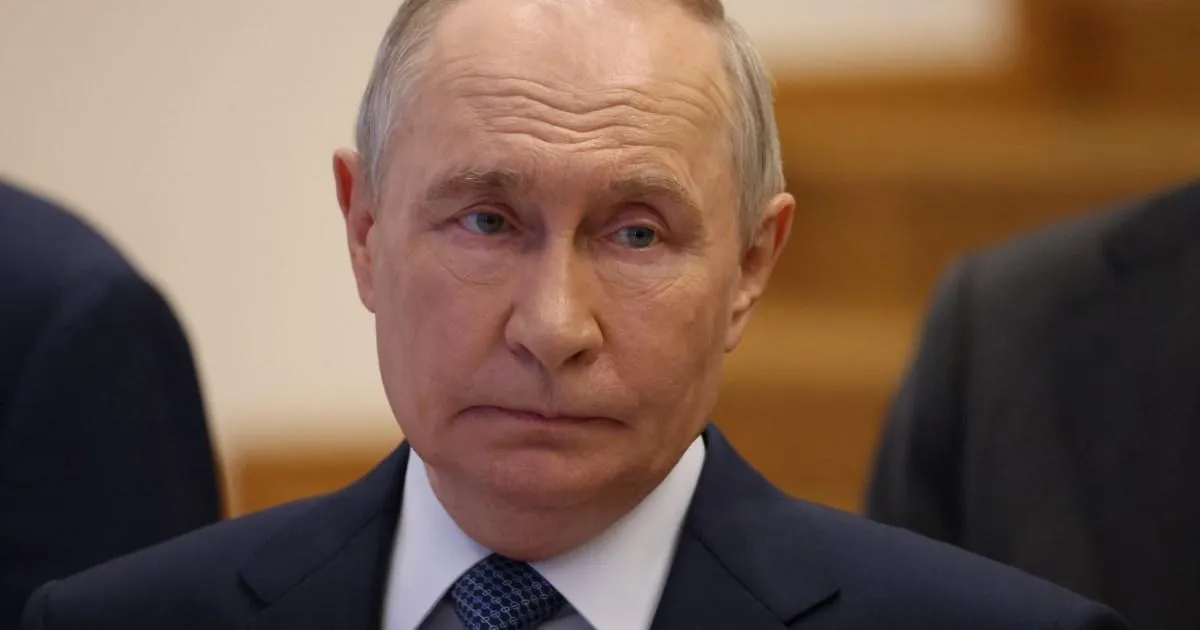
The Russian response, while in public, reflects the panic of the situation. The threat of the Kremlin’s propagandist, Vladimir Solovyov, on the television screen, issuing a nuclear challenge, is not just a figure of speech. His chilling offer to “hit them with Poseidon,” the underwater nuclear drone capable of deploying a city-scale tidal wave, and to give the British “a three days to learn to breathe underwater,” is the emotional outlet of a power that is feeling its vulnerability. This is the rhetoric of a level of escalation that American intelligence has already hedged: President Putin could sanction an attack on NATO territory to dampen the alliance’s support for Kyiv. The line between Ukraine and the larger alliance is being deliberately erased by Moscow’s outbursts. It’s a high-stakes poker game where the bluffs have a faint echo of plausible nuclear armageddon, and the stakes are the geopolitical map of Europe.
The UK, and in a broader sense, the United States and France, have past given the “green light” for their weapons to be used in cross-border strikes, but the frequency of these approvals begins to wane. The reasons are as multi-faceted as they are practical. First, there is the raw calculus of stockpiles – what if Ukraine runs out of a boom in a month, and then the strategic benefit is lost? Second, there’s the political weather, with Donald Trump signed for the White House, have publicly voiced his fear that a overt weapon is the kind of escalation that will drag the world into a war nobody wants, leading to a more cautious approach to signing off on long-range strikes. This push-and-pull between the need to support a besieged democracy and the fear of a reckless escalation is the true complex theatre of current geopolitics. The Ukrainian use of the Nyan drone stands as a sharp, clear stat that the line has been crossed again, but the most western leaders are now, for the first time, treating this as a problem to be managed, not a solution to be celebrated.
In the end, though, the story is not in the missile size or the factory’s location. It is in the human element of the ongoing, unflinching conflict. For the people of Ukraine, this success against an oil refinery is a cinematic moment of victory, a form of “justice” in a war where their cities have been reduced to rubble by the same Russian oil revenue. For many Britons, the news of a drone strike was a source of pride and vindication, a reassignment that their government is taking a side. But for the families of those in London, for the civic leaders in Manchester, for a 70-year-old grandparent in the suburbs, the storm clouds are now gathered. The threats of the Kremlin, of Poseidon, and of the next level of war, are no longer a far-away concept in a foreign land. They are now a question of the daily anxiety about a conflict that could be the edge of a western border. The grim reality is that a war, which began as a regional dispute, has metastasized into a global contagion, where the weapons of whispers become the very real engines of a destruction that no one is prepared to face. The aftermath of the Nyan drone strike is not just about a scarred oil refinery in a far-off city; it is a scar on the geopolitical body, a brutal check on the idea of “limited war” – and the next time a drone is used, the price might be far higher than any tax, more than any economic sanction, but the first moment of an irreversible Armageddon.