

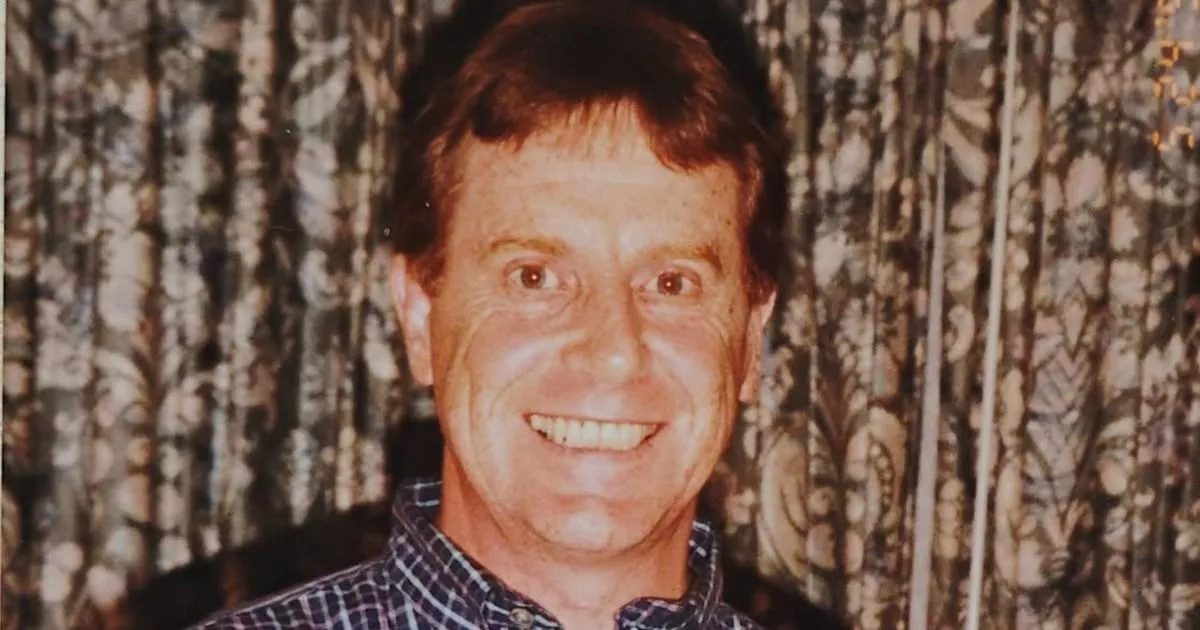
The disappearance of John Gillies, a 63-year-old Scotsman, began like many stories of adventure that take a tragic, quiet turn. Six years ago, John ventured into the rugged, vast wilderness near Sweetwater Gap, Wyoming. He was a man drawn to the solitude of the American landscape, but the wilderness is unforgiving, and eventually, the trail went cold. For over half a decade, his family back in Dunbartonshire, Scotland, lived in the agonizing limbo that only the families of the missing can truly understand—a silence where answers used to be. It was not until September 2025, when forest workers stumbled upon skeletal remains in a remote corner of that same wilderness, that the long chapters of uncertainty finally began to draw to a close.
The discovery prompted a meticulous, months-long recovery operation led by the Sublette County Sheriff’s Office (SCSO). Locating the remains was only the first step; identifying who they belonged to required an extraordinary international effort. The SCSO didn’t just treat the site as a crime scene; they treated it as a mission of compassion. By recovered personal items found near the scene, they were able to trace John’s identity back to his roots at Saint Mary’s Church in Kirkintilloch. This connection sparked a complex, collaborative investigation involving local Wyoming authorities, the Wyoming State Crime Laboratory, Scottish law enforcement, and the global reach of Interpol, bridging a gap between the Scottish Highlands and the American West.
The process of identification was a triumph of modern forensic science and human perseverance. To confirm the identity, investigators needed biological links, which meant coordinating with living relatives across the Atlantic. DNA samples were collected from John’s family in Scotland and sent to the Wyoming State Crime Laboratory for comparison. By June 2026, the scientific confirmation arrived: the remains had been positively identified as John Gillies. While the news was objectively tragic, it provided a rare and vital gift to his family—the end of the “what if” and the beginning of the ability to grieve with certainty.
Perhaps the most poignant aspect of this ordeal was the perspective offered by those who knew John best. During the investigation, his ex-wife provided more than just bureaucratic cooperation; she offered a heartbeat to a case that could have easily remained cold and clinical. In a comment shared with investigators, she stated, “I wanted you to know he was more than bones.” Her words serve as a vital reminder that every skeletal find in the wilderness is not just a forensic data point or a mystery to be solved, but a life once fully lived—a man who had family, history, and a spirit that presumably led him to the mountains in the first place.
Sheriff K.C. Lehr, who oversaw the operation, echoed the sentiment that this was far more than just a routine police procedure. He described the recovery as a testament to the power of international collaboration, noting that the shared goal was always to bring a sense of closure to a grieving family. The partnership between agencies in two different countries underscored a shared human duty: the commitment to ensuring that no one is left behind. For the sheriff’s deputies and international investigators, John Gillies was not just a name on a file; he was a person whose journey across the ocean had stalled, and it became their mission to see it completed.
As the case reaches its final, solemn conclusion, arrangements are being made to honor John’s memory in the way his family prefers. At their request, the sheriff’s office is working closely with Interpol to facilitate the transport of his remains from the Wyoming wilderness back to his home in Scotland. Soon, John Gillies will finally be laid to rest among his own people, in the land where his story began. It is a quiet return, bringing a difficult six-year chapter to a close, and ensuring that, in the end, he is remembered not as a lost soul in a foreign forest, but as a man who has finally come home.