


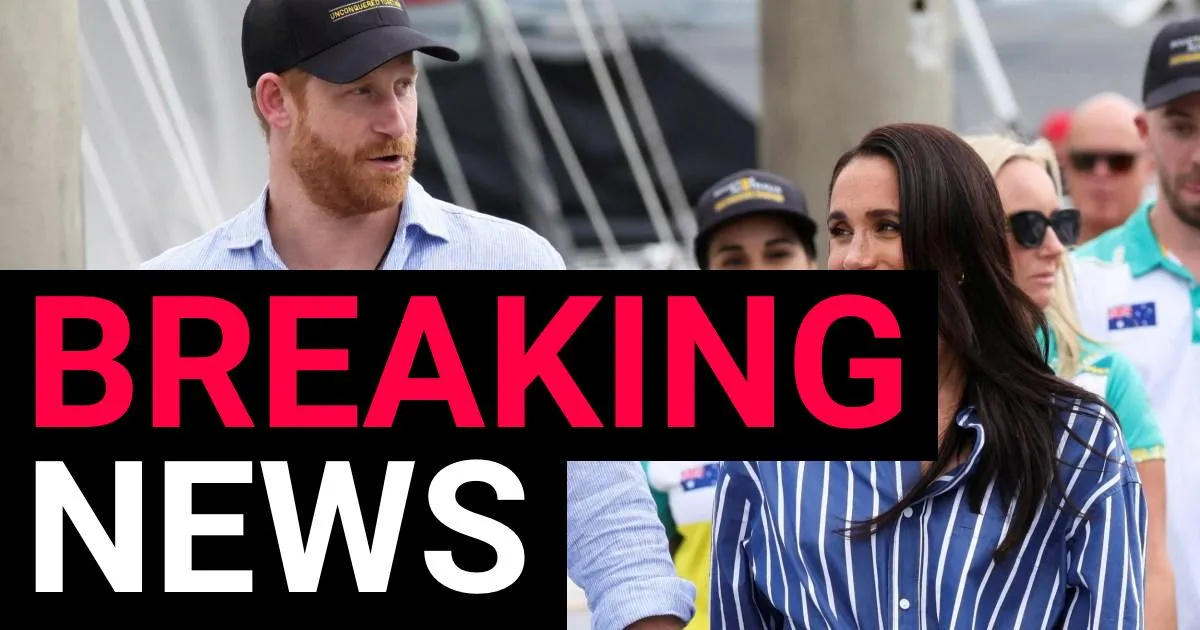
The ongoing saga surrounding Prince Harry’s relationship with his family and his homeland has taken another turn, as reports confirm that Meghan Markle, along with their children, Prince Archie and Princess Lilibet, will not be traveling to London with the Duke of Sussex for his upcoming visit. While Harry is set to embark on a five-day trip to the UK next week, the absence of his family highlights the persistent complexities that have defined their lives since stepping back from senior royal duties in 2020. This decision comes despite initial hopes that the family might be reunited on British soil to mark the one-year countdown toward the Invictus Games, which are set to take place in Birmingham.
At the heart of these travel logistics is a deeply personal and public struggle regarding safety. Prince Harry has been incredibly vocal about his desire to bring his family back to Britain, yet he remains at a stalemate with the UK government over the level of security provided to them. Following his decision to leave his role as a working royal, his state-funded police protection was downgraded—a move that prompted the Duke to launch a legal challenge. Last year, he suffered a defeat in that high-profile court battle, leaving the family’s security status in a state of uncertainty that has undeniably influenced their ability to visit the country comfortably.
The government’s stance remains firm, citing a rigorous and proportionate approach to protective security. Officials have consistently maintained that they do not publicly discuss the specific details of security arrangements for high-profile individuals, arguing that transparency could compromise the effectiveness of these measures. For Harry, however, the issue is not just bureaucratic; it is emotional. He has expressed, on multiple occasions, a “determination” to seek what he views as the necessary protection to ensure his wife and children are safe during their time in the UK. The refusal to grant this specific request for taxpayer-funded security has become a significant barrier that keeps the family physically separated from their British relatives.
This latest development serves as a poignant reminder of the “new normal” for the Sussexes. Transitioning from the heightened security bubble of working royalty to life as private citizens in the United States has necessitated a complete overhaul of how they move through the world. Every trip to his home country now requires a complicated calculus of risk, public scrutiny, and logistical hurdles. While the public often views these events through the lens of royal scandal or tabloid headlines, the reality is a family attempting to navigate a compromise between Harry’s ongoing philanthropic commitments—like the Invictus Games—and the very real concerns for the wellbeing of his spouse and children.
Behind the headlines and the government policy statements lies a broader narrative about the strained ties within the Royal Family. The fact that the Duke will be traveling without his family to mark such a milestone for the Invictus Games underscores the persistent divide that shows few signs of closing. It is a striking contrast to the images of unity often expected of the monarchy, reflecting instead a modern, fractured reality where personal beliefs and safety concerns take precedence over traditional appearances. For those hoping for a reconciliation or a return to the status quo, this news suggests that the path to a harmonious family reunion in London remains blocked by unresolved legal and personal tensions.
Ultimately, we are left with a story of a prince caught between two worlds. One world is defined by the security protocols and long-standing traditions of a monarchy he chose to step away from, and the other is the world he has fashioned for himself in America. As Harry prepares for his five-day tour, the silence from the Sussex camp regarding the rest of his trip suggests that the family is taking things one step at a time, keeping their options open while maintaining strict boundaries. Whether in the halls of Westminster or the quiet of their California home, the impact of these changes is a lingering, visible weight that continues to shape every move the family makes.