

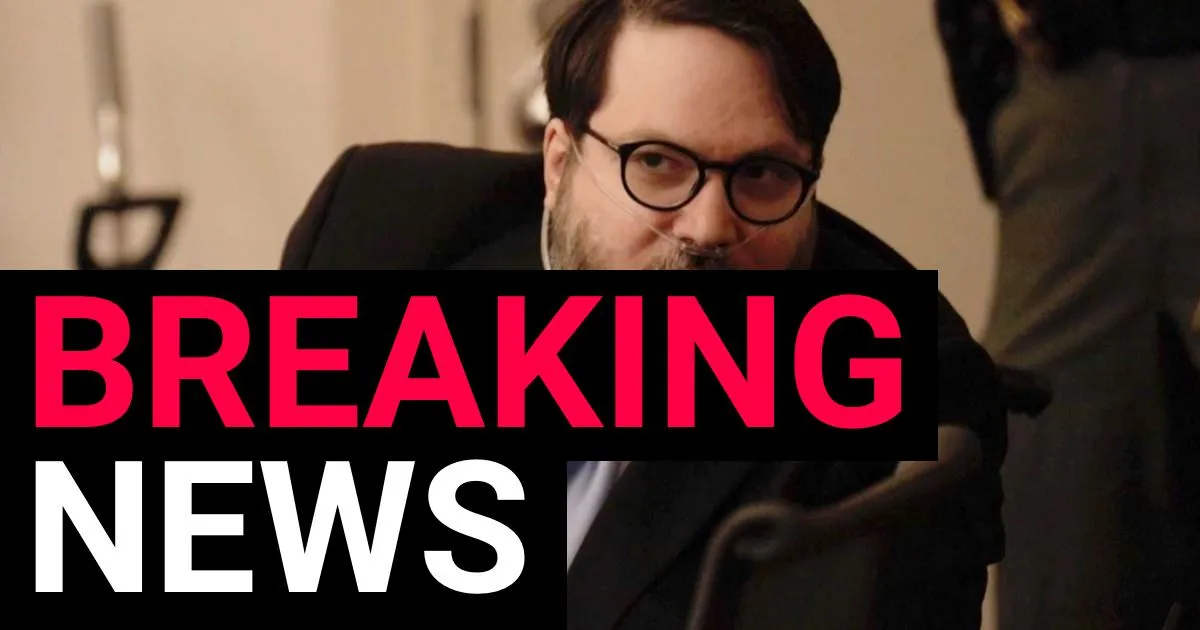
The life of Nicholas Rossi, a man whose existence became a labyrinth of deceit, has come to a somber, unremarkable end at the age of 38. A fugitive who spent years orchestrating an elaborate web of fabrications to escape the consequences of his actions, Rossi ultimately died while in the custody of the Utah Department of Corrections. His passing marks the final chapter in a long, dark saga defined by his attempts to outrun justice—a pursuit that saw him trade his real identity for a series of personas, including a terminally ill patient and eventually, an Irish orphan named Arthur Knight. The news of his death serves as a stark reminder of the wreckage he left behind, as he succumbed to the long-term, degenerative health issues that had shadowed his time behind bars.
For many, Rossi will be remembered not for his elaborate charades, but for the profound pain he inflicted on those he violated. His criminal record, rooted in a series of violent attacks occurring as far back as 2008, painted the portrait of a man who viewed the truth as something to be manipulated rather than honored. Even when confronted with the weight of overwhelming evidence, he famously dismissed his victims as liars, refusing to take a shred of responsibility for his behavior. When he was finally hauled into court in Salt Lake City, a judge did not mince words, labeling him a “serial abuser of women” and the “very definition of a flight risk.” That sentencing, which carried a term of five years to life, was the culmination of a decade-long hunt that finally caught up to him.
The measures Rossi took to disappear were as bizarre as they were calculated. In 2020, while the world was distracted by the uncertainty of the global pandemic, he attempted to vanish entirely by faking his own death. He went to the lengths of posting a formal online obituary, complete with claims that he had succumbed to late-stage lymphoma. Under this guise of a deceased man, he managed to carry on with his life, resettling in Glasgow after marrying a woman he met in Bristol. He seemingly believed that if he could convince the world he was dead, he could live in perpetual shadow, free from the reach of the law that had been looking for him ever since a 2018 DNA hit connected him to crimes from years prior.
His undoing was as ironic as his life was convoluted. While hospitalized with Covid-19 in a Glasgow medical facility in 2021, he was identified by alert staff members who recognized his face from an international “wanted” notice. Even then, Rossi doubled down on his theater of the absurd. He insisted to anyone who would listen that he was actually Arthur Knight, an Irish orphan who had never set foot in the United States. He maintained this facade with remarkable persistence, adopting a wheelchair and oxygen tank to bolster his performance of a frail, misunderstood man. However, the Scottish judicial system was not so easily fooled; after a thorough legal process, an Edinburgh court cut through the smoke and mirrors, confirming his true identity and signing his extradition papers.
By the time he was returned to the United States in early 2024, the legal system had already begun to provide a measure of peace to those he once terrorized. During the trials, the victims demonstrated immense bravery, standing in court to face the man who had exerted such cruel control over their lives. One victim offered a haunting, powerful testament to the long-term impact of his crimes, describing the “trail of fear, pain, and destruction” he left in his wake. Her statement was not merely a call for punishment, but a plea for the accountability that had eluded them for so many years. She spoke for many when she noted that the damage he caused was permanent, a ghost that would never fully fade away.
Now that the book is closed on Nicholas Rossi, the legacy of his life remains a complicated study of vanity and malice. He spent the best years of his life running from the truth, moving across oceans and adopting false names, all in a futile attempt to rewrite his own history. While he may have thought he had found a way to outsmart justice through his theatrics and lies, his eventual capture and death serve as a quiet, definitive end to his reign of manipulation. For his victims, his death does not rewind the clock or erase the trauma, but it does offer a finality that ensures he can no longer hide behind fake obituaries or manufactured identities, grounding the narrative finally in the cold, hard facts of the damage he caused.