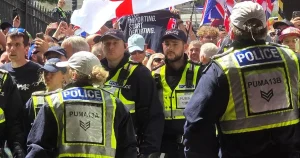

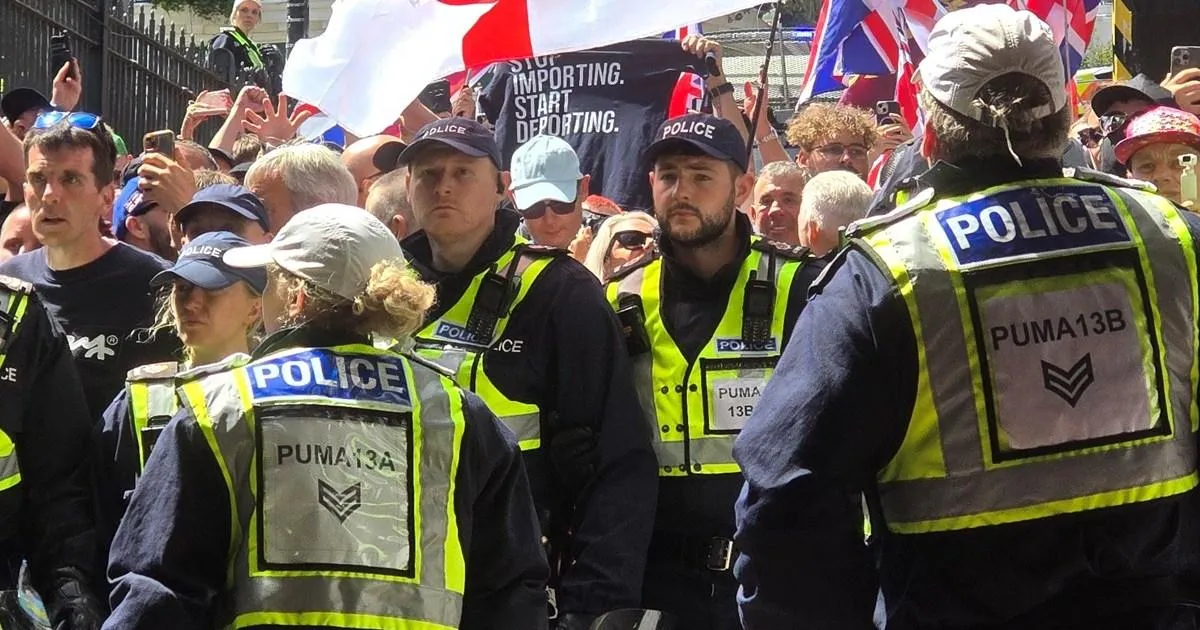
The streets of Brighton recently became a vivid, volatile theater of modern political polarization, as two sharply opposing groups collided in a display of intense civil unrest. The city center saw a massive surge of over 4,000 people gathered for the “Carnival Against Fascism,” a counter-protest that emphasized inclusivity and featured high-profile participants like Fatboy Slim, who performed near the train station. In stark contrast, a much smaller contingent of approximately 300 individuals gathered for a “Stop The Boats” demonstration. In a city known for its diverse, progressive spirit, this meeting of ideologies was always likely to be contentious, but the sheer scale of the crowd disparity quickly escalated the atmosphere from a heated debate into a chaotic confrontation.
As the day progressed, the situation took an ugly turn for a small, isolated group of the anti-immigration protesters. Approximately 20 individuals found themselves cornered and seeking refuge inside the Sussex Yeoman pub, which soon became a focal point of the day’s hostility. Those inside claimed they were subjected to degrading and violent behavior, alleging that counter-protesters threw projectiles—including, shockingly, bottles containing urine and excrement—at their location. Video footage circulated online captured scenes of raw chaos, including one woman bearing a blood-stained scratch on her face, while both sides exchanged vitriolic accusations through social media, each painting the other as the primary aggressor.
For the staff of the Sussex Yeoman, the day proved to be an unwanted and bewildering ordeal. The pub issued a statement afterward, clarifying that they hold no political affiliations and felt caught completely off-guard by the speed at which their venue became a trap for the trapped protesters. They explained that, in the rush of a busy afternoon, the marchers initially blended in with regular patrons. By the time they realized the implications of their guests’ presence, the pub was already surrounded by a wall of shouting counter-protesters determined to block their exit. The staff were essentially left acting as involuntary hosts to a standoff, feeling helpless until police intervention finally arrived.
The role of law enforcement throughout the day became a major point of contention, fueling feelings of abandonment from both sides. Inside the pub, the trapped protesters expressed deep frustration, claiming they were effectively held hostage for two and a half hours, with police allegedly telling them they would face arrest if they attempted to leave on their own. Conversely, critics of the police questioned the handling of the overall public order, highlighting the fact that eight individuals were ultimately arrested on charges ranging from public order offences to physical assaults on emergency workers. By the time the trapped group was finally escorted to safety, the tension had left a bitter, lasting mark on the city’s atmosphere.
Local leadership did not shy away from the intensity of the situation, with Brighton & Hove City leader Bella Sankey addressing the friction head-on. She criticized the “Stop The Boats” organizers for stirring up division in a city that prides itself on being a mosaic of different faiths, backgrounds, and identities. For Sankey, the massive turnout for the “Carnival Against Fascism” served as a statement of Brighton’s core values, suggesting that the city’s heart lies in the peaceful integration of its multicultural population. She emphasized that the diverse collective of residents—ranging from refugees and LGBTQ+ individuals to long-term residents of all faiths—stands in fundamental opposition to the exclusionary rhetoric brought to their streets that day.
As the smoke cleared and the police regained control, the event served as a sobering reminder of the fractures currently running through society. While the Sussex Police maintain that their priority was the complex balancing act of protecting the right to protest while ensuring public safety, the aftermath left many residents feeling unsettled. The incident at the Sussex Yeoman stands as a haunting snapshot of a nation struggling to navigate radical disagreements, where political discourse has transcended the podium and moved into the streets. Ultimately, the day’s events in Brighton were less a debate over immigration policy and more a visceral example of how quickly civil society can descend into a fractured, dangerous, and deeply divided experience.