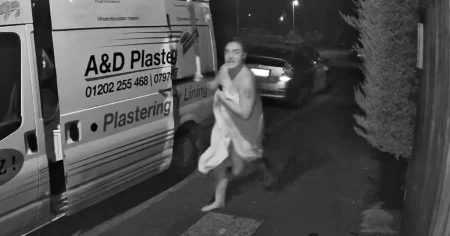


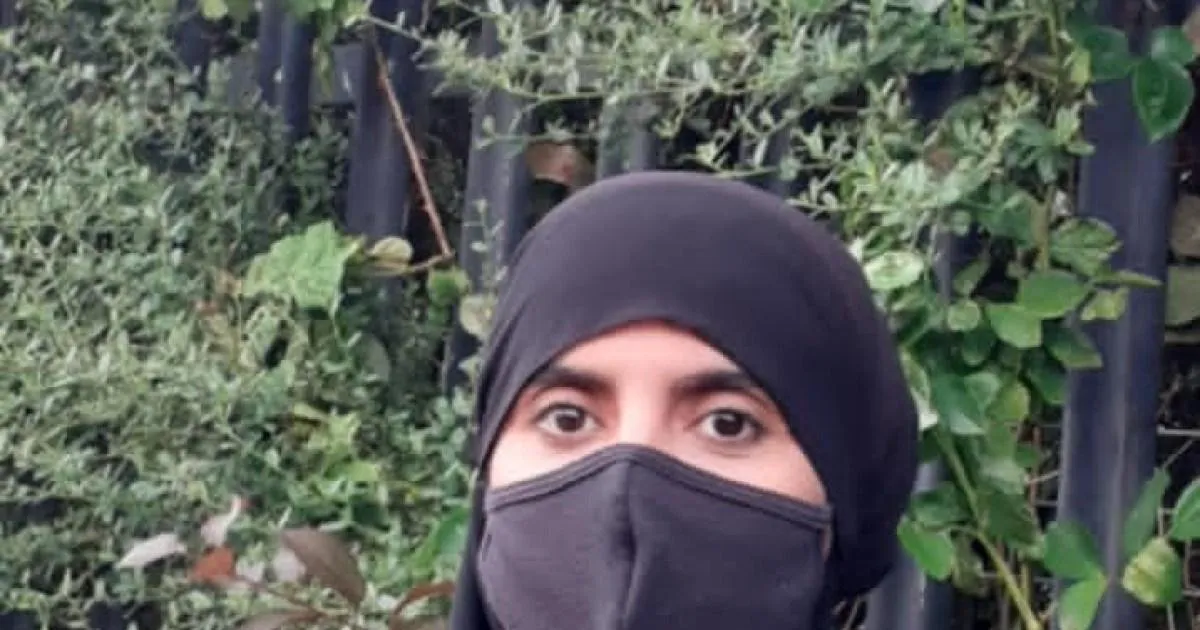
The digital age has ushered in a new era of misinformation where a split-second, out-of-context video can dismantle a person’s sense of security. Recently, Nora Mubarak, a resident of Grimsby, found herself thrust into a terrifying national spotlight after a video of her performing an act of pure kindness was weaponized by online agitators. In the footage, Nora was seen gently picking up a baby seagull that had fallen from its rooftop nest. However, instead of being recognized for her compassion, the clip was manipulated to suggest she was “catching a bird for food.” Two men filming from a van began by laughing, but the intent behind the footage shifted darker once it reached the hands of influential, far-right figures who used it to propagate anti-immigrant sentiment.
The aftermath of the video going viral has been nothing short of a nightmare for Nora. High-profile figures, including local political leader Oliver Freeston and activist Tommy Robinson, shared the footage with inflammatory captions that framed Nora as a symbol of a decaying society. By labeling her a “savage” and suggesting her actions were proof of a cultural “invasion,” these accounts stripped away the truth to serve a hostile agenda. The original video had actually captured a moment where Nora explained her intentions to the men—that she was merely rescuing the bird so it wouldn’t be hit by a car—but that crucial context was conveniently edited out. For Nora, seeing her reputation shredded by people who refused to retract the lies, despite being corrected by community notes, has been a painful lesson in the power of modern malice.
Beyond the online harassment, Nora is now facing the harsh reality of real-world xenophobia. In Grimsby, she reports being recognized in public, subjected to stares, and targeted with hateful slurs. She expresses a profound fear not only for her own safety but for the welfare of other women in her community who, like her, wear traditional Islamic dress. Nora notes that the vitriol she faces is a direct byproduct of a narrative that uses her appearance to justify hatred. She remains firm in her stance, however, articulating a simple but powerful truth: anyone capable of hurting an animal is not to be trusted, and those who project such cruelty onto her are merely looking for a pretext to express their existing prejudices.
Despite the ugliness of the accusations, Nora’s perspective remains remarkably grounded in empathy. She recounts the incident with a sense of clarity, describing her concern for the distressed mother seagull circling above as the chick lay stranded on the pavement. With the help of a kind neighbor who provided a ladder, the baby was safely returned to its nest—a moment of joyous reunion that stood in stark contrast to the hate brewing online. For Nora, the birds are not “pests” to be feared or consumed, but beautiful, special creatures that represent a piece of British life that deserves protection. Her act of kindness was prompted by the simple belief that all creatures, regardless of their species, deserve care and respect.
When asked about the far-right influencers who continue to keep the video up despite the evidence that they are lying, Nora is dismissive of their character but deeply concerned about their goals. She views these accusations as a cynical distraction, a way to stoke division and deflect attention from the actual systemic issues plaguing society, such as the negligence of those in power or the widening gap between the wealthy and the working class. She sees the rising tide of racism in her town as a symptom of a larger, systemic malaise, but she refuses to be cowed by it. She maintains that she will continue to live her life, walk her streets, and act with the same compassion that led her to pick up that bird in the first place.
Ultimately, this story serves as a sobering reminder of how easily humanity is lost in the pursuit of a political narrative. A woman’s gentle act of animal rescue was inverted into a tool for hatred, yet her resolve highlights the resilience required to stand against such currents. By continuing to speak out, Nora challenges the stereotypes placed upon her, forcing a confrontation between a manufactured lie and a lived, authentic truth. As she continues to advocate for the birds that she clearly loves, she also advocates for a society that chooses to look beyond the surface of a person’s clothing, seeking to understand their actions rather than condemning them through the lens of prejudice.