

Here is a humanized and expanded summary of the provided news content, written in six detailed paragraphs that explore the emotional, legal, and social dimensions of the story.
—
The announcement lands with the weight of a long-fought victory for a grieving widow. On a seemingly ordinary summer night in 2019, Police Constable Andrew Harper responded to what was reported as a quad bike theft in the Berkshire countryside. It was a routine call for a heroic officer, but it ended in absolute tragedy when he was dragged along a winding country road by a vehicle fleeing the scene. The 28-year-old officer’s life was cut short in a manner so brutal and senseless that it stunned the nation. In the aftermath, as his widow, Lissie Harper, processed her immeasurable loss, she was confronted with an additional, agonizing injustice: the men responsible for killing her husband were subject to standard sentencing rules that could have seen them walk free after serving just half of their 13-year manslaughter terms. For Lissie, the prospect of her husband’s killers being out in just over six years was not just a statistical possibility—it was a betrayal of his sacrifice. However, following a relentless public and political campaign, Prime Minister Andy Burnham has now delivered a seismic shift in criminal justice policy, confirming unequivocally that individuals convicted of unlawful killing, including manslaughter, will no longer be eligible for the early release scheme. This change ensures that those who take a life, particularly in the line of duty, will face the full consequences of their actions behind bars.
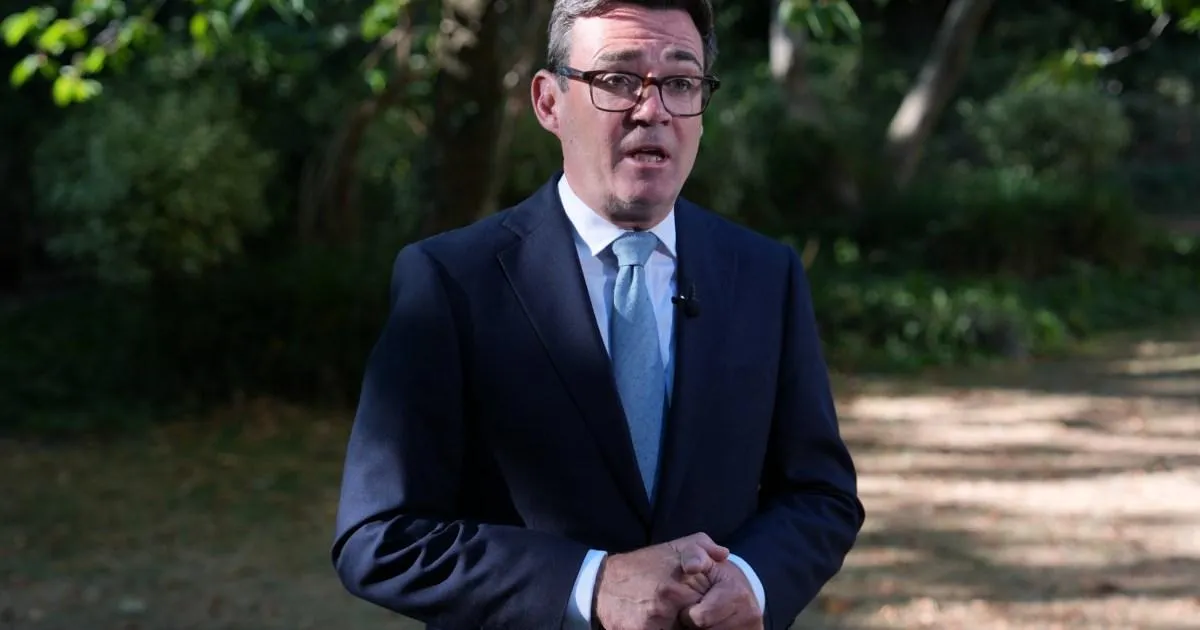
The Prime Minister’s intervention is not a hollow gesture but a direct, pragmatic response to a widespread public outcry that has been growing for years. Speaking about the reform, Mr. Burnham explained the rationale behind the decision, framing it as a matter of basic fairness and common sense. He pointed to the absurdity of a system that allowed individuals convicted of the most serious offenses—such as manslaughter, indecent assault, and death by dangerous driving—to benefit from automatic early release. The injustice, as he articulated, was stark: people who had committed grave crimes were being released back onto the streets prematurely, while the victims’ families were left to serve a life sentence of grief. The change is monumental because it directly addresses the rage felt by many when they see the criminal justice system prioritize administrative efficiency over the sanctity of life. By explicitly excluding these serious offenses from the early release scheme, the government is acknowledging that certain crimes are so heinous that they demand a punishment commensurate with their severity. This is a victory for all those who have campaigned for “Harper’s Law,” a movement spearheaded by Lissie Harper herself, which argues that anyone who kills an emergency worker should face a mandatory life sentence with no possibility of parole. The PM’s announcement is the first major step toward that sacred promise, ensuring that the men who killed PC Andrew Harper—Jessie Cole and Albert Bowers—will remain in prison, along with Henry Long, the driver who was handed a 16-year extended sentence.
Yet, this tightening of the law on violent criminals necessitates a broader, more complex solution to the United Kingdom’s chronic prison overcrowding crisis. The Prime Minister acknowledged that the prison system is currently operating at a staggering 97.6 percent capacity, a situation that is not only unsustainable but dangerous for both inmates and staff. To make room for these newly excluded offenders who will now serve their full terms, the government is pursuing a two-pronged strategy. The first is the accelerated deportation of foreign national offenders, which will free up significant space while simultaneously strengthening the integrity of the borders. The second, more controversial aspect involves a humanitarian review of those stuck on Imprisonment for Public Protection (IPP) sentences. These indefinite sentences, handed out between 2005 and 2012, were designed to keep dangerous offenders locked up until they could prove they were no longer a risk. However, the system became a revolving door of frustration, with many prisoners serving far beyond their minimum tariffs because they could never satisfy the parole board. Of the 2,271 people currently trapped on IPP sentences, a shocking 856 have never been released, simply because they have not been able to navigate the complex parole process. Mr. Burnham described this as a “blot on the system,” noting that many of these prisoners were very young when sentenced for lesser offenses and have since become victims of a system that offers them no hope of redemption. By granting release to the lowest-risk IPP offenders and ending this broken sentence altogether, the government aims to correct a long-standing injustice while creating the necessary capacity for truly dangerous individuals to remain locked away. A cross-party oversight group will be established to monitor these releases, ensuring that public safety remains the paramount concern.
The emotional core of this story rests squarely on the shoulders of Lissie Harper, whose tireless advocacy has transformed personal tragedy into a powerful force for national change. For years, Lissie has lived with the unimaginable pain of losing her husband, a man she described as her “best friend” and a dedicated public servant. The trial of his killers was an agonizing ordeal, as she listened to details of how Cole, Bowers, and Long used a stolen vehicle as a weapon, dragging Andrew to his death while he was entangled in the strap of their trailer. When the verdict of manslaughter was delivered, along with 13-year sentences, Lissie’s fight only intensified. She called the decision to even allow for early release “deplorable,” and her advocacy resonated with millions of people who felt the same indignation. Her campaign was not just about punishing the specific individuals who killed her husband; it was about deterring future criminals and ensuring that emergency workers—police, firefighters, and paramedics—are afforded the absolute maximum protection under the law. Her voice, combined with the support of PC Harper’s former colleagues and the public, created an unassailable argument that the PM could no longer ignore. The confirmation that Cole and Bowers will not walk free early is a profound acknowledgment of Lissie’s sacrifice and her victory for every family that has ever felt let down by a judicial system that seems too lenient on violent offenders.
Beyond the immediate case, this policy shift represents a philosophical re-evaluation of what justice means in the 21st century. The Prime Minister’s statement, “It is correcting an injustice that’s been there in the system,” speaks volumes about the changing political landscape. For decades, successive governments have engaged in a race to the bottom on sentencing, often viewing early release as a necessary evil to manage budgets and overcrowding. This announcement decisively breaks that cycle, drawing a clear line in the sand that violent, life-altering crimes will be treated with the severity they deserve. It also highlights a deep-seated societal desire for proportionality—a belief that the punishment should truly fit the crime. By simultaneously addressing the abhorrent IPP regime, which kept people locked up indefinitely for relatively minor offenses (often without any hope of rehabilitation), the government is demonstrating that justice is not a one-way street of harshness. It is about nuance: keeping the truly dangerous isolated from society while offering a path forward for those who offer no further threat. The PM’s pragmatic approach to the prison capacity crisis—deporting foreign criminals, releasing low-risk IPP prisoners, and cracking down on murderers—shows a government willing to engage with the messy, complicated realities of a strained system, rather than just delivering soundbites.
In the end, the legacy of this change will be measured not in statistics but in the peace of mind it brings to victims’ families. The confirmation that “hundreds more inmates will stay in prison” is a powerful message that the state will no longer aid and abet the early release of killers. For Lissie Harper, the years of campaigning have finally yielded a concrete result. She can now face the future knowing that the men who tore her world apart will remain locked up, serving their full 13-year terms as the law now demands. The Prime Minister’s commitment to legislate to end IPP sentences by the end of this parliament, coupled with the establishment of a strict oversight group, ensures that these changes are not temporary tweaks but permanent structural reforms. While the prison population will remain a challenge, the moral clarity of this decision clears a different kind of backlog—the backlog of public trust. The tragic death of PC Andrew Harper on that quiet Berkshire road will forever be a reminder of the cost of keeping society safe. But through his widow’s courage and the government’s willingness to listen, his sacrifice has led to a landmark change in British law. No longer will a killer of a police officer be allowed to walk free merely because half their sentence has been served. The justice system has finally caught up with the public’s conscience, and for Lissie, and for all those who loved Andrew, that is the only justice that matters.