


There is a particular kind of magic in a British bank holiday weekend, a last great exhale before the nights draw in and the summer begins to fade. This year, thousands of families packed their cars and headed for the countryside and the coast, determined to steal a few more days of warmth and freedom before the routines of autumn took over. According to the RAC and INRIX, some 14.4 million cars were expected on the roads between Saturday and Monday, and a large share of that traffic was heading to the nation’s most beloved beauty spots. Places like Bibury and Bourton-on-the-Water in the Cotswolds, and Salcombe in south Devon, have long been magnets for visitors, but this bank holiday the strain was impossible to ignore. Locals in these picturesque villages and towns say they have reached a breaking point. Coaches arrive in convoys, car parks overflow into verges and driveways, and the narrow streets that were once the centre of small, close-knit communities have become stage sets for hurried tourists. It is a strange and painful irony: people travel to find peace, but in doing so they destroy the peace of the people who already live there. The visitors are not cruel, and most mean no harm. They are simply looking for a beautiful place to stand for a few minutes, take a photograph, and move on. But when thousands of people do the same thing at the same time, a village of six hundred residents can feel like a festival ground. Residents say they are no longer able to enjoy their own front doors, and the fury and sadness in their voices is growing louder.
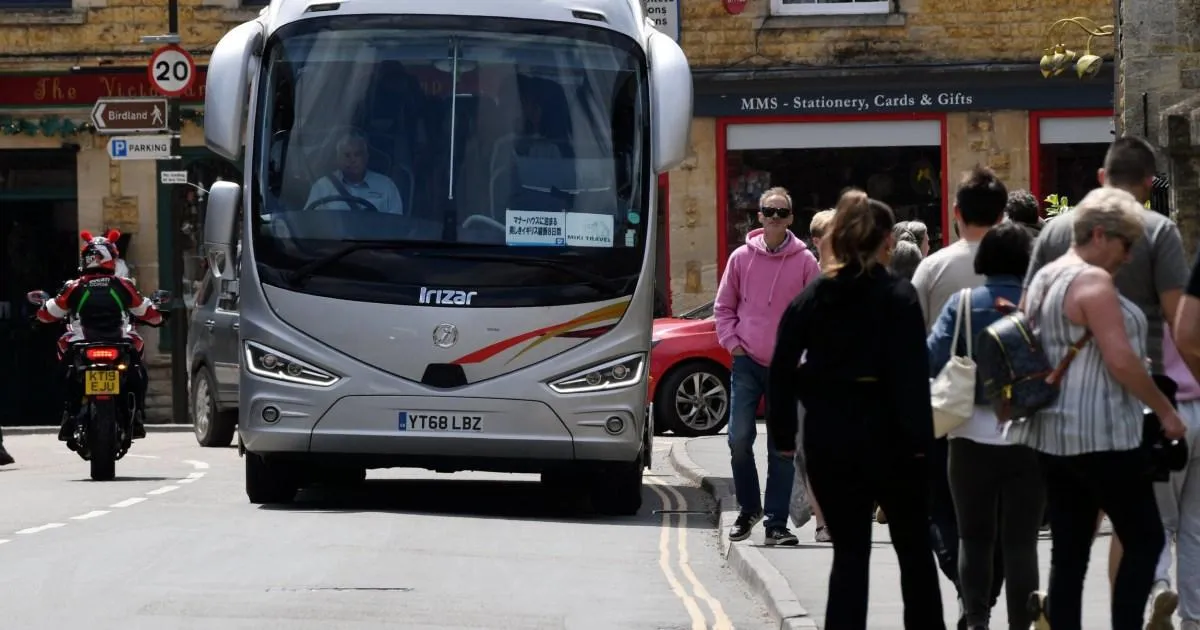
The village of Bibury, in Gloucestershire, has become one of the clearest symbols of this tension. It is home to just six hundred people, but visitors have discovered it through social media, and the numbers have swollen every year since the pandemic. Kris Watts, a resident of ten years, says the situation has become steadily worse, and on this bank holiday scores of large coaches arrived in the village in a single day. Some days, Kris said, there have been up to ten big coaches arriving at once, each one disgorging a wave of tourists who wander through the streets for what often amounts to no more than forty minutes before being herded back on board. They come to see the river, the cottages, the tranquility—and then they leave, leaving behind traffic, noise, and an overwhelming sense that the village has become a drive-through attraction. Kris, a retired private school office manager, said she no longer goes into the village at weekends because it is so bad. The pandemic, in some strange way, made everything worse. When international travel stopped, people rediscovered their own country, and places like Bibury suddenly became famous online. Influencers posed on the stone bridges and by the riverbanks, and the algorithm did the rest. But Kris said the visitors are not the true problem; the problem is that they come in such numbers, stay for such a short time, and leave nothing behind but congestion. She used to drive into the village to buy a newspaper and a cup of coffee, a simple morning ritual that has now become impossible. The romance of living somewhere beautiful has been replaced by the reality of living somewhere besieged.
What makes this overtourism feel so personal is the way it intrudes on the most private parts of everyday life. Kris said one woman told her about five cars that had parked across her driveway while the visitors went into a nearby field to have a picnic, as though the property belonged to them. Another resident discovered that people had wandered into private gardens to take photographs. In response, some locals have started putting up signs in several languages, politely but firmly asking strangers to stay off private land. It is an understandable act of self-defence, but also a sad one; no one wants to live behind barriers in a place they chose for its openness. The river that runs through Bibury is also feeling the pressure. Visitors wade and paddle in protected areas, unaware that these stretches are ecologically sensitive and vital for local wildlife. The very beauty that draws people to the water is being degraded by their footprints. There is a sense that the village is being loved to death, photograph by photograph, picnic by picnic. The infrastructure was never designed for this. The lanes are narrow, the bridges are old, and the car parks are tiny. Yet the expectations of visitors are huge. They want the perfect holiday photo, the ideal picnic spot, the undisturbed beauty they saw on Instagram—without realising that the beauty depends on being undisturbed. The result is a slow collision between the needs of tourists and the needs of residents, and in that collision, it is the residents who are losing the quiet lives they once had.
The physical damage is not just to the atmosphere of the place, but to its very fabric. Bibury’s historic Swan Bridge, an old stone structure that carries coaches full of tourists over the river, has become a particular concern. Residents worry that the constant weight of large vehicles is damaging the bridge, which was never built for such traffic. Craig Chapman, chairman of Bibury Parish Council, has called for a 17-tonne weight restriction on the bridge, with an exemption for public buses, in order to protect the structure. The parish council is waiting for more information from Gloucestershire County Council about the condition of the bridge, but the fear is already clear. At some point, the heritage that attracts visitors will begin to crumble under the weight of their curiosity. The county council, meanwhile, has tried to address the coach problem by introducing experimental drop-off points, developed after discussions with residents, businesses, and coach operators. The stated priority is safety. But residents say that the coaches often ignore the designated drop-off points and continue to stop wherever they please, rendering the experiment largely ineffective. The bridge, like so many other parts of the village, has become a battleground between preservation and accessibility. Everyone agrees that visitors should be able to enjoy the Cotswolds. The question is how to make that possible without destroying the thing they come to see. It is difficult to imagine the bridge being closed to traffic, but it is equally difficult to imagine it surviving the next decade of rising visitor numbers. Something has to give, and residents fear it will be the very architecture that makes the village so special.
The same scenes are being repeated across the country, often within the same day’s drive. Bourton-on-the-Water, with its famous arched stone bridges crossing the River Windrush, was pictured swarming with holidaymakers over the bank holiday. Visitors piled onto the bridges, dipped their feet in the water, and spread picnics along the riverbanks. It looks wonderful in photographs, and there is something genuinely lovely about people enjoying the outdoors together. But for the people who live there, the charm wears thin when every weekend feels like a festival. The sound of a peaceful river is replaced by the noise of crowds; the feeling of a quiet village is replaced by the anxiety of trying to get through the day. Salcombe, on the Kingsbridge estuary in Devon, tells a similar story. Car parks were packed to capacity, with cars spilling onto roadsides and verges. Streets that are usually quiet were overwhelmed by visitors, and locals found themselves navigating a gauntlet of slow-moving tourists, buggies, and queuing vehicles. The photographs are dramatic and, in a way, beautiful—they show how much people want to connect with nature and with history. But they also show the problem. When a place becomes this popular, it risks becoming a parody of itself. The very things that made it charming—the quiet, the scale, the sense of stepping back in time—are impossible to experience when you are standing shoulder to shoulder with a hundred other people trying to experience the same thing. Yet the visitors keep coming, and the residents keep coping as best they can, sometimes with frustration, sometimes with resignation, and always with the knowledge that the flood will not stop on Monday evening.
There is, of course, another side to this story. Tourism is not an invader; it is also the lifeblood of these communities. The cafés, shops, pubs, and guesthouses depend on the visitors who arrive throughout the year. Without tourism, many of these picturesque villages would struggle to survive, their post offices and local shops already fragile in an age of online shopping and declining rural services. The residents who complain about the crowds are often the same people who benefit, indirectly or directly, from the money tourism brings. This is why the answer cannot be simply to close the gates. The challenge is to find a way to manage the flow so that places like Bibury, Bourton-on-the-Water, and Salcombe remain alive but not overwhelmed. That means investing in proper infrastructure, enforcing parking and coach regulations, encouraging visits outside peak times, and perhaps even limiting numbers when capacity is reached. It also means asking something of visitors: a bit more patience, a bit more respect, a willingness to see a place as someone’s home rather than as a free attraction. The social media culture that drives so much of this behaviour is unlikely to change overnight, but individuals can change. They can choose to stay longer, spend more, tread more lightly, and leave no trace. They can respect private driveways, keep their voices down, and understand that a protected river is not a paddling pool. The bank holiday may be over, but the question it left behind is not. How do we share the places we love without loving them to death? It is a question with no easy answer, only compromises, difficult choices, and a hope that the people who live in these beautiful places can still find the peace they once came there to enjoy.