


There is a kind of grief that arrives without warning, and for those who look at London through the lens of its streets, the news of Helch’s death feels exactly like that. Helch—not a person, exactly, but a name, a mystery, a giant shout written across bricks and bridges and railway viaducts—has passed away. The announcement came from BSMT Space, an urban contemporary art gallery in Dalston, and it landed among his followers like a physical blow. “Receiving news today of the untimely passing of Helch has left us broken hearted,” the gallery wrote, and those words now echo through the tag-stained alleys and underpasses where Helch made his name. In the graffiti and street art community, tributes began pouring in, and one phrase rose above the rest: “Rest in Paint.” It was a perfect epitaph for a person who never truly revealed himself but gave his word to the world. For those unfamiliar with Helch, he was not a household name in the way of Banksy or Invader. He was something more elusive, more elemental—a phantom who turned a single word into a punctuation mark across London’s urban landscape. His death has left a hole in a city that is itself built from layers of memory and paint. And yet, even in sorrow, there is a strange beauty in the way this community mourns someone they may never have met, someone whose face remains unknown, someone who communicated through perhaps five letters. Helch was never a person; Helch was a presence. And now that presence has faded, leaving behind a city that is somehow quieter, even amid the noise. It feels as though a familiar shout has gone silent overnight, and the walls themselves have become monuments to a stranger who made the whole city feel like his diary.
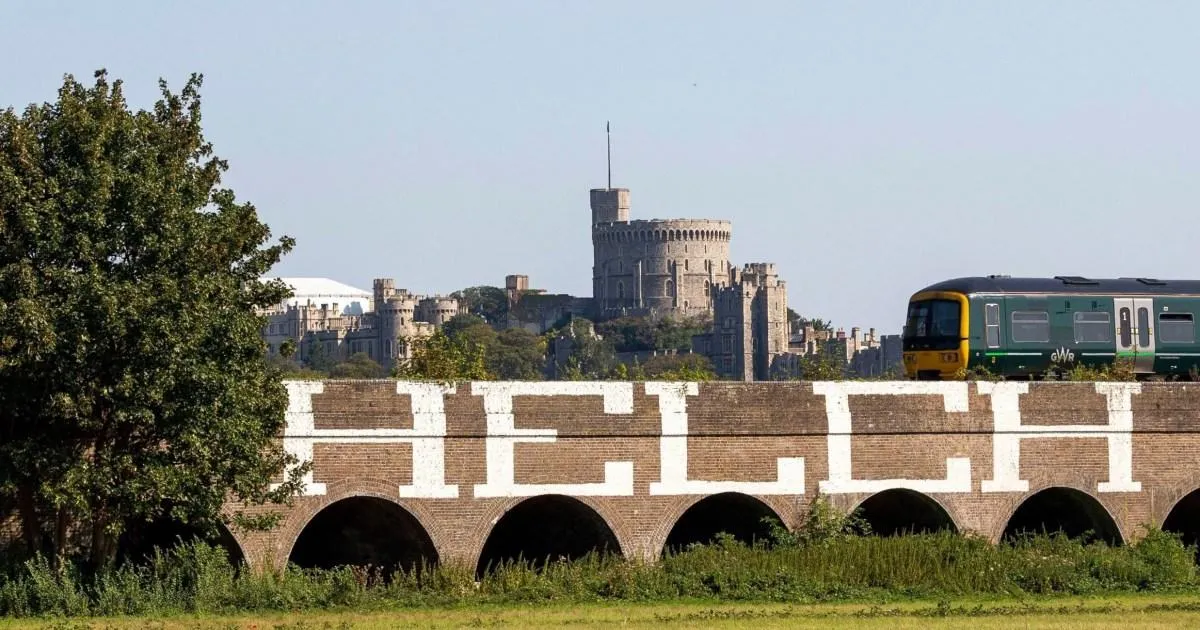
To understand what Helch achieved is to understand the geography of London in a new way. The phenomenon began in September 2018, in the western suburbs, when a flurry of “helches” appeared around Harrow. At first, perhaps, they looked like simple vandalism—white or silver letters, huge and emphatic, sprayed onto walls, shutters, abandoned buildings, and railway infrastructure. But quickly, the tags multiplied. They spread from Harrow to the streets of east London, where they became landmarks in their own right. There was a massive Helch on a bridge near Windsor Castle that caught the attention of the nation, particularly because it supposedly upset the Queen, who reportedly did not appreciate the enormous word spoiling her view of the royal residence. The authorities had to remove it from a railway viaduct. That image—royal displeasure provoked by a graffiti tag—became part of Helch’s mythology. Here was an artist who could make his mark not just on the margins but in the very periphery of the most famous royal residence in the UK. His work was called a triumph of roller graffiti, especially the famous piece outside the American Carwash in Shoreditch, an East London landmark that turned a functional building into a sort of urban shrine. Helch’s tags were not subtle. They were enormous, confident, almost anatomical, as if the word itself was a body, a living thing that breathed and flexed against the architecture. He did not paint pictures or use complicated imagery. He simply repeated his name, over and over, until it became a place, a sound, a memory. In doing so, he transformed the act of graffiti from defiance into an invitation—an invitation to wonder, to look up, to question who this person was and why he had chosen these spots. Every tag was a self-portrait, and yet it revealed nothing. That contradiction is exactly what made Helch so compelling. He was a legend of the night, and the daylight only showed the proof.
Who was Helch? That remains a mystery, and perhaps it always will. Over the years, speculation ran wild. Some people suggested he was an established artist, others claimed he was a prankster, and a few joke theories even floated in the direction of former Prime Minister Boris Johnson—a notion so absurd it became a beloved meme. But behind the enigma, there was a human story, and one of the few clues came from a school friend who spoke to Metro. As a young boy in Hayes, west London, Helch was always tagging everything. He invented the name “Helch” during childhood, and even those closest to him never learned what it meant. “He is a London legend but also 1,000% a Hayes one too,” the friend said. Those words are profoundly moving because they ground the myth in a very specific place: Hayes, a working-class corner of west London, not usually associated with street art fame. Helch was once just a kid, perhaps bored, perhaps creative, perhaps in need of a way to express himself. He found his medium in letters. The name itself might have no meaning, but it had a sound, a texture, a rhythm that worked perfectly on concrete. The fact that he never explained it only added to the allure. He did not need to be understood; he needed to be seen. And he was seen, by thousands, perhaps millions, of Londoners and visitors. He turned a private nickname into a public conversation. In an age where so many people are desperate to reveal themselves, Helch remained a blank canvas. He let his work speak, and the work said: I exist, I was here, I am not going away. It is hard to think of a more authentic form of self-expression than that. No CV, no Instagram biography explaining his coffee habits, no curated backstory. Just a word, repeated with such conviction that it became a message from the city itself.
The gallery that championed Helch, BSMT Space, had just begun to bring his work into the art world. It was a strange relationship, because Helch was not a typical gallery artist. As the gallery explained, he was “a true creature of the night”—a person who found his vocation in darkness, in the hours when the city sleeps and the streets belong to the bold. The gallery’s journey with Helch began with a moment of revelation outside the American Carwash in Shoreditch. The founder was so drawn to the enigma of the word that they had to find out more. It took six months to get Helch to agree to meet in person. That detail says so much about the artist: he was not looking for fame, not chasing commercial success, perhaps even shy or wary of the human connections that come with recognition. But eventually, in 2022, they released his first print, and it sold out within the hour. To anyone familiar with the art world, that is an astonishing achievement for an artist with no public identity. It demonstrates how powerful Helch’s presence had become. People were not buying a face or a biography; they were buying a mystery, a slice of the street, a relic from a phantom. The gallery also noted that “the gallery walls were not always what it was about for him.” They often had to recalibrate their expectations as they worked together. This suggests Helch was not easy to manage, not because he was difficult, but because he was authentic. He did not care about the conventions of the art market. He cared about the streets, the night, the act of painting. The gallery’s tribute is heartbreaking because it reveals a relationship that was just beginning—a promising new chapter in Helch’s career that can now never be completed. The untimely passing cuts short not just a life, but a future. All the works that would have been painted, all the conversations that would have happened, all the stories that would have been told—they are gone now, as if erased by a black spray can.
The death of Helch is more than a personal loss; it is a moment to reflect on the fragile relationship between art, memory, and the city. Graffiti is inherently ephemeral. It can be painted over, cleaned away, weathered by rain, or destroyed by renovation. Helch’s work, for all its scale, was always vulnerable. The Windsor viaduct piece was removed. Other tags may fade, be buffed, or disappear as London changes. Yet the act of graffiti is also a gesture against oblivion—a way of saying that even if the paint disappears, the moment of creation mattered. Helch’s legacy is not just in the physical traces he left behind, but in the impact he had on people who encountered his work. There is something profoundly human about a person who uses a pseudonym to sign their existence onto public walls. He did not seek money, though he began to sell prints; he did not seek fame, because he hid his face. He sought connection, in a way. When we saw a Helch tag, we were being invited into a conversation with a stranger who trusted us not to erase him. The outpouring of grief—the “Rest in Paint” tributes, the stories from friends, the gallery’s heartfelt words—shows that he succeeded. His name is now a shared memory, a password for a community of people who understand that art can be temporary but the feelings it evokes are not. In mourning Helch, we also celebrate the very idea of graffiti: the courage to go out at night, to climb, to spray, to claim space in a world that tells us to stay invisible. He may have been anonymous, but his actions were anything but. He gave the city a gift, and the city, in turn, is giving him something far more permanent than any wall: remembrance.
In the end, Helch leaves behind a city painted with his name and a community bound by his mystery. The tributes will fade, the news cycle will move on, and London will undergo more transformations. But every time someone walks along a street and sees a faded “Helch” on a wall, they will pause. They will wonder. They will perhaps remember the story of an anonymous artist who appeared out of nowhere, took the city by storm, and then vanished. The school friend’s words ring truest of all: Helch is a London legend, and a Hayes one too. He came from a specific place, with a specific accent, a specific childhood, and a name that nobody truly understood. That is perhaps what makes his story so relatable. Not everyone can paint a giant tag near Windsor Castle or sell out a print run in under an hour. But everyone can understand the desire to be seen, to leave a mark, to say “I was here.” Helch did that better than almost anyone. “Rest in Paint” is more than a pun. It is a prayer, an acknowledgment that the artist is now part of the same canvas he loved. He has not left the city; he has become it. His letters remain in the cracks of brick, under the bridges, along the railway lines. And even when the last paint is buffed away, the stories will remain, passed among those who knew his work. Helch was a mystery, and perhaps that mystery is now safe forever. He died unknown, in the most literal sense, but also immortal, in the way that matters most. Rest in paint, Helch. The streets will not forget you. The night is darker without you, but your name is written everywhere, and no one can paint over that.