

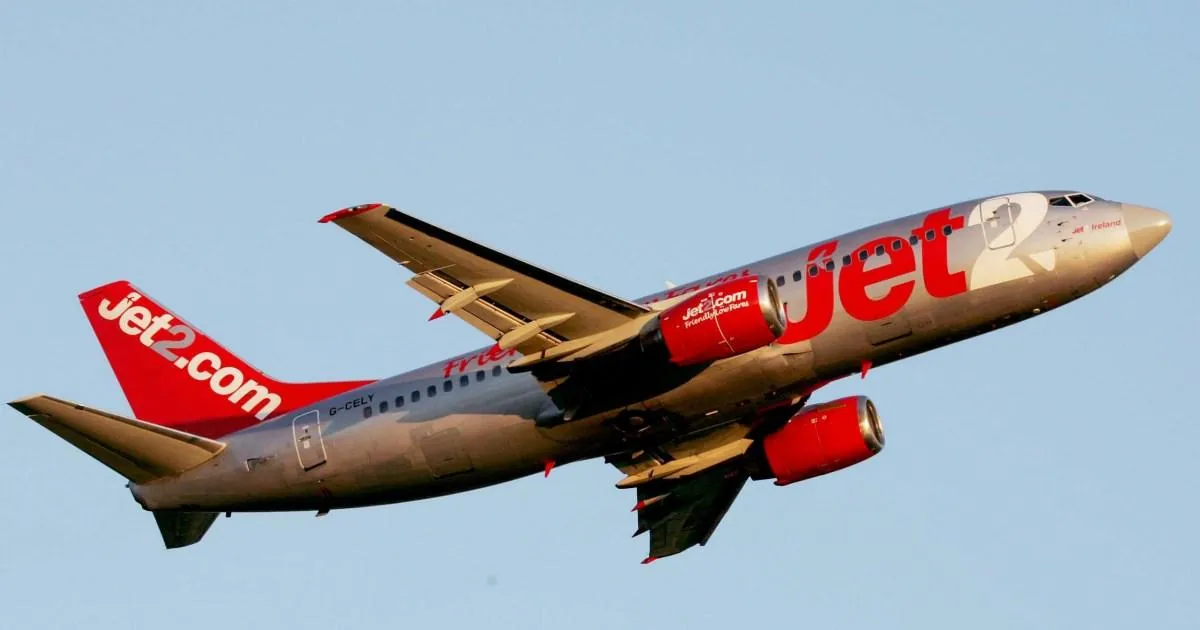
On a crisp Tuesday morning, the hum of routine travel at London Stansted was broken by the tense hum of a Boeing 737-800 preparing for departure. Flight LS148, bound for the sun-drenched party island of Ibiza, was filled with passengers dreaming of sandy beaches, poolside cocktails, and the pulsating beats of world-famous nightclubs. No one on board could have anticipated that their journey would become the subject of an international incident, a mid-air crisis that would see them touching down in the gilded city of Paris, far from their Spanish destination. For the crew, the day was about to pivot from standard procedure to textbook emergency response, testing their training and composure at 35,000 feet. Every flight carries its own quiet tension, but this one had a secret burden: an unspoken alarm was about to be triggered in the clouds, sending a ripple of concern through air traffic control and ground stations across Europe.
The flight had barely settled into its southward trajectory across the English Channel, carving a path through the morning sky with passengers likely settling into in-flight entertainment or ordering a cup of tea, when the atmosphere in the cockpit shifted. Over central France, at the cruising altitude of 35,000 feet, the captain was forced to make a split-second decision that would alter their course: declaring a general emergency. The pilots transmitted the discreet yet unmistakable squawk code 7700, the electronic equivalent of an S.O.S. that announces to air traffic controllers that a plane is in dire straits. In an instant, the elegant arc towards Spain became a desperate, tilted turn, a U-turn that would redirect them towards Paris Charles de Gaulle. Below, the patchwork fields of rural France passed silently, unaware of the drama unfolding overhead. The cabin crew, masters of calm, received the news with trained stoicism, their primary concern now the safety and security of every soul on board as the aircraft descended from its high-altitude sanctuary.
For the men, women, and children strapped into their seats, the diversion was met with a confusing mix of anxiety and curiosity. Some noticed the subtle change in engine pitch, others saw the worried glance exchanged between flight attendants. There was no announcement to panic, no visible sign of the danger perceived by the flight deck, but the shift in flight path was enough to send a frisson of fear through the cabin. The pilot’s voice, usually a source of reassuring banter, revealed nothing over the intercom, yet the sudden presence of emergency vehicles on the tarmac moments later confirmed that this was no ordinary procedural stop. As the runway of Charles de Gaulle rushed up to meet them, flanked by fire trucks and ambulances, the true weight of the situation settled in. The intention was to be on their way within the hour, a mere pit stop in the grand scheme of their journey, but the emotional toll on the passengers was just beginning to surface, turning a routine commute into a story they would tell for decades.
This unsettling scene, however, paints a stark picture of a broader, more troubling trend gripping the aviation industry. With travel surging back to pre-pandemic levels, airlines are reporting a disturbing increase in incidents involving disruptive and sometimes violent passengers. The serene calm of the cabin is increasingly broken by alcohol-fueled brawls, mask-related tantrums, and blatant disregard for crew instructions, often forcing pilots to make unscheduled landings and offload unruly individuals, sometimes in the middle of the night. The flight to Ibiza, the latest in a string of diversions to make headlines, serves as a high-profile symbol of this chaotic new normal. While the crew handles an initial crisis, colleagues across the industry are dealing with a different kind of emergency: managing a traveling public that seems to have lost its manners, turning the friendly skies into a contentious battleground where even the most routine flight can veer off course.
Ibiza, a destination famously known for freeing its visitors’ spirits along with their inhibitions, is unfortunately also a hub where the consequences of that overindulgence come home to roost. The increase in diversions to the Balearic Islands and other hotspots has prompted airlines to take a harder stand. Industry bodies are demanding an end to the days of easy access to alcohol for passengers. It’s a struggle that has moved beyond mere nuisance and into the realm of legal liability and passenger safety, with crew members facing unprecedented levels of abuse. The question is no longer just about passenger comfort but about the basic operational safety of flights when disruptive individuals compromise security. As the sun sets on another incident at a foreign airport, the industry is left to figure out a solution, considering drastic measures like banning passengers for life or limiting access to duty-free liquor.
Ultimately, the plane in France eventually landed in Ibiza hours behind schedule, a testament to the crew’s successful management of the initial threat, yet the echo of the incident lingers. For the passengers, the delay was an inconvenience, but the diversion was a lifeline—a reminder that in the high-stakes world of air travel, there is no situation so grave that it cannot be handled with grace under pressure. As the aviation world debates new regulations and lists of banned customers, we are reminded that behind every flight number and tailwind is a human story of resilience and responsibility. The narrative of the skies is not just written in flight plans and airspeed, but in the quiet heroes who bring us home safely, turning what could be a catastrophe into just another story at 30,000 feet, waiting for the next chapter to begin.