


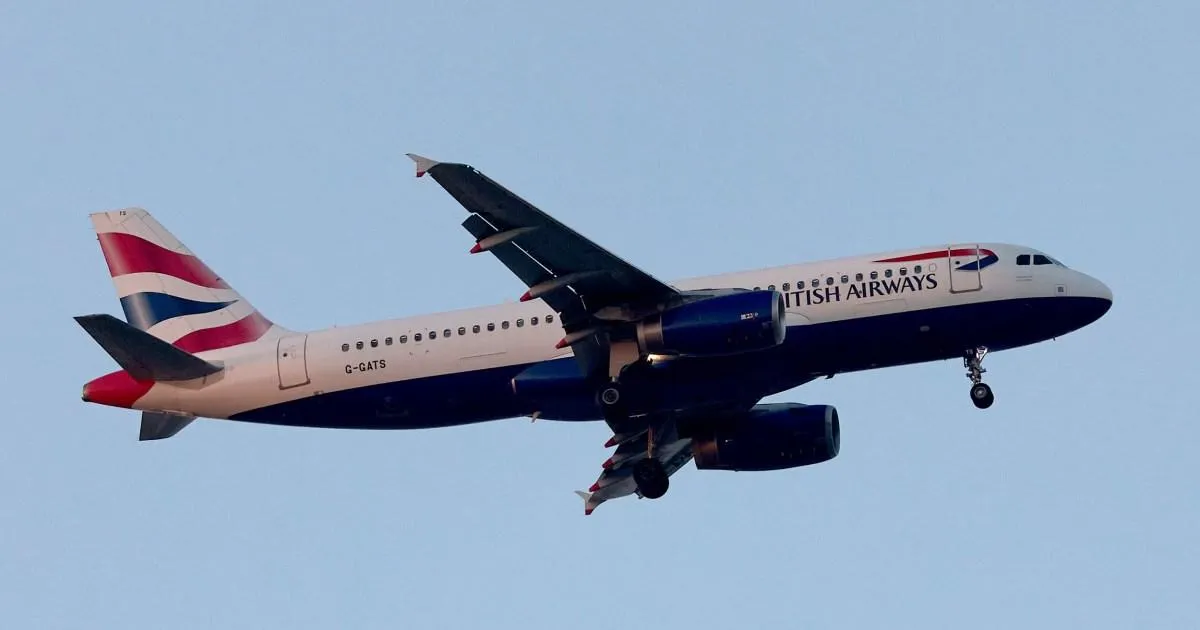
On July 6, a routine British Airways flight from Düsseldorf to Heathrow transformed into a harrowing experience that left passengers convinced they were seconds away from a catastrophe. Flight BA919, an Airbus A320, was navigating the final stages of its approach when a technical failure in its air data systems spiraled into a serious in-flight emergency. At just 4,000 feet over the busy landscape of Canary Wharf, the cockpit was hit with dual stall warnings, forcing the crew to transition from an urgent PAN PAN signal—which indicates a serious but manageable problem—to a full-blown “mayday” distress call as the aircraft’s stability hung in the balance.
The experience inside the cabin was nothing short of terrifying for those on board. Passenger Edward Killiwick, who was traveling with his partner, described a scene of rising panic as the plane performed a sudden, violent maneuver to correct its course. The aircraft, which had been attempting a landing, abruptly aborted and banked sharply, an action that felt to those in the seats like a desperate move to avoid an mid-air collision. For many, the lack of immediate information from the flight crew only heightened the sense of impending doom, as the silence from the cockpit left passengers to imagine the worst.
In the midst of the chaos, the humanity of the situation took center stage. Mr. Killiwick recounted the gut-wrenching moment he had to step in to comfort a fellow passenger who had become overwhelmed with fear, screaming, “I don’t want to die.” As the engines roared at full power and the plane bucked under the strain of the pilot’s recovery efforts, the shared terror in the cabin was palpable. For the travelers, the uncertainty of the holding pattern was perhaps the most unsettling part of the ordeal, as the lack of updates suggested that the pilots were in the midst of a struggle that far exceeded standard landing procedures.
The gravity of the incident has since come to light through investigations, suggesting this was far more than a typical technical glitch. Reports indicate that the situation was a “loss of control” event, allegedly complicated by human input. Sources have claimed that the captain was forced to physically intervene and override the first officer’s control inputs to correct the stall warnings—a rare and drastic measure that underscores the severity of the situation. Aviation insiders have described this as one of the most dangerous near-misses in the UK in recent years, with some experts noting that the plane was alarmingly close to a “hull loss,” an industry term for an aircraft destroyed beyond repair.
As the dust settles, the toll of the event is becoming clear both for the passengers and the flight crew. The captain, having navigated the aircraft to a safe landing despite the extreme pressure of the situation, is reportedly now on stress leave, highlighting the psychological intensity of the emergency. For the passengers, the aftermath was marked by a chilling, collective silence; upon landing at Heathrow, there was no celebratory chatter, only the quiet relief of people processing the fact that they had walked away from a flight that had pushed their vessel to the absolute edge of its performance limits.
The Air Accidents Investigation Branch (AAIB) is currently leading an inquiry into the incident, examining how the initial data failure cascaded into such a critical loss of control. While the Civil Aviation Authority remains tight-lipped during the ongoing review, British Airways has pledged its full cooperation. For the people who were on board that day, the investigation is a secondary concern to the memory of those final minutes over London—a stark reminder of how quickly a mundane journey home can turn into a battle for survival, and the profound, lingering impact of coming face-to-face with the possibility of the unthinkable.