


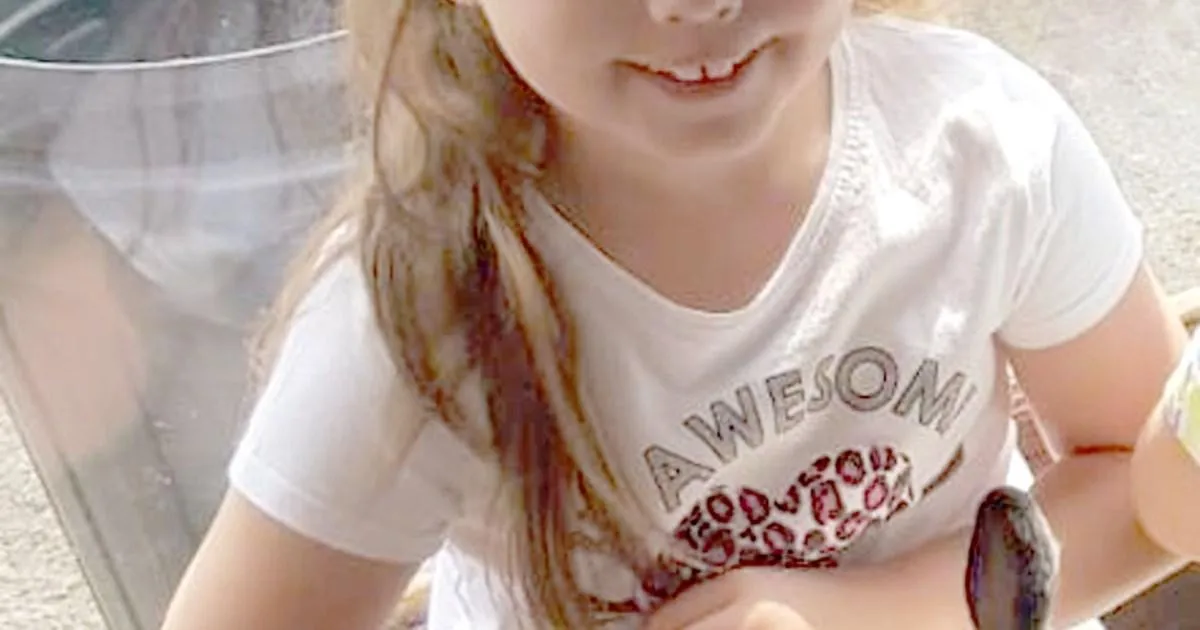
Four years ago today, Olivia Pratt-Korbel was shot and killed inside her family home in Knotty Ash, Liverpool. For her mother, Cheryl Korbel, the anniversary is not a milestone or a ceremony; it is simply another day in a life that has learned to carry absence everywhere. “I do not need an anniversary to mark the day for me,” Cheryl told Metro. “Her absence is felt in everything.” Olivia was nine years old, a small girl with a huge presence, a child who should have had her whole life in front of her. Instead, she became the innocent heart of a story too brutal to understand. A gunman, Thomas Cashman, had been lying in wait in Kingsheath Avenue, waiting to attack a drug dealer named Joseph Nee. Two shots were fired outside. Cheryl, reacting as any mother would, opened her front door to see what was happening. In that precise moment, Nee—already shot in the abdomen—barged inside. Cashman fired again. The bullet tore through Cheryl’s hand and struck Olivia in the chest. Olivia had been woken by the noise and had walked to the stairs. Her last words were a child’s cry of pure fear: “I’m scared mummy, I’m scared.” She died that evening at Alder Hey Children’s Hospital. No trial, no prison sentence, no apology could ever make sense of that night, because there is no sense in it. Olivia’s death was not a tragedy with a neat cause and effect; it was a grotesque accident of violence, a bullet that found the wrong person in the wrong place at the worst possible time. The city grieved, headlines were written, people marched and wept. But for Cheryl and her family, the real weight has been carried quietly, day after day, in the ordinary rooms that no longer have Olivia’s voice in them. Four years later, they still wake up and have to remember, again, that she is gone. Grief is not a chapter that closes; it is the whole book, rewritten a little every morning.
Yet in the middle of all that pain, Olivia remains a vivid, warm, even funny presence in the memories of those who loved her. Seven family members crowded around a laptop for an interview, and none of them was willing to miss a chance to talk about “their Liv.” The group agreed that Olivia was “the boss” and a “force of nature”—a child who did not wait for life to happen but made it happen. On the holidays she adored, she insisted on packing her own suitcase; once at the destination, she dragged her siblings and friends around the pool for games and makeovers. Her last holiday was to Haven in Wales, at Easter, only a few months before she was killed. She had strong opinions about what she loved: Matilda the Musical, the mermaid show H2O, Netflix, and Stranger Things. A family friend, Trish Cowhig, made everyone laugh when she said, “She spoke so much about Stranger Things I didn’t need to bother watching it in the end.” The laughter in that room was real, not forced. That is one of the strange mercies of grief: it can be shared, and sometimes it turns into joy. Olivia was not a photograph or a headline. She was a loud, stubborn, bright little girl who would not be ignored. She had her own plans, her own tastes, her own way of filling a room. She was a daughter, a sister, a friend, a tiny force of nature. The family does not describe her as a victim; they describe her as a person. And because they describe her that way, she remains alive in the only way love can keep someone alive: in story, in memory, in the exact details of who she was.
Anniversaries are strange for people who have lost a child. There is pressure to do something meaningful, but meaning cannot be manufactured. Gemma Hollingsworth, the mother of Olivia’s best friend, described how the family now approaches the day. “We like to see how we are feeling on the day. On the first anniversary we felt a lot of pressure to do something perfect,” she said. That pressure has faded. Now the family does something Olivia would have liked, often a walk. It can be anything, as long as it takes the day away from the manner of her death. That phrase—“the manner of her death”—feels deliberate and powerful. The family has chosen not to make her killer the centre of their memory. During an hour-long conversation, no one said Thomas Cashman’s name. Not once. The man who destroyed their lives is not given the dignity of a name in their private world. Their stories are not about bullets or hospital rooms. They are about a girl who packed a suitcase, bossed everyone around, and loved television shows about mermaids and monsters. The first anniversary taught them that they did not need a perfect tribute; they needed each other. A walk in the fresh air, with arms linked and memories flowing, is enough. It is a quiet rebellion: we are still a family, we are still together, and she is still ours. No one can tell them how to grieve, and no one can tell them when to stop. Some years they will want company; some years they will want stillness. The anniversary is one day, but Olivia is every day. The ritual is simply a way of saying, out loud, that she mattered and still matters. It is a human thing to do when the world has become unbearable.
At the centre of this long grief is a mother still wrestling with an impossible guilt. Cheryl blames herself for Olivia’s death. Her family tells her over and over—until they are “blue in the face”—that it is not her fault. She will not hear it. “What they say doesn’t make a difference to me,” she said. “If I had done something different rather than open the front door, she would still be here.” There is a terrible truth embedded in that sentence: love always believes it should have done more. A mother’s brain will loop back to the front door, to the noise outside, to the split-second decision that was not really a decision at all. Any mother would have opened that door. But Cheryl cannot find comfort in logic. Grief has convinced her that she could have saved Olivia, and no amount of reassurance can undo that conviction. The family’s home became unbearable after the shooting. Cheryl and her two other children had to move. It was especially painful for Chloe, Olivia’s sister, who had shared a bedroom with her. Chloe began to speak, and the tears came. “Adjusting to the silence in the bedroom was one of the hardest things I had to do.” That sentence speaks for itself. Imagine a room that used to hold two girls—their chatter, their arguments, their secrets, their music, their late-night giggles—and then imagine the same room with only one heart beating in it. The silence must have been enormous. The family moved just 10 minutes away because they could not leave the community that had become their support system. But you cannot outrun sorrow. It followed them, as it always does. They carry it in their hands, in their quiet moments, in the space beside them where Olivia should be. Still, they carry it together. That is the only way they can.
Community has become a lifeline. Olivia’s Auntie Margi remembers a moment in a park when she started talking to a Gypsy family. She told them what had happened to Olivia. They cried with her. They refused to leave her side for the rest of her outing. It is a small story, but it holds one of the most important truths about grief: when it is shared, it becomes bearable. There are no strangers in a grieving city. The Korbels have stayed in the same neighbourhood, 10 minutes from the home where their world collapsed, because they need the people who knew Olivia. They need the butcher, the bus driver, the neighbours who saw her growing up. They need to walk the same streets where she ran, because those streets still hold her footprints. In Liverpool, the story of Olivia Pratt-Korbel touched everyone. It became a reminder that gun violence is not just a statistic; it is a little girl with a suitcase and a Netflix account and a voice that never stopped talking. The family has learned to accept help in all its forms—meals, silence, prayers, tears, company. A child’s death is never a private matter. It ripples outward, touching people who never met her. That is what the Gypsy family in the park understood. They didn’t know Olivia. They didn’t know her favourite shows or her bossy little smile. But they knew grief. They cried with a stranger because grief speaks one language. And then they stayed. Sometimes the greatest comfort is simply staying. Four years later, that circle of support has not weakened. It has become part of the family’s daily rhythm. Every time someone says Olivia’s name, every time someone stops Cheryl in the street to say they remember, something warm lights up in the middle of the cold. It is not closure. It is love, continuing to do what love does.
What does four years mean? It means another four years of waking up without her. It means the family no longer expects closure, because closure is a word for people who were not asked to live with an impossible loss. It means the anniversary has become less about doing something perfect and more about doing something human. Perhaps this year they will go for a family walk. Perhaps they will sit in someone’s living room and tell the same stories they told the last time, and the time before that. Perhaps they will watch Stranger Things and wonder what Olivia would have shouted at the screen. Perhaps they will laugh at Trish’s jokes and cry at Chloe’s memories. All of it is allowed. Olivia Pratt-Korbel was not a headline. She was not a symbol. She was a nine-year-old with a stubborn chin and a determined spirit, a child who packed her own suitcase, who bossed her siblings, who loved mermaids and musicals and scary television. She was “the boss.” She was a “force of nature.” She was somebody’s Liv. Her mother says she doesn’t need an anniversary to mark the day because her absence is felt in everything. But her presence is felt too. It is felt in the sister who had to learn to sleep in a silent room. It is felt in the mother who still cannot forgive herself, and whose love remains ferocious. It is felt in the aunt who tells a stranger in a park about her niece and watches the stranger cry. It is felt in the friend’s mother who still considers the family part of her own. Four years ago today, a bullet took a child away, but it did not take her story. It did not take her name. It did not take her out of the hearts of the people who loved her. And that is why they keep going. Olivia is still the boss, even from a world away. She is still a force of nature. She is still loved. That is a fact no gunman can undo.