


Paragraph 1: The Arrival and the Sensory Overload
The morning sun beats down on the tarmac of west London, but the natural heat is nothing compared to the sheer incandescent energy that radiates from the streets. The Sunday preceding this day was a softer, gentler affair, dedicated to the laughter of children and the gentle sway of families. But on this Bank Holiday Monday, the city has shed its polite reserve and dived headfirst into something far more primal. This is Adults Day at Notting Hill Carnival, and an immense tide of hundreds of thousands of revellers has engulfed the neighbourhood, turning the unassuming postcodes of Notting Hill, Ladbroke Grove, and Westbourne Park into a swirling vortex of colour, rhythm, and unadulterated joy. The journey begins long before you reach the barrier; the Tube carriages are sardine-tins of anticipation, with patrons clutching cans of rum punch, carrying costume bags bursting at the seams with sequins and feathers, and already tapping their feet to the imaginary beats in their heads. As you exit the station, the air thickens with a layered symphony of sound—the deep, resonant bass of a dozen competing sound systems washes over you in rhythmic waves, punctuated by the metallic chime of steel pans and the piercing cry of whistles. The crowd moves as a single, living organism, a human ocean where bodies swim in a collective, euphoric state of being. Street vendors shout their wares, mixing the air with the scent of grilled jerk chicken, fried dumplings, and the sweet, intoxicating perfume of tropical cocktails. Every street corner is a stage, every balcony a VIP viewing box, and the pavements themselves seem to vibrate under the sheer weight of the assembled masses. This is not merely a large gathering; it is a seismic event, a temporary transformation of the urban landscape into a Caribbean paradise transplanted into the heart of Britain.
Paragraph 2: The Historical Memory and the Windrush Legacy
To walk these streets today is to walk through a living, breathing museum of British-Caribbean history, and crucially, this year marks the monumental 60th anniversary of this extraordinary festival. It is impossible to hear the music without acknowledging the ghost of the past that rides alongside the current celebration. The carnival’s genesis lies not in a desire for a party, but in a desperate need for healing and community. In the aftermath of the devastating race riots of 1958 in Notting Hill, and the persistent hostility faced by the Windrush generation who had been invited to rebuild Britain, a sense of isolation and fear permeated the Caribbean community. In 1959, a dynamic activist named Claudia Jones held a small, indoor caribbean carnival at St Pancras Town Hall, broadcast on television, as a way to unite the diaspora and showcase the beauty of their culture. That seed grew, eventually spilling out onto the streets in 1966, and now, six decades later, it has erupted into Europe’s largest street festival. This is a profound testament to resilience. For the grandparents and great-grandparents who arrived on British shores with little more than hope and a suitcase, facing discrimination in housing and employment, this carnival was a declaration: we are here, we are proud, and we will not be silenced. They used the steel pan—an instrument forged from discarded oil drums—to create transcendent melodies, turning the rubbish of industrial society into a tool for joy and revolution. Today, as those elders sit on garden chairs, watching their great-grandchildren dance in the same streets they once marched to reclaim, the emotional continuity is palpable. The carnival remains a defiant surface against the erasure of their contributions, a vibrant archive of memory, and a powerful reminder that joy can be the most potent form of political resistance.
Paragraph 3: The Visual Spectacle and the Anatomy of the Parade
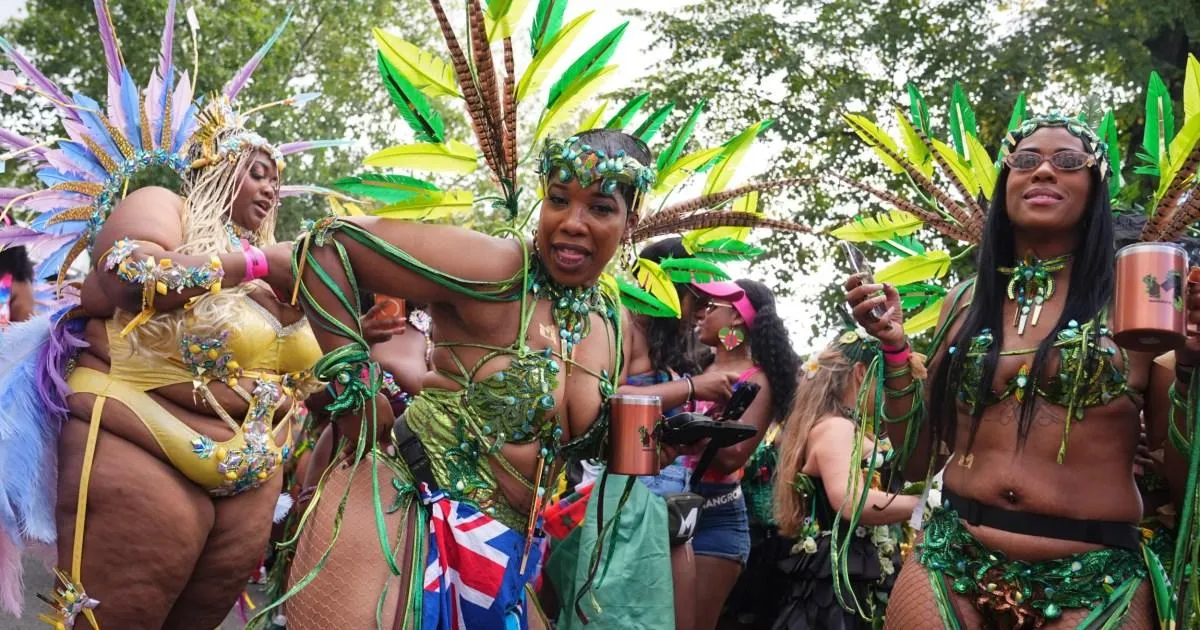
To say that the carnival is visually spectacular would be an exercise in gross understatement; it is a dazzling, hallucinatory fever dream of craftsmanship and creativity. The mas bands—the groups of costumed dancers who parade in familial or friendship groups—are the heart of this spectacle. The costumes, meticulously hand-stitched over months in local mas camps, are extraordinary creations of art. Bright sequins, iridescent and mirrored, catch the high sun and scatter it back into the eyes of the crowd like a thousand tiny fireworks. Towering feather headdresses, coloured in iridescent magenta, electric blue, and sunburst yellow, sway precariously with the rhythmic gyration of the dancers, resembling tropical birds in a mating dance. Women and men alike are strapped into these towering, heavy creations, displaying incredible endurance as they dance for hours, the sweat on their skin gleaming as brightly as their garments. The sound is a character in itself; the giant sound systems, legends in their own right—powerhouses like Aba Shanti-I or Channel One—are stacked on trailers, transforming the streets into open-air nightclubs. The DJs are maestros, orchestrating the frenzy by dropping iconic soca or reggae tracks that elicit deafening roars of recognition. The dancing itself is a language of celebration—the winding of hips, the energetic kicking, the synchronized jumping—a physical expression of freedom that is deeply infectious. As the day wears on, the atmosphere on this Adults Day becomes decisively more intense. The children have gone, and the tempo of the party sharpens into a more hedonistic, raw edge. There is a palpable sense of letting go, a communal release of inhibitions that is both thrilling and liberating.
Paragraph 4: The Delicate Dance of Freedom and Order
Given the sheer magnitude of the event—with official attendance often exceeding one million people across the two days—the logistics of maintaining peace and safety are staggering. The Metropolitan Police have reported that the event has thus far passed off “overwhelmingly peacefully,” a statement that carries far more weight when one considers the context. At any gathering of this size, containing as many as statistically inevitable incidents, the reported figure of 169 arrests is a testament to the extraordinary harmony of the crowd. To put it into perspective, this represents a mere drop in a multi-million ocean. The arrests, predominantly for minor drug offences, pickpocketing, and low-level disorder, statistically prove that the carnival is far safer than many a typical night out in the city’s clubbing districts. The peace, however, is not solely the result of police presence. It is a triumph of communal self-regulation. The revellers themselves act as stewards, looking out for one another, sharing water, and de-escalating tensions before they even begin. The police, mounted on horseback and walking among the crowds, have cultivated a unique relationship of mutual respect with the carnival-goers, often seen laughing and dancing alongside the floats, understanding that their role is primarily to facilitate the joy, not to suppress it. Medics pass through the crowds, handing out free water to those struggling with the heat. This intricate, silent social contract—freedom of expression balanced with collective responsibility—is the true secret to the carnival’s longevity. It smashes the archaic stereotype that large gatherings of marginalized communities inevitably descend into chaos, proving instead that a million people can celebrate their heritage with spectacular, peaceful opulence.
Paragraph 5: The Culinary Ecosystem and the Soul of a Community
Beyond the pulse of the music and the dazzling costumes, the carnival is a vibrant economic and cultural ecosystem that breathes life into the heart of the city. The aroma of the food stalls is an assault on the senses in the best way—a culinary tour of the islands. The grill smoke from jerk chicken, marinated in fiery Scotch bonnet peppers and allspice, curls into the air, while the sweet, caramelized scent of fried plantains and the rich, sticky promise of rum cake beckon to the hungry reveller. For the thousands of independent vendors, DJs, costume designers, and artists, this weekend is more than just a celebration; it is an economic lifeline, often providing a significant chunk of their annual income. It is a vital showcase for Black British talent, offering a platform for fashion, art, and entrepreneurship that might otherwise be overlooked by the mainstream. The lyrics reverberating from the sound systems are often laced with sharp political commentary, dissecting government policies, historical grievances, and social inequalities, delivered with a smile and a beat that makes the medicine of truth easy to swallow. In recent years, there has been a beautiful resurgence of interest among the Gen Z and Millennial descendants of the Windrush generation, who have rediscovered this carnival not just as a fun day out, but as a vital reclaiming of their ancestral identity. For the Caribbean diaspora in London, it remains the ultimate social mixer—a place to run into old friends, make new ones, perhaps find a partner, and bask in the glorious feeling of being part of a massive, beautiful family that stretches across generations.
Paragraph 6: The Twilight, The Legacy, and The Promise of Tomorrow
As the sun begins its slow descent, casting long, golden shadows across the packed streets, the energy of the carnival does not diminish; it merely transmutes. The neon lights on the floats flicker to life, casting an ethereal, surreal glow over the dancing throngs. The heat of the day gives way to a cooler, more intimate dusk, and the party intensifies in the waning light. For the revellers, there is a bittersweet awareness creeping in—the 60th Notting Hill Carnival is drawing to a close. Empty cans and discarded confetti litter the pavement, testament to the day’s exuberance, but there is no sadness in the air, only a deep, stoic satisfaction. The enormous clean-up crews begin their monumental task, sweeping up the remnants of the celebration, but the spirit of the carnival clings to the walls and the memory of the city. As the last floats roll past, weary feet begin their slow, reluctant journey home, but the rhythm continues to pulse in the veins. The carnival has proven, once again, that it is the beating heart of multicultural Britain, a beacon that shines brightly against the shadows of gentrification and homogenization. It is a living, breathing declaration that diversity is not a weakness to be tolerated, but a spectacular strength to be celebrated loudly. Those leaving the gates carry with them more than just souvenirs and ringing ears; they carry the resilience of a history forged in adversity, the joy of a culture that refuses to be assimilated, and the unifying power of rhythm. The promise is already made for next year. The 61st will come, and the spirit of soca and calypso will once again conquer the grey streets of London, proving that joy, community, and culture are the most enduring forces of all.