


Here is the story of Karmen, a mother who desperately needed an escape from her real-world troubles but found her family holiday turning into a fresh nightmare. What should have been a week of healing by the sea became a battle for basic hygiene and a test of corporate accountability.
—
For Karmen, the decision to book the family holiday was born out of a deep need for respite. The year leading up to it had been a relentless emotional gauntlet: her beloved father had passed away, leaving a void that felt impossible to fill. To compound the grief, both her parents had received cancer diagnoses within the space of a single year, making every day feel precarious and precious. The upcoming anniversary of her dad’s death loomed on the horizon like an emotional storm cloud, and Karmen knew she couldn’t face it at home, surrounded by memories and silence. She envisioned the holiday as a sanctuary, a place where the salty sea air might clear her head and the laughter of her children might push back against the grief. She chose Haven’s Seashore Holiday Park in Yarmouth, believing the familiar family brand signified reliability and comfort. The price tag of £1,837 felt like a significant investment for seven nights, but she rationalized it as money spent on healing. She was desperate for a distraction, a chance to focus solely on her young children and her partner, Mark, hoping to bottle some joy amidst the adversity. The plan was perfect in her mind: a clean, comfortable caravan, a week of fun activities, and the simple pleasure of watching her kids be kids. She could not have anticipated that the very environment meant to be her refuge would instead become a source of profound stress and disgust, forcing her to adopt the roles of a peacekeeper, a clean-up crew, and eventually, a relentless advocate for her family’s wellbeing.
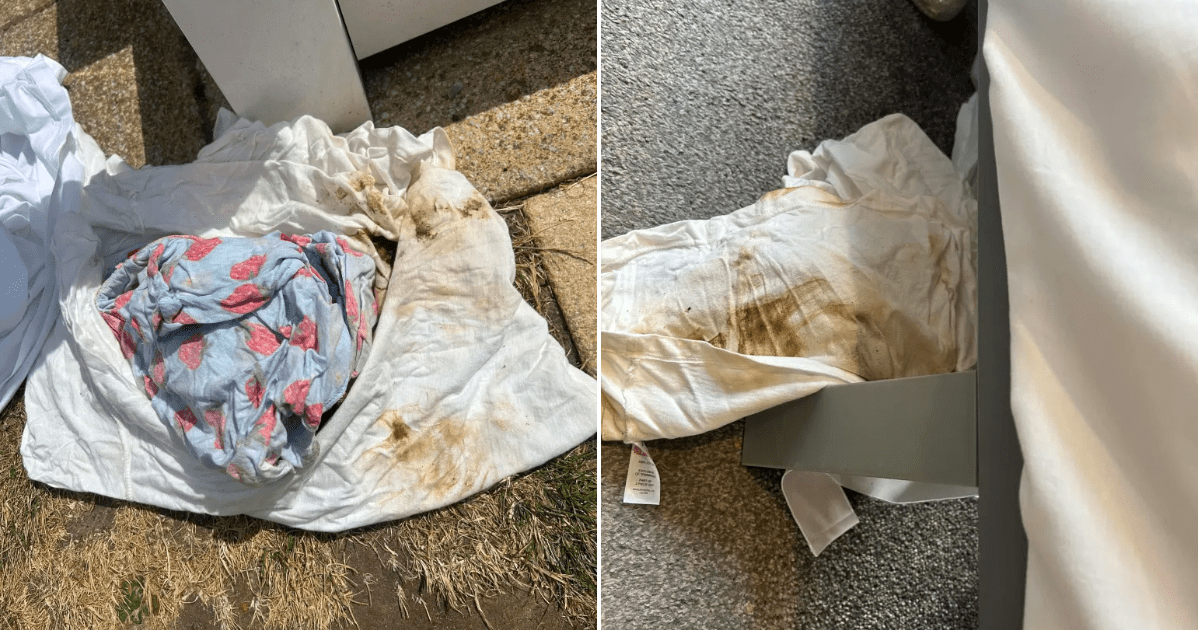
Upon arriving at the park, the exhaustion of the journey and the emotional weight she carried made her eager to simply step into their temporary home and unpack. But her heart sank the moment the caravan door swung open. The air inside was thick and stale, carrying a pungent, unmistakable odor of dampness and neglect. As she walked further in, she noticed the wear and tear wasn’t just cosmetic; it looked and felt dirty. However, the true horror was yet to be uncovered. Her three-year-old daughter, with the unerring curiosity of a toddler, bent down to peer under one of the beds. She emerged triumphantly, proudly pulling out a haul of debris: a pile of dirty sheets and what appeared to be soiled children’s clothing, stained with grim marks. Karmen, a woman who had worked in hospitals for years, recognized the smell and the stains immediately. It wasn’t just a missed cleaning; it was a biohazard. She felt a knot tighten in her stomach, a mix of rage at the negligence and nausea at the thought of what else might be lurking. For a mother who had been dealing with sickness in her own family, finding rubbish that looked like it had come from a sickbed was an agonizing twist of fate. It was the first, most visceral blow to her hopes for the holiday, forcing her to confront the fact that the peace she had purchased was an illusion, and that she would have to fight for even a modicum of cleanliness.
The discovery under the bed was just the tip of the iceberg. As Karmen and Mark began to inspect their surroundings with a new, suspicious eye, they found a catalog of hazards and faults. A window frame was broken, with exposed wires hanging precariously from the wall, a serious risk with two young children in the vicinity. The carpet was peeling up from the floor, creating a tripping hazard and exposing more dirt beneath. It was clear that the caravan had not been cleaned to any reasonable standard, let alone a family-friendly one. The impact on their son, who is on the autistic spectrum, was immediate and severe. He has heightened sensory sensitivities, and the putrid smell of the soiled fabrics and the general state of decay in the caravan was overwhelming for him. He became visibly distressed, unable to relax or settle in what was supposed to be his home away from home. The holiday’s purpose—to give him a joyful experience—was being cruelly undermined. While her partner stayed with their son, Karmen, determined to make things right, scooped up the disgusting items into a plastic bag to remove them from the living area. She then marched over to the reception desk, feeling a mix of anger and embarrassment, showing them photos of the filth she had found. The initial response was apologetic; a man at the desk was said to be “really embarrassed” by the condition. They sent a cleaning crew and a maintenance worker back to the caravan, hoping to rectify the issues, but the ordeal was far from over.
The temporary fix did little to restore Karmen’s confidence. The deep, pervasive smell of damp and filth remained stubbornly etched into the very fabric of the caravan, mocking the surface-level cleaning efforts. When they returned to the caravan after the cleaners had left, the stench was still there, a constant reminder of the horror they had discovered. The mattress, which had been one of the main points of concern, was never replaced, and the stain remained. Karmen knew instantly that the caravan was still uninhabitable for her family, especially her son. So, they made the difficult decision to abandon the unit, spending the night in the caravan of friends who had also traveled with them. The management, belatedly realizing the severity of the situation, offered to move the family, but by this point, the damage was done. The trust was broken. Karmen’s email to the guest experience team outlined the entire ordeal, asking for a full refund not just as a financial recompense, but as an acknowledgment of the stress, the ruined vacation time, and the emotional fallout they had endured. Haven eventually responded with an offer of a £100 partial refund as a “goodwill gesture,” a sum that felt insulting to a woman who had paid nearly two thousand pounds for what she described as a “nightmare” rather than a holiday.
Karmen was incandescent with anger at the paltry offer, which represented just a fraction of what she had paid. To her, £100 was a token amount that completely failed to account for the emotional distress and the fact that their holiday had effectively been ruined. She felt her son had been deprived of the experience they had promised him. She demanded that Haven go further and cover the costs of the family holiday, but they refused, stating their official line of regret while maintaining their position on the partial refund. For Karmen, this was a stark lesson in corporate accountability. “It was just one thing after the other,” she said, her voice heavy with frustration. She recounted how she had spent a precious day of what was supposed to be a relaxing break on the phone complaining, arguing for basic rights and for her family’s safety. The financial burden was significant, and to have to fight for even a fraction of it back was exhausting. She argued that the company’s quality checks should have been far more robust, especially given the clientele. Her determination to get a full refund was less about the money itself and more about validation—a formal acknowledgment that the accommodation was unacceptable and that the company bore the responsibility for the failed holiday.
Karmen’s promise to “never” book with Haven again is born from this profound sense of betrayal. She had a previous, positive experience with them, which is precisely why she chose them for this trip, making the fall from grace all the more bitter. The holiday was meant to be a bright spot in a dark year, a way to honor her late father by focusing on the living. Instead, it added yet another layer of stress to an already unbearable situation. “I just needed that break so badly,” she explained, reflecting on the tragedy that prompted the trip. The experience has left her feeling cynical about holiday companies and their promises, and she has decided that if others are considering a Haven holiday, they should think twice. Her story highlights a troubling disconnect between the glossy marketing of family holidays and the reality that can be found behind the doors of a neglected accommodation, especially for families dealing with special needs and health crises. Ultimately, Karmen feels that a simple holiday turned into a public health hazard, and her only desire now is to see the company acknowledge the severity of what happened and ideally, to recover her money so she can attempt to give her children a better memory in the future.