Michael Mullins was the kind of headteacher who made a school feel like a family. Beloved by colleagues, parents, and the children who passed through Stretford Grammar School, he had spent his working life shaping young minds and leading with quiet kindness. On April 20, after another ordinary day at school, he set off on his bicycle for the familiar ride home to Northwich, Cheshire, probably looking forward to an evening with his family. He never made it. At the junction of Dunham Road and Warburton Lane, he was struck by a Volvo XC90. Prosecutors say the driver, Simon Richardson, did not stop, but instead continued driving with Michael trapped underneath the vehicle, dragging him for more than a mile through the streets before his broken body came to rest on a grass verge on Wet Gate Lane in Lymm. Now, in Manchester’s Minshull Street Crown Court, Richardson, 35, stands accused of murder. He denies the charge, as well as alternative offences of manslaughter and dangerous driving. But the court has heard a harrowing account of what happened, and of the ordinary people whose instincts and courage led them to a dying man on a quiet roadside.
The first person to realise something terrible had happened was Andrew Besant-Roberts, a motorcyclist who was riding through the area that evening. He came across a damaged and bent bicycle lying in the road, surrounded by confused drivers who were peering around, trying to find the rider. There was no one there. Then he noticed something strange on the tarmac, a long trail that stretched ahead of him, winding along the road like a dark ribbon. At first it looked suspicious, and then, as he crossed a white line and saw the colour clearly, he understood with a jolt of horror that it was blood. Instead of turning away, he followed the trail on his Kawasaki motorbike, mile after mile, his heart growing heavier with every yard. The trail led him to a grass verge at the side of Wet Gate Lane, where Michael Mullins lay critically injured, unconscious and barely alive. Besant-Roberts immediately called 999 and began performing CPR, desperately trying to keep the headteacher breathing until paramedics arrived. In court, he described the terrible rhythm of those moments: “His breathing became worse. There were long pauses, then it stopped.” He kept going, working against the silence, refusing to let go, even as the life slipped away from the man in front of him. His evidence painted a picture not just of a crime, but of a human tragedy witnessed by a stranger who tried his best to change its ending.
Others had seen glimpses of the horror unfolding that evening. Katie Woodward, parked at the Green Dragon pub on Mill Lane, noticed something underneath a vehicle travelling at speed. Her first thought was that it was a body, but she convinced herself that was ridiculous, because surely a body could not be under a car and the driver could not keep going. She told herself it must have been an animal, some unfortunate creature caught beneath the wheels, and she watched as the vehicle drove along the road leaving a thick, dark trail coming from the passenger side. But something nagged at her, and she decided to follow the trail herself. It stopped at the place where Michael Mullins lay, already being tended to by Andrew Besant-Roberts. Another witness, dog walker Peter Connell, saw the Volvo on Mill Lane and was struck by the unusual sound it made, something flapping around underneath, like cardboard or plastic sheeting. As the car passed, he looked carefully and could see an object beneath it, all different colours, looking like clothing. It was only later that he understood what he had seen. Off-duty Police Constable Claire Bailey also happened to be passing the scene of the original crash at 6.25pm. She used her motorbike to block the road and called 999, telling the operator that the cyclist was potentially under the vehicle because he was nowhere to be found at the crash site. Each of these witnesses added a new layer to the story: the confusion, the disbelief, the dawning realisation that something monstrous had taken place on an ordinary road in broad daylight.
The prosecution’s case against Richardson is built on the claim that he knew exactly what was happening and chose to continue. According to the evidence heard by the jury, at one point Richardson stopped the car, got out, and made what prosecutors described as “concerted physical efforts” to try to pull Michael Mullins out from underneath the vehicle. If that was an attempt to free him, it failed. Richardson then got back behind the wheel and turned sharply, in what the prosecution says was a deliberate move to remove Michael from under the car. He carried on driving, veering sharply and deliberately, even mounting a grass verge. The court heard that for more than a mile, Michael Mullins was dragged under the wheels of the Volvo, his body battered and broken as the vehicle twisted and turned along the roads of Lymm. Richardson, prosecutors allege, knew that Michael was trapped beneath his car, injured but alive, and that his actions would either kill him or cause him the gravest possible injuries. Yet he continued to drive anyway. The image is almost impossible to absorb: a respected educator, a husband and father, clinging to life underneath a speeding car while the man at the wheel tried to shake him loose. Richardson, of no fixed address but formerly of Epsom Avenue in Sale, insists he is not guilty of murder, manslaughter, or dangerous driving. His defence is expected to challenge the prosecution’s version of events, but the evidence already heard has painted a deeply disturbing picture.
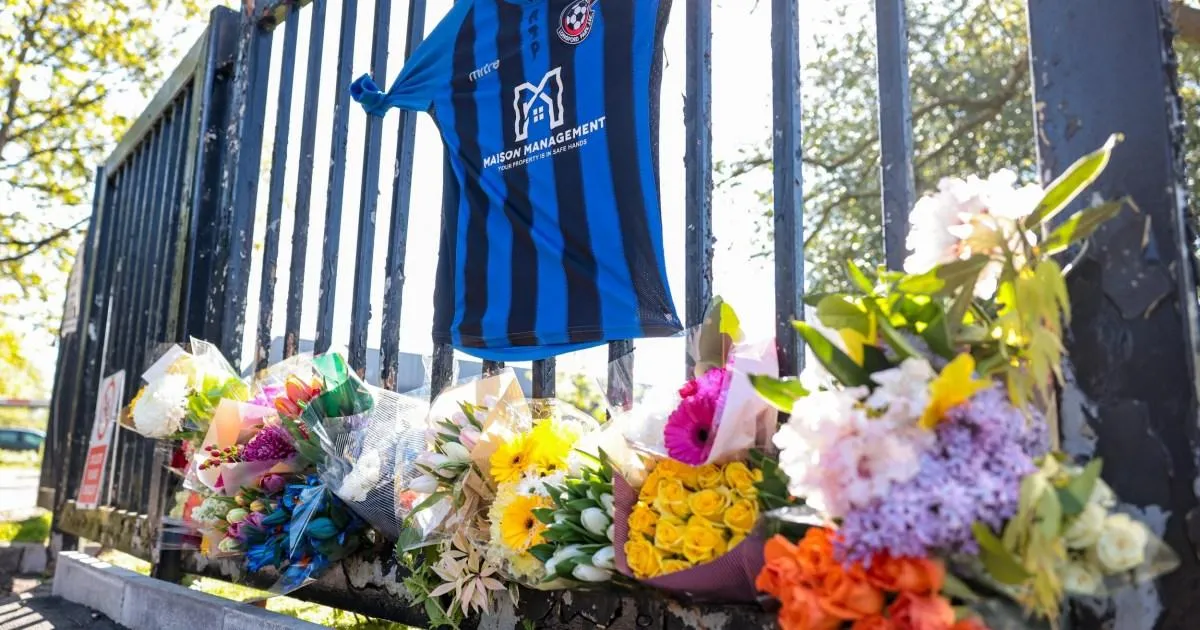
Beneath the legal arguments and the forensic details, there is a human story that deserves to be remembered. Michael Mullins was not simply a victim or a name in a court report. He was a man who dedicated his life to education, who walked through the gates of Stretford Grammar School every day with a sense of purpose, who was loved by the children he taught and the staff who worked alongside him. He was someone’s husband, someone’s father, someone’s friend. On that April evening, he was doing nothing more than trying to get home after a day of work, perhaps thinking about dinner, about his family, about the ordinary comforts of home. Instead, he was taken from them in a way that defies understanding. For his loved ones, the trial is an agonising replay of the last moments of his life, told through witness statements and police evidence, each detail another wound. For the wider community, there is shock that such a man, so respected and so devoted to others, could have ended up dying alone by the side of a road, in a place where he had never intended to be, his plans and future erased in a single moment of violence. The grief is not just personal; it is communal, because schools are built on relationships, and Michael Mullins was at the heart of that architecture of trust and care.
As the trial continues, the jury will have to decide what exactly happened in those terrible minutes, whether Richardson acted with murderous intent or whether a different verdict is more appropriate. The charges against him, murder, manslaughter, and dangerous driving, represent the range of possibilities, from the most serious to the least, but none of them can bring Michael back. His family are left to sit in court, listening to the details of his death, waiting for a verdict that will never restore what they have lost. In the meantime, the memory of Michael Mullins endures: in the faces of the pupils who looked up to him, in the staff room where he once led with warmth, in the homes of those who loved him. A motorcyclist who followed a trail of blood, a woman who thought she had imagined the impossible, a dog walker who heard a sound he could not explain, and an off-duty police officer who acted with instinctive professionalism, all of them came together in the chaos of that evening to bear witness. They could not save him, but they made sure he was not entirely alone. Now it is for the court to deliver justice, and for the rest of us to hold onto the truth that Michael Mullins was a man of worth, a cherished life, stolen far too soon.