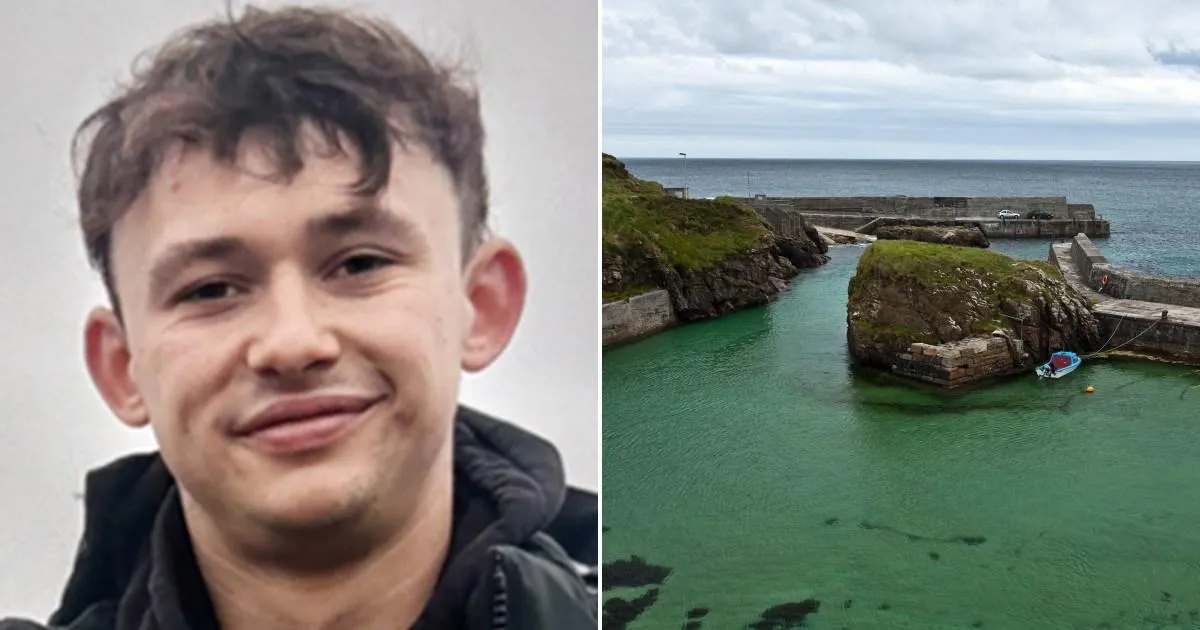
On a windswept morning off the north coast of the Isle of Lewis, the sea gave back one of its own, but only one. The body of Douglas Craigie, a 49-year-old fisherman from the island, was recovered from the water at around 2.45am on Wednesday, bringing a heart-stopping moment of confirmation to a community that had spent the night hoping against hope. But the tragedy is far from over. His crewmates, Norman Murray, 40, and Murdo Morrison, just 23, remain missing, and the fishing boat they were all aboard, the Kilda, has still not been found. The vessel vanished on Tuesday night somewhere near the Port of Ness, a rugged and exposed stretch of coastline on the northern tip of Lewis, part of the Outer Hebrides. Police Scotland have confirmed that all three men are local to the island, which means their names are not just entries on a missing persons report, but familiar faces in a small, close-knit community where everyone knows everyone, and where the sea is both a livelihood and a lifelong companion. For the families left behind, the waiting is now a slow, agonizing spiral of fear and grief. For the island itself, the loss cuts deep. In places like Lewis, fishing is not just a job; it is a way of life passed down through generations, and the men who work the waters around the Hebrides know better than most how quickly the ocean can turn from provider to predator. The discovery of Douglas’s body has only sharpened the pain, because it proves that the worst is possible, even while the search for Norman and Murdo continues with desperate urgency.
The timeline of the disappearance reveals how suddenly tragedy unfolded. The Kilda is understood to have left the Brevaig area on the west side of Lewis at about 7.30am on Tuesday, heading to the Port of Ness area to work. For a fishing crew, a long day at sea is ordinary, and no one would have raised the alarm simply because the boat was late. But as the daylight faded and the boat failed to return, worry began to creep in. The Royal National Lifeboat Institution launched its all-weather Lochinver lifeboat at 9.42pm on Tuesday, responding to the growing concern that something had gone seriously wrong. It was not until 11.35pm that Police Scotland were formally notified of the boat’s disappearance, and from that moment on, the night became a blur of sirens, searchlights, and silent prayers. The recovery of Douglas Craigie’s body in the early hours of Wednesday came as a devastating blow, but it also meant that the search for the other two men was no longer just a routine rescue operation; it was a recovery mission with an ever-narrowing window of hope. For the families of Norman and Murdo, every hour that passed without news must have felt like an eternity. They were not just waiting for information; they were waiting to learn whether their loved ones were still alive, still fighting, still out there in the cold, dark water. The sea, which had been their workplace and their source of pride, had become a vast, indifferent mystery.
The scale of the search effort has been immense, and it reflects both the seriousness of the situation and the determination of those involved to bring the missing men home. HM Coastguard said that an aircraft, two helicopters, six rescue teams, and a local vessel were all involved in the search. These are not just numbers; they represent real people putting themselves in harm’s way, scanning the waves from above and from the surface, knowing that the conditions are brutal and that every moment counts. The weather has been a relentless enemy, with strong gusts of wind and heavy rain battering the coast. Chief Inspector Ross McCartney, the local area commander for Police Scotland in the Western Isles, spoke movingly about the impact of the tragedy and the need for caution. He said that the thoughts of everyone were with all those affected, and that the families of all three men were being provided with specialist support. But he also issued a plea to the community, urging people not to carry out their own searches in dangerous areas. This is a difficult message for a community that wants to help, especially one so connected to the sea and to the missing men. But the warning is necessary. In a storm, even the strongest swimmer and the most experienced sailor can be overcome. The police presence in the Port of Ness area remains, and officers are asking anyone with information or concerns to speak to them. The search is not over, and the hope, however fragile, has not been extinguished.
The human cost of this disaster is written in the ages and lives of the three men. Douglas Craigie was 49, old enough to have spent decades at sea, to have weathered countless storms, and to have built a life and a family around the rhythms of the tide. Norman Murray, at 40, was in the prime of a fisherman’s career, strong and seasoned, someone who knew the waters around Lewis as well as he knew his own name. Murdo Morrison was only 23, a young man with his whole future ahead of him, perhaps following in the footsteps of his father or grandfather, eager to make his own way on the water. These are not just statistics; they are sons, partners, fathers, brothers, and friends. The grief that is spreading through the island is not a vague, collective sorrow. It is personal and specific. It is the empty chair at the dinner table, the unanswered phone call, the bed that was not slept in. For the families of Norman and Murdo, there is still the torment of not knowing. They are suspended between hope and despair, clinging to the possibility that a miracle might still happen, while all the evidence and all the experience of the sea tell them to prepare for the worst. For Douglas’s family, there is the brutal finality of loss, but even that is complicated by the knowledge that two other families are still waiting, still searching, still praying.
The official responses to the tragedy have been full of grief and solidarity. Councillor Kenneth Macleod, the convenor of Comhairle nan Eilean Siar, described it as a very dark day for the communities affected, and said that no one could even begin to comprehend what the families of the three fishermen were going through. His words are a reminder that in the Outer Hebrides, a tragedy like this does not happen to just one household; it happens to the whole community. The islands are scattered and small, but they are bound together by a shared history and a shared dependence on the sea. When a boat goes missing, everyone feels the chill. Councillor Macleod also expressed gratitude to the search teams working in very challenging weather conditions, and that gratitude is real and heartfelt. These are people who left their own homes and families in the middle of the night to go out into the storm, not because they were paid to do so, but because they could not imagine doing anything else. First Minister John Swinney also posted about the situation, saying that it was deeply distressing news and that his heart went out to the families and communities on the Isle of Lewis. The fact that the leader of Scotland felt moved to respond personally reflects the depth of feeling that this tragedy has stirred, not just on the island, but across the entire nation. In a country where fishing has always been a vital and dangerous industry, the loss of a crew is a reminder of the price that is sometimes paid for the food that ends up on our plates.
As the search continues, the community of the Isle of Lewis is left to hold its breath. There is nothing quite like the bond between people who live and work on the sea, and there is nothing quite like the silence that falls over a harbour when a boat does not come home. The names of Douglas Craigie, Norman Murray, and Murdo Morrison will not be forgotten, and the Kilda, wherever it lies, will remain a part of the island’s story. In the days and weeks ahead, there will be vigils, and there will be questions. There will be anger at the sea, and there will be acceptance of its power. There will be stories told of good days and hard days, of big catches and near misses, of laughter in the wheelhouse and quiet moments on deck. And through it all, the families will have to find a way to live with the loss, or with the uncertainty, which can sometimes be even harder. But they will not be alone. The community will wrap around them, the way it always does, with food and silence and presence, with prayers spoken in Gaelic and English, with the simple understanding that this could have happened to any of them. The sea is unforgiving, but the people who live by it are not. They will search, they will wait, and they will remember. And in that memory, the three men who set out on the Kilda on that Tuesday morning will remain, not as victims, but as fishermen, doing what they loved, in the place they called home, under the wide and restless sky of the Outer Hebrides.