



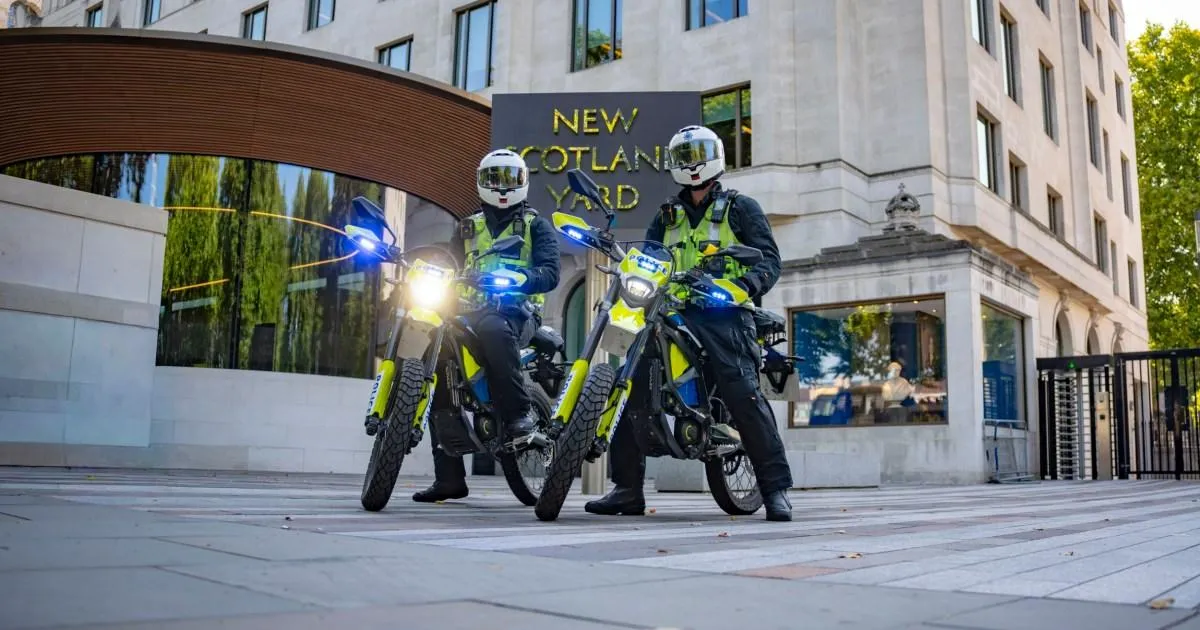
In the relentless, chaotic ballet of central London, where traffic often grinds to a standstill and the streets pulse with the energy of millions, a new kind of peacekeeper has emerged. The fight against a pervasive urban crime wave has found an unexpected ally, not in the form of heavier armor or more sophisticated surveillance, but in the sleek, silent, and incredibly agile silhouette of a high-powered electric bike. Scenes of thieves fleeing on mopeds, weaving effortlessly through gridlocked traffic and vanishing into the warren of back alleys, are becoming a thing of the past. This is the story of how Scotland Yard, in a bid to reclaim the streets from brazen phone snatchers, has deployed a fleet of specialist e-bikes that are rewriting the rules of urban pursuit and delivering a resounding victory in the battle for public safety.
The weapon of choice is the Sur-Ron, an electric bike that defies conventional categorization. It may look like a bicycle, but it has the heart of a beast, capable of reaching speeds of up to 50 miles per hour. This speed, however, is only part of its transformative power. The Sur-Ron’s true genius lies in its remarkable versatility and its ability to navigate a landscape that is entirely inaccessible to standard police vehicles. These are not just motorcycles with pedals; they are surgical instruments designed for the unique geography of a dense metropolis. In the past, a fleeing criminal on a motorbike could escape by darting into narrow alleyways, shooting down pedestrian-only walkways, or taking shortcuts through sprawling housing estates. For an officer in a patrol car, these escape routes were an impenetrable barrier, forcing an end to the chase and allowing the offender to melt into the shadows. The Sur-Ron, however, changes that entire dynamic. It is lightweight, allowing it to be maneuvered with incredible dexterity, and is steered by a highly trained unit of riders who know every shortcut and sliproad in the city. These riders don’t just follow; they anticipate, using the bikes’ agility to cut through congestion, carve around obstacles, and even tackle staircases, creating an unbreachable perimeter around their quarry.
The results of this strategic investment have been nothing short of spectacular. The Metropolitan Police have credited the expansion of their e-bike unit from a mere five bikes to a formidable fleet of 25 with a dramatic reduction in the crime that has been plaguing the West End and other busy districts. The numbers tell a powerful story of success: an estimated 13,000 fewer phone thefts across London in the last year. This is not just a statistic; it represents thousands of individuals who were spared the violation, anger, and financial loss of having their personal device stolen. The unit operates by conducting continuous, proactive patrols, circling the busiest areas frequented by tourists and commuters, acting as both a visible deterrent and a rapid-response tool. Their mere presence disrupts the calculus of would-be thieves, who are now acutely aware that the days of a guaranteed getaway are over. They provide a highly visible symbol of law enforcement’s adaptability, demonstrating that the police are not just reacting to crime but are actively, intelligently, and successfully staying one step ahead of the criminals.
The aggressive expansion of this initiative also signifies a deeper, more strategic shift in how London’s police force is tackling the systemic issues that fuel street-level crime. The new e-bikes were not purchased with taxpayer funds alone; they were paid for, in part, by the profits seized from the very criminals they are being used to catch. This is a powerful tautology of justice, effectively forcing crime to fund its own demise. The Metropolitan Police have also been intensifying their efforts to remove dangerous, un-roadworthy vehicles from the streets. So far this year alone, officers have seized more than 2,500 illegal e-bikes and e-scooters. Many of these are not the low-powered, legally compliant models sold in high-street retailers. Instead, they are often highly dangerous, illegally modified machines, fitted with high-powered batteries and motors that can propel them at speeds exceeding 70 miles per hour, far beyond what is safe or legal. These vehicles are effectively unregistered, uninsured, and untaxed electric motorbikes, placing both their riders and the public at enormous risk. The crackdown, supported by the Home Office, sends a clear message that the use of these illegal machines, whether for crime or for uninspected commercial use, will not be tolerated.
The human element in this technological solution is what truly brings the initiative to life. Deputy Assistant Commissioner Louise Puddefoot has been vocal about the transformative impact of the bikes, describing them as “another powerful tool to stay one step ahead of criminals.” The abilities of the fleet have been proven in real-world scenarios within weeks of their deployment. In one recent incident, a suspect attempted to evade arrest by speeding into a housing estate, a classic escape tactic designed to shake off a patrol car. However, he was quickly intercepted by an officer on a Sur-Ron who had followed him into the estate, resulting in the discovery of class A drugs. This anecdote illustrates the ability of the unit to neutralize criminals who are confident in their ability to escape, delivering a tangible shock to the system of organized theft. These are not just pursuits; they are a demonstration of superior intelligence, training, and equipment. The success is systemic; alongside the seizure of illegal vehicles and the introduction of the e-bikes, overall neighbourhood crime has fallen by 14 percent over the past year. This broader trend confirms that the e-bike unit is not a standalone gimmick but an integral part of a comprehensive strategy that is making London a safer city.
Beyond the headline statistics, the success of the Met’s e-bike unit highlights the profound change in the criminal landscape, where the very tools of modern mobility are also being used as instruments of crime. The battle against phone snatchers has become a high-tech arms race, with police forced to adapt to the new tactics of criminals who are equally agile and technologically aware. The illegal market is fueled by cheap conversion kits available online for under £300, which can transform a standard pedal bike into a high-speed motorbike in a matter of hours. This creates a constant pressure on law enforcement to innovate and invest. The decision to quadruple the e-bike fleet represents a decisive move in this arms race. It acknowledges that to beat a fast, nimble threat, you need an equally fast, nimble response. The Sur-Ron bikes are not just for chasing suspects; they are for preserving the leisure and livelihood of Londoners. They are for the delivery riders who use their e-bikes for legitimate work, now sharing the road with a safer, more regulated environment, and for the commuters who can travel with less fear of opportunistic theft. This strategy is about securing the public realm and ensuring that the fabric of city life remains intact. It is a proactive, forward-thinking approach that promises to evolve with the city, setting a new standard for urban policing in the 21st century.