


The recent rioting that engulfed Belfast on Tuesday night has left a trail of emotional devastation that extends far beyond the charred skeletons of buses and vandalized storefronts. Triggered by a violent incident involving a local man, the protests quickly spiraled into a chaotic display of aggression, with far-right agitators turning their fury toward residential neighborhoods. For those caught in the crossfire, the night was not defined by political grievances or social discord, but by the primal, heart-wrenching experience of watching their lives go up in smoke. It is a sobering reminder that when civil unrest turns violent, it is almost invariably the innocent who pay the highest price.
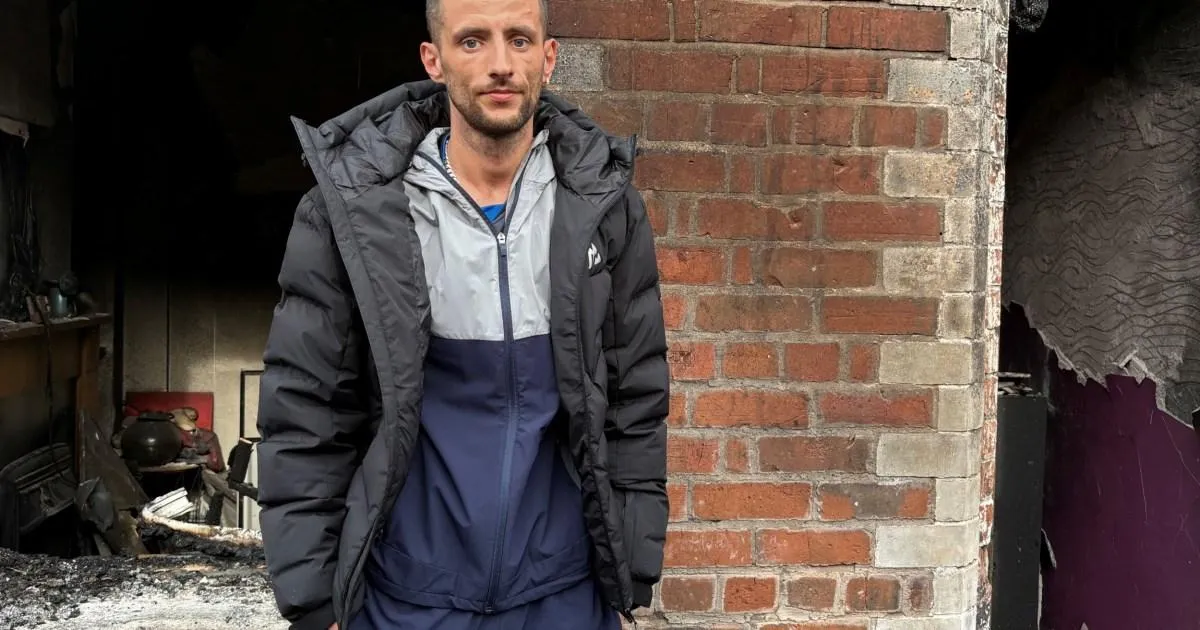
Among those left to grapple with this senseless wreckage is Jamie Corry, a resident of Lendrick Street for the past 13 years. His account is harrowing; he stood by in helpless disbelief as his home—the sanctuary he had built for over a decade—was systematically destroyed by fire. He recalls the agonizing moments of confronting the vandals, desperately pleading that the house was his home, only to watch them ignite the cars parked directly in front of his property. As the flames jumped from the vehicles to the structural frame of his dwelling, he was forced to retreat, left to stand in the street as his doors began to smoke and his windows melted under the intense heat.
For Corry, the destruction goes deeper than the loss of square footage or physical security. Inside that house were personal archives of his existence, including irreplaceable sentimental items belonging to his late father. Standing before the blackened debris of his life, his voice carries the heavy weight of someone who has lost their history in a single evening. While he expresses a profound sense of relief that his children were safe at his partner’s home during the attack, the trauma of the event remains visceral. He is now faced with the impossible task of beginning again, staring down a future where the comfort of home has been replaced by the emptiness of a gutted shell.
The ripple effects of this violence have paralyzed the city, leaving entire communities under a cloud of paralyzing anxiety. Residents are being forced to evacuate their own neighborhoods under police escort as the sound of sirens and the smell of smoke fill the air. Israel Eguaogie, a long-time member of the Belfast community and representative for the City of Sanctuary, has spent his nights working to ensure the safety of terrified families. He describes a pervasive atmosphere of fear, where the simple act of existing has become a source of danger for many. For Eguaogie and those he supports, this is not a abstract debate about immigration or crime; it is an immediate, life-altering threat to their basic right to live without the fear of their homes being torched by strangers.
The psychological toll on Belfast’s children is perhaps the most distressing aspect of these riots. As graphic footage of burning buses and homes circulates across platforms like TikTok, the innocence of a generation is being eroded by the realization that their streets are no longer safe. Families who have contributed to the fabric of the city for years are now questioning their future, trapped behind locked doors while the streets outside teem with rage. Eguaogie notes that this is becoming a recurring nightmare for the city, with a marked increase in racially motivated tensions each June. The fear is no longer just a hypothetical worry; it has materialized into the real, tangible threat of being burned out of one’s own residence.
As police and politicians scramble to restore order and appeal for calm, the residents of areas like Lendrick Street are left to pick up the pieces of a fractured community. The violence has acted as a divider, pitting neighbors against one another and leaving a deep, festering wound in the heart of Belfast. Ultimately, the story of these riots is not found in the manifestos of protesters or the political rhetoric surrounding the violence, but in the silence of those who have lost everything. It is a call to recognize that, regardless of the cause, the destruction of homes and the terrorization of families will never be a legitimate form of expression—it is merely a tragedy that leaves the most vulnerable in the dark.