



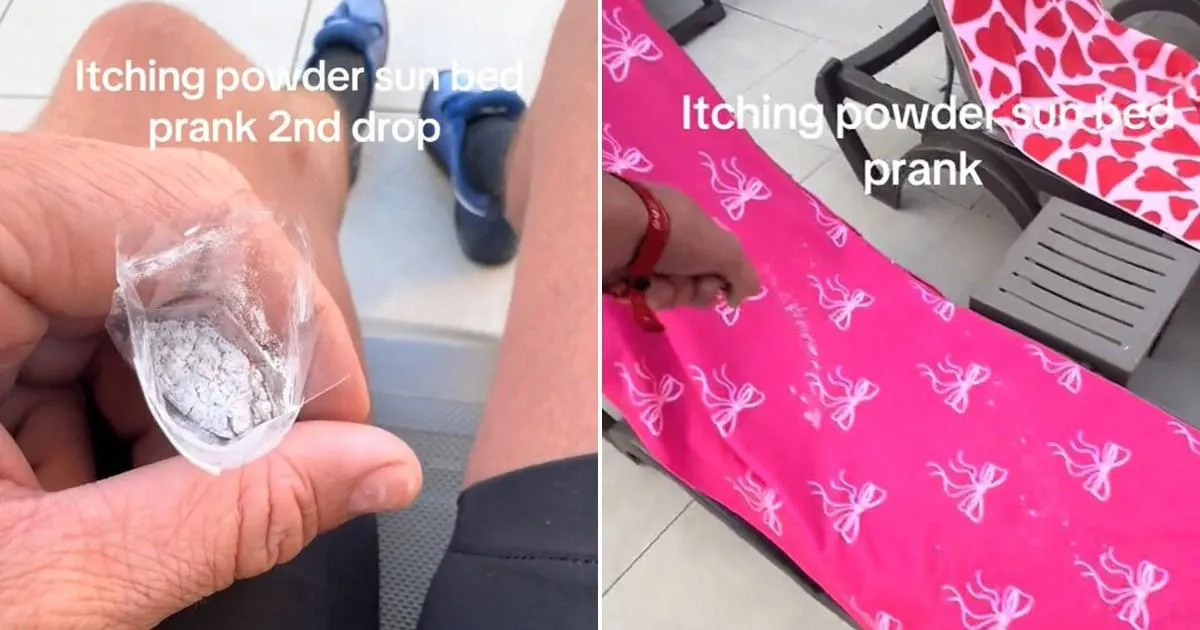
We have all been there: you shuffle down to the hotel pool in the crisp morning air, hopeful for a relaxing day in the sun, only to find that every single prime lounger has already been “claimed” by a colorful towel. There is a universal, bubbling frustration that comes with vacationing alongside people who treat poolside real estate like a tactical military operation, securing spots at sunrise only to abandon them for hours on end. For 31-year-old Tom Caunce, a holidaymaker from Southport, this perennial vacation grievance finally reached a boiling point during a recent family trip to Majorca. Rather than just grumbling from the sidelines, Tom decided to take matters into his own hands, transforming a mundane act of holiday sabotage into a viral social media spectacle.
Tom’s plan was born from a desire for what he jokingly calls “playful payback.” Having spent the first few days of his trip observing a cohort of “repeat offenders”—guests who consistently claimed the exact same loungers each morning before vanishing back to their rooms for breakfast or naps—he decided he had seen enough. The sheer audacity of these early-bird towel-droppers, who treated the poolside as a private reserve while other families struggled to find a single square inch of space, fueled his motivation. He wasn’t looking to cause harm, but he was certainly looking to make a point, and he identified his targets with the precision of a seasoned investigator.
The execution of the prank was not without its hurdles, which only added to the drama of his online narrative. His first attempt involved a covert “walk-by sprinkle” of itching powder onto a woman’s towel, but the woman, seemingly oblivious to his presence, simply swapped the towel out, inadvertently dodging the trap. Undeterred, Tom went back to the drawing board. He returned the following morning with a reinvigorated strategy, staking out a couple who were habitual offenders of the “reserve and retreat” method. Once the coast was clear, he made his move, meticulously rubbing the powder into the fibers of the white hotel towels, ensuring that whoever claimed them would soon find their day of relaxation significantly less comfortable than intended.
The climax of the prank provided the exact kind of feedback Tom was looking for, though the reality of the situation was undeniably chaotic. Despite his initial fears that the couple might swap the towels again, the man eventually settled into his chosen spot. As the minutes ticked by, Tom watched as the man began to fidget, the irritation building from a mild annoyance into a full-body ordeal. When the man finally opted to jump into the pool to wash the sensation away, and then—perhaps regrettably—used the same treated towel to dry himself off, the “itch factor” supposedly reached its peak. The result was a holidaymaker who, instead of enjoying the sun, found himself retreating under an umbrella for the remainder of the afternoon, defeat written all over his posture.
Predictably, sharing this footage online turned an isolated incident into a massive public debate, racking up nearly a million views and thousands of likes. The reaction in the comment sections was as polarized as a soap opera, reflecting how deeply the “towel-tagging” culture impacts the average traveler. Some viewers hailed Tom as a digital hero, applauding his commitment to justice and thanking him for his “service” in taking down the beach-chair hoarders. To these people, the prank was an act of hilarious rebellion against a rude, entitled minority who spoil the relaxing atmosphere of resorts for everyone else.
However, the stunt also drew sharp criticism from those who felt Tom had severely crossed the line. While many people sympathize with the annoyance of losing sunbeds to invisible guests, critics pointed out that inflicting physical discomfort upon strangers—regardless of how annoying they are—is a bridge too far. The consensus among the detractors was clear: “Remove the towels if you’re angry, but don’t touch the people.” Ultimately, the story highlights a fascinating tension in modern tourism. While we all want a fair system, Tom’s controversial method serves as a reminder that when polite social norms for shared spaces fall apart, people will inevitably start looking for their own, often questionable, ways to enforce their own sense of order.