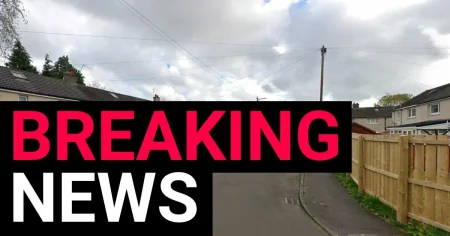



It was the kind of hour when east London is supposed to be at its most peaceful. The pubs had long since closed, the streets were largely empty, and the only sound one might expect in the early hours was the distant hum of a night bus or the wind moving through the trees. Then, shortly before 3 a.m., that quiet was shattered in the most brutal way imaginable. A man, just 40 years old, was sitting in his white Prius when he was ambushed and shot dead in Newham. The sudden violence turned a familiar residential road into a scene of chaos and horror. Witnesses described seeing an overwhelmingly heavy emergency presence arrive within moments, armed police fanning out onto the pavement, blue lights cutting through the darkness, and paramedics desperately trying to save the man’s life on the ground. A woman named Mira Kabal, a local resident, would later use a simple but devastating phrase to describe the unfolding scene: “absolute carnage.” She told reporters that she initially believed the white car had been involved in a crash, only to be informed that the man inside had been shot. Her words capture the disorienting collision of everyday expectation and sudden tragedy, the way a normal street can transform into something unrecognizable in seconds. For those who live on St Bartholomews Road and the surrounding streets of Newham, the memory of those flashing lights and frantic shouts will not fade easily. This was not a statistic or a headline for them; it was their neighbourhood, their morning, their sense of safety being ripped apart. The victim, whose name had not yet been released, was someone with a life, a story, and people who loved him. In the hours after the shooting, forensic officers began their painstaking work under the glare of floodlights, while detectives started the long and difficult process of trying to piece together exactly what had happened. But before any answers came the shock, the fear, and the unmistakable feeling that something had gone terribly wrong in a place where people thought they were safe.
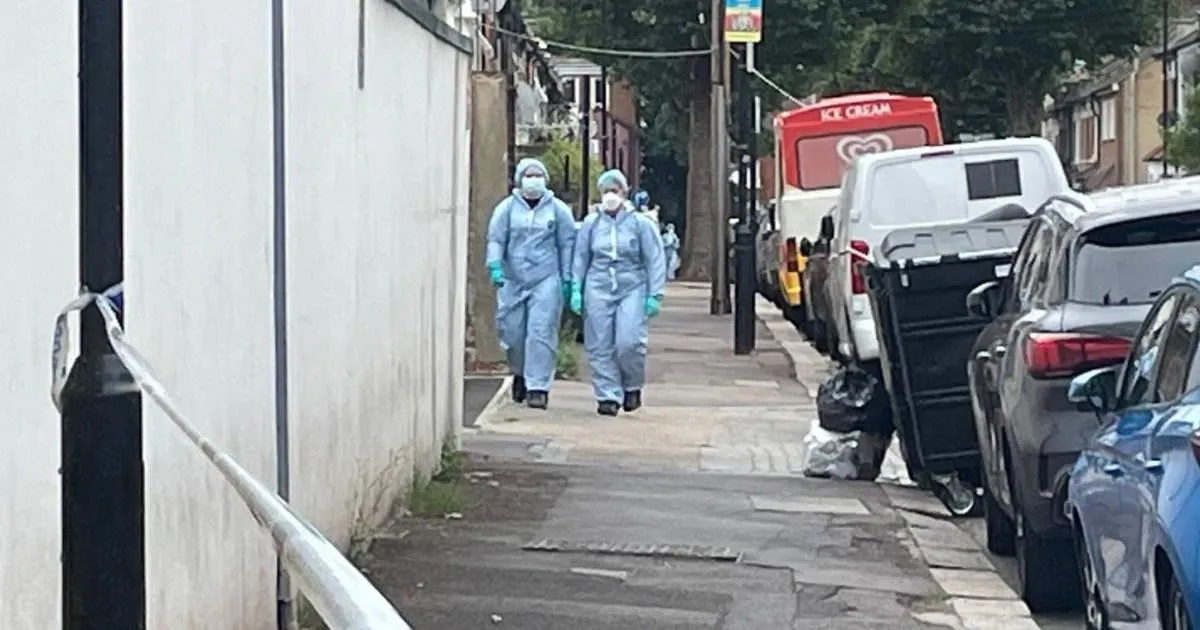
By the time dawn broke, the scene had taken on the eerie stillness that follows any act of sudden violence. A police cordon stretched across St Bartholomews Road, sealing off the area from the outside world. Inside it, forensic officers in white suits moved slowly and methodically, their eyes scanning the pavement for shell casings, blood, or any other piece of evidence that might explain the night’s horror. The victim’s white Prius sat with visible damage to its front end, a silent and grim reminder of the attack that had taken place just a few hours earlier. The car, an ordinary vehicle that might have been used for work, school runs, or any of the countless everyday errands that make up a life, was now being treated as a crime scene. Dramatic footage captured in the immediate aftermath showed armed police surrounding the area as paramedics worked frantically on the ground, their movements urgent and desperate. Detectives were collecting CCTV footage from homes and businesses in the area, hoping that a camera might have captured the shooter’s face, the direction they fled, or some fleeting clue that could crack the case open. Yet despite all this activity, there was a painful silence where answers should have been. No arrests had been made. The victim’s identity had still not been formally released, leaving his family and friends in a state of agonising uncertainty even as the world learned of his death. This shooting also carried a wider significance, as it was the second fatal shooting in London in the space of just one week, a fact that added to the growing unease among residents and politicians alike. For the detectives working the case, every hour that passed without a breakthrough made their job harder, but they remained visibly present, determined, and mindful of the fact that the community was watching and waiting. The image of those forensic officers closeted behind police tape, carefully brushing and bagging evidence, was a stark visual reminder of the consequences of gun violence. It also served as a promise of sorts: that the investigation would not be abandoned, and that those responsible would not simply melt into the shadows without a fight.
The emotional impact of the shooting rippled outward from the cordon and into the lives of everyone who called this part of Newham home. Mira Kabal, the witness who had emerged from her house to find the world upside down, summed up the mood in three words that spoke volumes: “absolute carnage.” But her fuller account was even more unsettling. She spoke of blue lights and armed police, of the shock and terror that had gripped her and her neighbours, and of the awful moment when she realised that the damaged white car she had spotted was not merely a crash but a killing site. Her words were echoed by Councillor Syed Naqvi, who visited the crime scene and stood looking at the police tape with visible concern. He spoke not just as a public official but as a member of the community, sharing in the collective disbelief. “People are terrified here,” he said. “It’s the school holidays, what if a child had been hit? People are worried to walk the streets. We are in shock. The police are doing their best. People need reassurance.” That last word, reassurance, felt especially significant. Because beyond the forensic evidence and the press conferences, there was a neighbourhood of ordinary people trying to process the idea that a man could be killed in his car on a residential street while they slept. Parents who had planned to take their children to the park or to the shops were suddenly thinking twice. Residents who had walked that same street countless times were now looking over their shoulders. The timing made it worse; with school holidays under way, the area was filled with young people enjoying their summer freedom, and the thought of a stray bullet finding its way into a child’s life was almost too horrible to contemplate. The councillor’s plea for reassurance was really a plea for something more basic: a return to the ordinary, to the belief that the streets outside their front doors were safe places to walk, to play, and to live. But in the immediate aftermath of the shooting, that sense of safety felt very fragile indeed.
As the sun rose fully over the cordon, the police operation shifted from emergency response to methodical investigation. Detective Chief Inspector Dan Whitten, the officer leading the case, stepped before the cameras with a message that was both professional and compassionate. “Firstly, our thoughts remain with the friends and family of the man who has sadly died,” he said, acknowledging the human tragedy at the centre of the police work. He then addressed the obvious anxiety in the neighbourhood, offering reassurance that his team were doing everything in their power to understand what had happened and to trace those responsible. The investigation, he explained, would involve a substantial presence of officers throughout the day, both to gather evidence and to offer a visible reminder that the police were not abandoning the area. He appealed for anyone with information, no matter how small or seemingly insignificant, to come forward, stressing that even a single detail could be vital. Behind his words lay the difficult reality of modern policing in a city like London: a shooting in the early hours, often with few willing witnesses, requires patience, forensic skill, and the cooperation of the community. Detectives were already trawling through hours of CCTV, looking for vehicles that had been in the area, pedestrians moving at odd hours, or any anomaly that might not have been noticed by a tired eye. The forensic examination of the white Prius would also take time, as technicians worked to extract fingerprints, DNA, and ballistic evidence that might link the shooting to a suspect. For the officers involved, this was not simply a job; they too were part of the community they served, and the weight of a life lost weighed heavily on them. They knew that the public was looking to them for answers, and they shared in the collective desire for justice. The appeal for information was, in many ways, a call to trust: a reminder that even in the face of violence, the bonds between police and public could make a difference.
The shooting on St Bartholomews Road did not happen in isolation. It came just days after another fatal shooting elsewhere in London, a grim coincidence that made both incidents feel like part of a troubling pattern. For many residents, the news of a second death in a single week was not just shocking but deeply alarming, seeming to confirm their worst fears about a rise in violent crime. In recent years, London has grappled with a complex picture of knife and gun violence, with far too many young lives lost to the streets and communities left to mourn in the face of an endless cycle of retaliation and grief. While statistics often dominate the headlines, the reality on the ground is more human and more painful. Each shooting leaves behind a family shattered by loss, friends unable to comprehend what happened, and neighbours who find themselves caught in a web of fear and uncertainty. Police have repeatedly said that they are doing everything they can, deploying additional officers and using technology such as enhanced CCTV to try to disrupt violence before it happens. But for ordinary people living in affected areas, the promise of extra patrols can feel abstract compared to the immediate terror of hearing gunshots outside their bedroom window. The councillor’s words about children walking the streets highlighted one of the cruelest aspects of such violence: it does not discriminate between those involved and those simply caught up in the crossfire. A stray bullet does not ask whether its victim is a gang member or a passerby; it simply destroys whatever it hits. This is why the public reaction to the Newham shooting was so visceral, why residents spoke of being terrified and in shock, and why the need for reassurance went beyond mere police presence. It was a cry for the fundamental right to live without fear, to walk to the shops or wait at a bus stop without wondering if a weapon might be aimed at you. Until that right is secured, every cordon, every forensic examination, and every funeral will be a reminder of how much work remains to be done.
At the centre of this storm of statistics, police statements, and community anger, there is a story that must not be forgotten: the story of the man who died. He was 40 years old, old enough to have built a life, to have loved and been loved, to have dreams and responsibilities. He was sitting in his car, perhaps on his way home or waiting for someone, when his life was taken in a single, brutal moment. His family now face the unbearable task of grieving a loss that can never be explained, while the world moves on to the next news cycle. In the days and weeks ahead, tributes will be left at the scene, flowers will wilt on the pavement, and candles will be lit in his memory. Those gestures may seem small, but they matter. They remind us that violence is not just a criminal justice issue; it is a human issue, a community issue, and a moral issue. The investigation will continue behind closed doors, with detectives following every lead and hoping that someone will find the courage to come forward. An arrest, and eventually a conviction, would not bring the victim back, but it would offer a measure of justice to those who loved him and send a message that the community will not tolerate such acts. Yet even as the search for answers goes on, there is also a quieter, more defiant spirit taking shape. Neighbours who were once strangers are talking to one another, exchanging numbers, watching out for each other’s children. Councillors are pressing for more resources, for better lighting, for youth programmes, for anything that might prevent the next tragedy. The shock is real, but so is the determination. The people of Newham do not want to be defined by this one moment of horror. They want their streets back; they want their peace of mind back; they want to feel safe again. In the end, that is the truest tribute to the man who lost his life in the early hours on St Bartholomews Road: not just to remember him, but to work toward a world where no one else has to die in such a way. Until then, his memory will stand as a quiet, powerful reminder of the cost of violence, and of the strength it takes to carry on.