


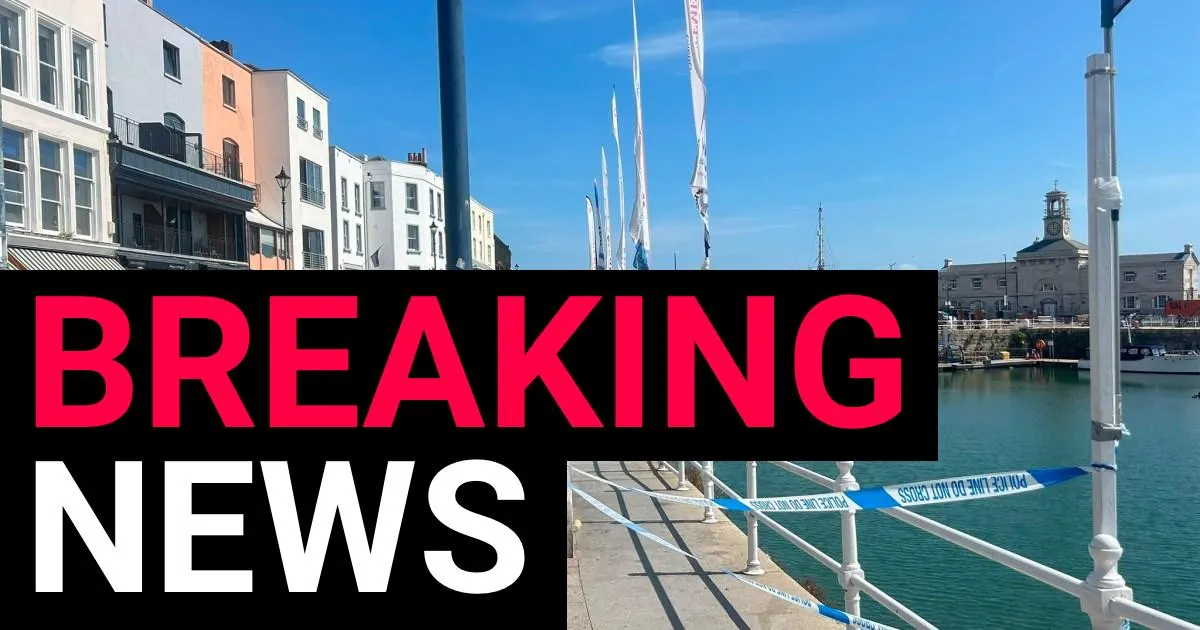
The pre-dawn streets of Ramsgate, a town that ordinarily trades in the peace of seaside tourism and the lull of fishing boats, shattered into an unimaginable nightmare just after 4:50 AM. What began as a quiet Sunday morning—the kind where the only sounds might be the distant cry of gulls or the scrape of a boat hull against the dock—descended into a razor-edged chaos that would leave one life lost, another man battered and wounded, and a community trembling in the wake of an unspeakable act of violence. When the emergency contact exploded across the town, the initial reports were too grotesque for many to fully comprehend, yet the evidence was starkly physical. In the dim streetlights of Harbour Street, a 52-year-old man lay with catastrophic stab wounds, the warmth of his body already fading against the cold pavestones. Just a short distance away on the adjacent Harbour Parade, a 48-year-old man was also discovered, bloodied and in shock, a direct victim of the same frenzy. The night of rest had been replaced by a scramble of ambulances, police tape fluttering like ghastly ribbons, and the dawning realization that something truly depraved had shattered the town’s perception of its own safety. The sheer absurdity of the scene was punctuated by the sight of a taxi—a vehicle normally associated with the mundane errands of daily life—completely wedged and hopelessly stuck upon a rigid concrete bollard, the result of a desperate, gritty attempt to escape the horror that had just unfolded inside its cabin.
When authorities began to piece together the fractured timeline, the humanity behind the event began to peek through the flashing blue and red lights. It appears the taxi was not just a random vehicle but the very arena where the violence erupted, presumably between victims, the driver, and a suspect. A 21-year-old man was taken into police custody not long after, adding a deeply tragic layer of youth and sudden future destruction. In the frantic aftermath, both victims were rushed to local hospitals, where the grim specter of reality firmly set in: despite the round-the-clock efforts of trauma surgeons and nursing staff, the 52-year-old man was pronounced dead. He was somebody’s father, brother, or best friend. He was not a mere statistic or a blur in a newsprint. He was a breathing soul making his way through a Sunday morning, perhaps heading toward work or a late-night stop, whose life was unjustly concentrated and severed. Meanwhile, the 48-year-old man, in the fragile fortune that exists within tragedy, was after several hours released from the hospital. But that release is a deceptive term; it signifies the curable wounds of the flesh, not the lingering mental injuries. A man released from a hospital after witnessing the death of a colleague, or indeed being the target of the same blade, is walking a far longer path of healing—a path lined with sleepless nights and the heavy recollection of steel piercing the night air.
The emotional scale of the event reverberated instantly through the town’s civic heart, personified in the voice of Ramsgate Mayor, Cllr Raushan Ara. Her words—”I am shocked by the horrific incident that took place in our town last night… It is the worst I have ever seen”—are not just empty political sentences. They carry the tone of a civic leader whose soul is pulled to be a protector of her residents, yet felt deeply, utterly powerless in the face of such inexplicable aggression. She speaks of a failure of social fabric. The fact that the mayor is on administration–rapidly calling for the MP and increased policing—tells the great story of a quiet, struggling town feeling that the world of crime is closing in on them. She pointedly mentions antisocial behavior and drug-related issues rising in the community, exposing the dark simmering pot that lies beneath the surface of the coastal town’s scenic identity. Her words are a plea for control to be restored; they echo the fears of every mother walking her child to school, the worries of small business owners who are seeing their town sliding downhill, and the deep sense of outrage from residents who feel their safety is slipping through the fingers of an over-stretched police force.
It is impossible to fully humanize this tragedy without acknowledging the singular terrible irony—that the vehicle meant to take someone from one destinations to another, driven by a member of the community, became the stage for such a lethal confrontation. Any taxi driver holds a profound seat in a town’s social scaffold; they are the 3am witnesses to the city’s secrets, the keepsake for the drunk, the fragile, and the boisterous. In that confined space of synthetic leather seats and safety glass, arguments erupted into a furious exchange that spilled both passengers and driver onto the denilla lanes of Harbour Street only to end in someone’s life leaking away. The car crashing into the bollard, attempting to speed away, is a heart-stopping picture of sheer human panic. It is not the deliberate act of an assassin, but the fumbling, terrified response of men desperate to save themselves or to chase and doom. In that monumental final action—the screeching of tires, the breaking of grille on concrete—we see the chaotic, almost filmic sensationalism of humanity moving at erratic speeds, crossing the thread of sadness and violence.
As dawn broke over the English Channel on that Sunday, the community was left to confront the eerie reality of forensics teams erecting tents in Harbour Street, of photographers documenting the taxi’s mangled position, and children waking up to ask their parents why the red tape was flapping by the sea. Beyond the Mayor’s cry for widening policing, these deep moments are a reminder that a community heals through the collective memory. That day, the town became divided—not geographically, but in spenders of spectatorship and those who lived the event—but unified in horror nonetheless. Meanwhile, the individuals who survived are not only the ones with bandages, but those who reside along it and woke to the sound of the sirens. The fear of a knife not being an invasion, but the reality of our world. The sense of it being certain that no matter how guilty holds the 21-year-old suspect eventually reaches, the crime scene’s a stain on the street—a physical lineage that will choose where the blood dries.
In the end, our attention is drawn not just to the broken bodies and the arrest, but to the silent resilience of the human spirit in a forced moment of introspection. There is an ideology that calls for austerity, for heavier policing, for the capital debate of public space safety. But behind that ideology, we must remember the simple, stark, human grief. The week before, the 52-year-old man was walking around, breathing, laughing, perhaps reluctantly waking up on a Sunday morning. He had hopes against, unexplained stories that will echo in the heart of those who love him. The response of Ramsgate should not be to turn into a gated fortress, but into compassionate co-leaders, aware of the vulnerabilities of their neighbors, especially those who work the uncovered hours—those driving tax, night shift workers. And as the community mourns, they must also steel themselves for the ideological battles ahead. The 21-year-old arrest holds the question “Why?;” the answer to that is not just a legal one, but a deeply sociological one—one that speaks to mental health, drug accessibility, and the erosion of young lives, as the mayor rightly pointed out. The hope latent in this horrific isn’t just on arrests, but in the communal prayer that the 48-year-old survivor can find peace he won’t suffer trauma.
And so, we return to the simplicity of the harbor, the beauty of the grotto, the absurdity of the autumn time being struck down by stabbings. We hold space for the silence that comes when a life is violently taken—the silence that the survivors wouldn’t know how to fill. But we also champion in the resilience of people; the emergency services that worked without fail, the detectives who will hunt for truth, and the community solidarity that refused to be broken despite the shock of reality. Beyond the facts of the media, it’s needed to keep the souls of these victims at the very front—they were not. Just men cut down on a road, but they were sons, fathers, friends, taxi drivers, native netizens of a place now forced to laugh, feel a little more shadowed. The eventual trial will deliver justice, but it will not resurrect the silence. The Muder case will die down; the news cycle will move, but the harbor will forever hold the memory of the dawn it turned from a sanctuary into a crime scene. Ramsgate will not be defined by this darkness—it will be defined by its courage to rise, and its relentless ask for deere light, a safe street and a pillow of tranquillity that was unaccountably stolen by the events of that one alarming Sunday morning. The final word belongs to the poignant, invisible pain of the people left behind, rather than the crime itself. It is a ransom call to society to behave better, to care for the broken, and ensure the bollards and the taxis are just infrastructure—not sorry mementos of a life unlived and another man condemned by the scars of fate.