

The Unfair Fine That Turned a Quick Pit Stop into a Nightmare
It was a quiet Tuesday morning in early June when Zhangyu Wu pulled his Toyota into a parking bay on Green Lanes in Enfield, a bustling North London thoroughfare known for its diverse shops and restaurants. For the 55-year-old business owner, it was just another errand, a quick stop before starting his day. He had no idea that the next few minutes would spiral into a bureaucratic nightmare, leaving him feeling cheated by the very system meant to keep order. As he stepped out of his car, his eyes scanned the row of shops and signs, trying to locate the payment instructions. He spotted the large parking sign just a few meters away and walked over to read it, his wallet already in hand. Little did he know, a Civil Enforcement Officer (CEO) was watching his every move, and a stopwatch had already begun to tick.
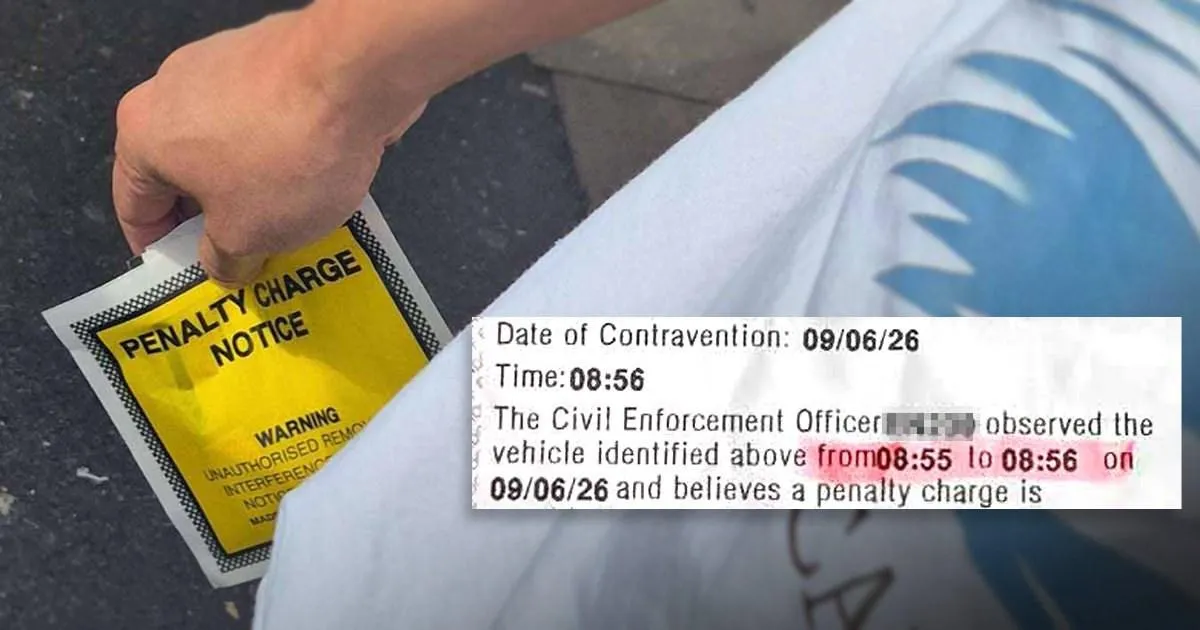
What happened next felt like a scene from a Kafka novel. Zhangyu was not loitering, not wandering off, and certainly not attempting to dodge the parking fee. He was standing within arm’s reach of his vehicle, trying to decipher the “small letters” on the council’s parking sign, a mundane and honest act that any driver in a new area would perform. Yet, within the span of a single minute—from 8:55 AM to 8:56 AM—the enforcement officer determined that the car was “parked without payment” and slapped a Penalty Charge Notice (PCN) on the windscreen. The officer’s log would later state that he observed the vehicle unattended, and that no one was seen near the parking sign. But the timeline tells a different story. Zhangyu was captured on the officer’s own recorded evidence at 8:57 AM, just sixty seconds after the ticket was issued, confronting the warden, visibly stunned and trying to explain the misunderstanding that had just cost him £110.
The emotional whiplash of that moment is something many drivers can relate to—that sharp pang of injustice when a simple mistake, or even a proper attempt to comply, is met with rigid, unforgiving enforcement. Zhangyu, a man who prides himself on following rules, was in disbelief. He had not tried to sneak a free park; he had not abandoned his car to run into a shop; he was merely reading the payment instructions, a prerequisite to paying. When he approached the officer, his voice likely laced with confusion and frustration, he explained the situation: “I was just understanding how I was supposed to pay. The sign has lots of small letters. I was not trying to avoid paying, I was trying to follow the rules.” But the officer was unmoved. The ticket had been issued; the computer had logged the transgression. The only path forward, he was told, was to appeal.
The appeal process, which should have been a safety net for exactly these kinds of situations, proved to be just as cold and unforgiving as the initial ticketing. Zhangyu took the officer’s advice and wrote a detailed, polite letter to Enfield Council, outlining the timeline with a clarity that makes the whole situation seem absurd. He had arrived at 8:54 AM. By 8:55 AM, he was reading the sign. By 8:56 AM, he was fined. By 8:57 AM, he was protesting. He provided the evidence and asked for common sense to prevail. But the council’s response was a rigid rejection, stating there were “no grounds” to cancel the PCN. They argued that their officer had remained with the vehicle the whole time and saw no one in the vicinity, a claim that directly contradicts the photographic evidence showing Zhangyu at the scene moments later processing the injustice. It was a classic case of bureaucracy hiding behind procedure, refusing to acknowledge the human context that the law was designed to serve.
For Zhangyu, the fine has become more than just a financial penalty; it has become a symbol of a systemic failure. He has refused to pay the discounted £55 fine on principle, a decision that has now escalated the situation to the point where his sister-in-law, the registered owner of the vehicle, has been issued a formal “Notice to Owner” demanding the full £110. The financial sting is real, but the emotional toll is heavier. Zhangyu feels targeted and unfairly treated, his trust in the local authorities shattered. “I don’t understand. Is the council using this as a way to generate money?” he asked, a question that echoes the sentiment of countless people who feel that parking enforcement has become more about revenue generation than about maintaining order and fairness.
His story highlights a critical tension in modern urban life: the battle between strict, automated enforcement and the need for human judgment. Parking enforcement officers are under pressure to be efficient and meet quotas, but this efficiency can come at the expense of common sense. There is a distinct difference between a driver who has wilfully abandoned their vehicle in a restricted zone and a person who is standing two meters away, actively trying to figure out how to pay. The system, however, treats them the same. The “one minute” observation feels less like a fair assessment and more like a predatory trap, preying on drivers who have the audacity to pause and read signs rather than instantly using a mobile app. Zhangyu’s experience highlights a growing frustration among motorists who feel they are navigating an increasingly complex and unforgiving web of rules enforced by a system that lacks discretion.
Enfield Council, however, remains steadfast in its defence, issuing a statement that argues the enforcement officer “followed procedure.” They claim that the officer remained with the vehicle and saw no one at the parking sign, a statement that ignores the photographic evidence of Zhangyu seconds later. This hardline stance speaks to a broader issue in local government: the reliance on parking fines as a significant source of revenue. For many councils, Penalty Charge Notices are a lucrative income stream, and there is little incentive to apply leniency when a ticket can be easily issued and defended with procedural technicalities. For Zhangyu, the refusal to show any common sense or human discretion feels less like an act of justice and more like a deliberate cash grab. “I don’t understand,” he says, his frustration palpable. “Is the council using this as a way to generate money? It is not fair. Anybody with a reasonable understanding should see this is not correct and should be cancelled.”
The final blow came when the appeal was formally rejected barrier, and the burden shifted to the vehicle’s owner, Zhangyu’s sister-in-law, who received the official Notice to Owner. Now, the stakes are higher. It is no longer just about a £55 discounted fine; it is a full £110 charge that will hang over the family unless they escalate the matter through the independent tribunal—an appeals process that can feel daunting and time-consuming for ordinary people. Yet, Zhangyu has vowed to fight on. He refuses to accept that a driver can be financially punished for the crime of taking sixty seconds to understand how to pay. He is preparing to take his case to the independent adjudicator, driven not just by the money but by a profound sense of fair play.
The story of Zhangyu Wu is not a tale of a reckless driver trying to beat the system. It is the story of a law-abiding citizen caught in the crosshairs of an inflexible, automated enforcement machine that values ticketing quotas over context. It raises a critical question about the ethics of modern urban parking management: where is the line between enforcement and entrapment? Should a grace period exist for drivers to read signs and set up payment, or does the “one minute” rule treat every citizen as a potential scofflaw? As Mr. Wu prepares to fight the fine, his story serves as a cautionary tale for every driver, highlighting how the time it takes to blink can be the difference between a free parking space and a costly legal battle. The council defends its officer, insisting the procedure was followed, but the public is left to wonder if the procedure itself is broken. Is issuing a £110 fine within 60 seconds of a car stopping a fair act of enforcement, or is it punishment without grace? For Zhangyu, the answer is clear, and he is ready to fight for it, hoping that someone in a position of power will finally see the man behind the vehicle and apply a little common sense.