


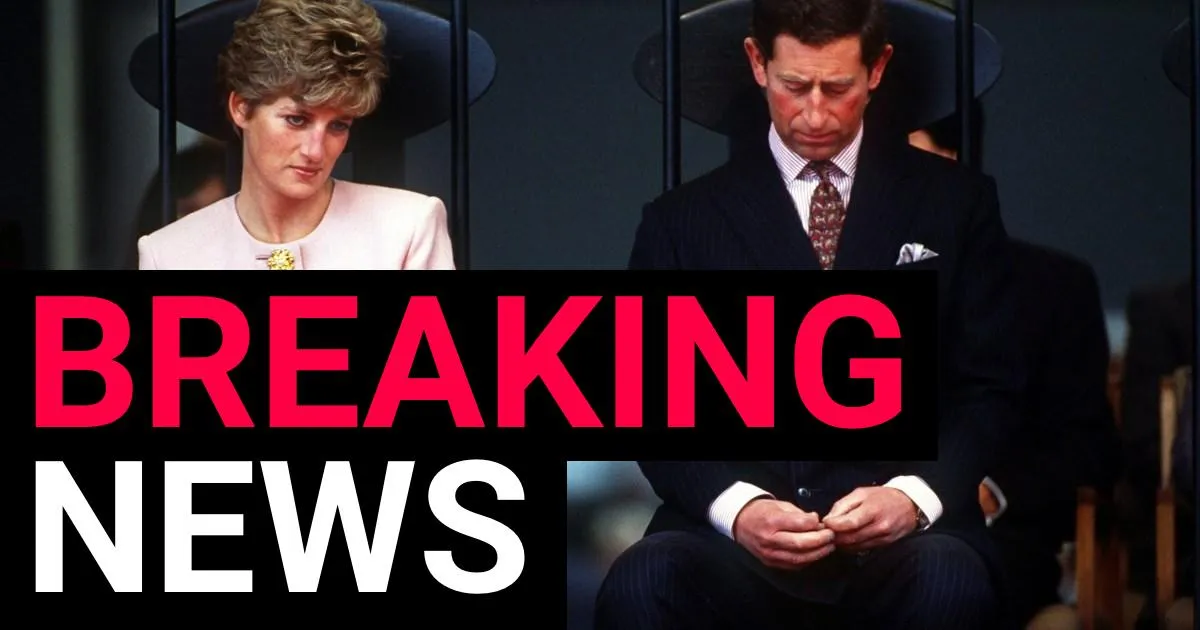
Almost three decades have passed since the world woke to the shocking news that Princess Diana had died in a Paris car crash, but the grief, the unanswered questions, and the controversy surrounding that tragic summer have never truly faded. Now a new memoir by her brother, Earl Charles Spencer, has reopened those wounds with an extraordinary and deeply personal account of the phone call he received from Prince Charles—the man who is now King—just hours after Diana’s death. In his book, Swan Song: Diana, My Sister, serialized in the Daily Mail, Spencer claims that the now King sounded nothing like a man shaken by tragedy. Instead, Charles was “strangely matter-of-fact” and, even more alarmingly, “giddily elated like a lottery winner.” The memory is searing, written by a brother who has spent much of his life defending and remembering his sister. It paints a picture of the royal household as emotionally disconnected from the enormity of what had just happened, and it suggests that Charles’s first instinct was not grief, but relief. Buckingham Palace has already pushed back, with a spokesperson saying: “While we do not comment on books as a matter of principle, His Majesty is mindful that the pain of fraternal grief can cloud reason, affect judgment and colour memory in ways others do not recognise, even many years after such a loss.” The statement is carefully diplomatic, but it also reveals how seriously the Palace is taking these claims—and how determined it is to frame Spencer’s account as the product of a grieving brother’s damaged memory rather than a factual record.
In the pages of his memoir, Earl Spencer describes the emotional atmosphere of the days after Diana’s death in vivid, painful detail. He recalls that his phone rang constantly with condolences, and that most callers were stunned and barely able to find words. They spoke in hushed, sorrowful tones, offering support and struggling to comprehend the horrifying loss of a woman so young, so loved, and so full of life. But when Prince Charles called, the tone was jarringly different. Spencer writes: “Unlike my other callers, who were stunned, barely able to articulate their condolences and offers of help, he sounded giddily elated – like a lottery winner, I remember thinking at the time.” He goes on to say that Charles sounded “strangely matter-of-fact, given the enormity of the disaster,” and that the conversation included a practical, almost clinical discussion of how he had told Princes William and Harry about their mother’s death “first thing in the morning, in their bedrooms.” For Spencer, this was not the voice of a man mourning the mother of his children. It was the voice of someone who seemed to be looking ahead, not backward. Looking back on that conversation now, Spencer writes: “I suspect the prince’s first reaction must have been to think more of how this event might free him to marry the woman he loved, rather than appreciating the loss of one he did not.” That line cuts to the heart of the matter, because it suggests that even in the immediate aftermath of Diana’s death, Charles was already thinking about Camilla Parker Bowles and a future that had suddenly become possible. Spencer acknowledges that divorce makes it hard to feel sympathy for an ex-spouse, writing: “It can be hard to feel too much sympathy for an ex-spouse, or those who care for them profoundly, after bitter divorce.” But even with that understanding, the memory of the call has stayed with him for more than twenty-five years as something cold and unsettling.
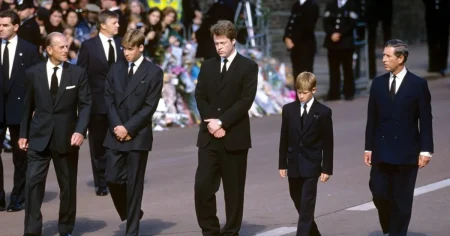
The memoir also contains an explosive account of a furious argument between Charles and Spencer over whether the young Princes William and Harry should walk behind their mother’s coffin during the funeral. Spencer claims that he flatly rejected the idea when a top Palace aide informed him of the plans. “That’s not going to happen,” he said, and he meant it. He could not bear the thought of two boys, still shell-shocked by the sudden death of their mother, being forced to walk through the streets of London under the world’s gaze while carrying that immense weight. Within minutes, Charles called him, and the conversation quickly turned into a bitter confrontation. Charles pointed out that he himself had walked behind the coffin of Lord Mountbatten in 1979, using that as an example of what was expected of royal men in moments of mourning. But Spencer was not persuaded. He reminded Charles that in 1979, Charles had been thirty years old—an adult, not a child. The distinction mattered profoundly to Spencer, who argued that William and Harry were far too young to be subjected to such a public ordeal. He even quotes his own uncle in the book as saying: “They can’t make these boys walk behind their mother’s coffin! It’s barbaric.” The argument escalated, and Spencer claims that Charles questioned the Spencer family’s sense of duty, implying that they were failing the monarchy in its hour of need. Spencer describes the call in detail, writing that Charles continued his stream of anger without interruption. Then there was a pause. Spencer assumed Charles was trying to bring himself under control, but the silence was followed by something far more shocking. According to Spencer, Charles unleashed what he has always taken to be his pent-up contempt for Diana and his horror at the world’s outpouring of grief with a chilling final remark: “Rest assured, we’ll forget her soon enough!” Spencer says he hung up immediately.
To understand the intensity of that exchange, it is important to remember the complicated and painful history between Charles and Diana before her death. The couple had been separated since December 1992, but their divorce was not finalized until August 1996, just a year before Diana died. The years between separation and divorce were filled with bitterness, public recriminations, and a war of words conducted through the media. Diana’s famous Martin Bashir interview, in which she said that there were three people in her marriage and that it was “crowded,” had permanently changed the way the public viewed the royal marriage. Although the Palace insisted at the time that no third party was involved in the split, the world understood that she was referring to Camilla Parker Bowles, the woman Charles had loved for years and would eventually marry. The relationship between Charles and Diana had deteriorated so badly that it was almost impossible for them to be in the same room together without tension. They tried to co-parent William and Harry as best they could, but the atmosphere was poisoned by jealousy, betrayal, and a deep sense of injustice on both sides. Diana felt rejected and humiliated; Charles felt trapped in a marriage that had been publicly dismantled. By the summer of 1997, Diana had moved on with her life, and there were even signs of a thaw between them as she spent time with the boys at Balmoral and elsewhere. Her sudden death tore through that fragile, complicated story and threw the royal family into a crisis that threatened to destroy the monarchy itself. For Earl Spencer, the memories of those days are not just about losing his sister; they are also about watching the institution that had once embraced Diana from afar turn against her, both in life and in death.
The timing of these revelations is significant, because the King has been forced to confront them while continuing his public duties. He appeared at a technology summit earlier today, speaking to members of the government and thought leaders about how technology can be developed and deployed in ways that benefit society. He looked composed and professional, but the allegations from Earl Spencer’s book were hanging over everything, and the Palace’s carefully worded response suggested that this is not a story they can simply ignore. The Palace’s statement about “fraternal grief” and the way it can “cloud reason, affect judgment and colour memory” is an attempt to dismiss Spencer’s account without directly calling him a liar. It is a classic royal strategy: acknowledge the pain of the person making the accusations, then subtly undermine their credibility. But the Palace also knows that Spencer is not an outsider with no access to the story. He was there, standing on the streets of London as Diana’s coffin passed, surrounded by his nephews, his grief raw and visible to millions. He has spent years reflecting on what happened, and his book is clearly intended to be a definitive account of his sister’s life and death from the perspective of the family who knew her best. The fact that the Daily Mail has serialized the book over two consecutive days suggests that there is much more to come, and each new excerpt seems designed to provoke a reaction. One headline from the same publication even suggested that King Charles is “worried” Earl Spencer is a “ticking time bomb” ahead of the book’s release, which indicates how nervous the royal family is about what else might be revealed.
Ultimately, this is a story about grief, memory, and the impossible task of reconciling two very different versions of the same moment. Diana’s death was one of those rare events that seemed to freeze time, and everyone who lived through it remembers where they were and what they felt. For Earl Spencer, the weeks after her death were a blur of sorrow, anger, and protectiveness, especially when it came to William and Harry. For King Charles, those same days were spent guiding his sons through an unimaginable loss while also dealing with the public’s fury and his own complicated feelings about the woman he had once married and then divorced. It is entirely possible that memory, filtered through decades of bitterness and grief, has shaped Spencer’s account in ways he cannot see. It is also possible that the record is more accurate than the Palace would like the public to believe. The truth is probably somewhere in between, wrapped in the confusion and adrenaline of a terrible week. What cannot be argued, however, is the lasting impact of Diana’s life and death. She remains one of the most beloved and remembered figures in modern history, and her brothers, her sons, and the institution she married into have all been shaped by the tragedy that ended her story. Earl Spencer’s book is his attempt to make sure his sister’s side of that story is not forgotten, even if it means scorning the man who is now King. It is a powerful act of loyalty, but it is also a reminder that grief is not a tidy process. It can distort, divide, and defy reconciliation. In the end, the dispute over what Charles said on that phone call, and how he sounded, is not just about one man’s memory. It is about the deep fracture that Diana’s death exposed in the royal family, and the painful truth that some wounds never fully heal, no matter how many years pass or how many official statements are issued.