

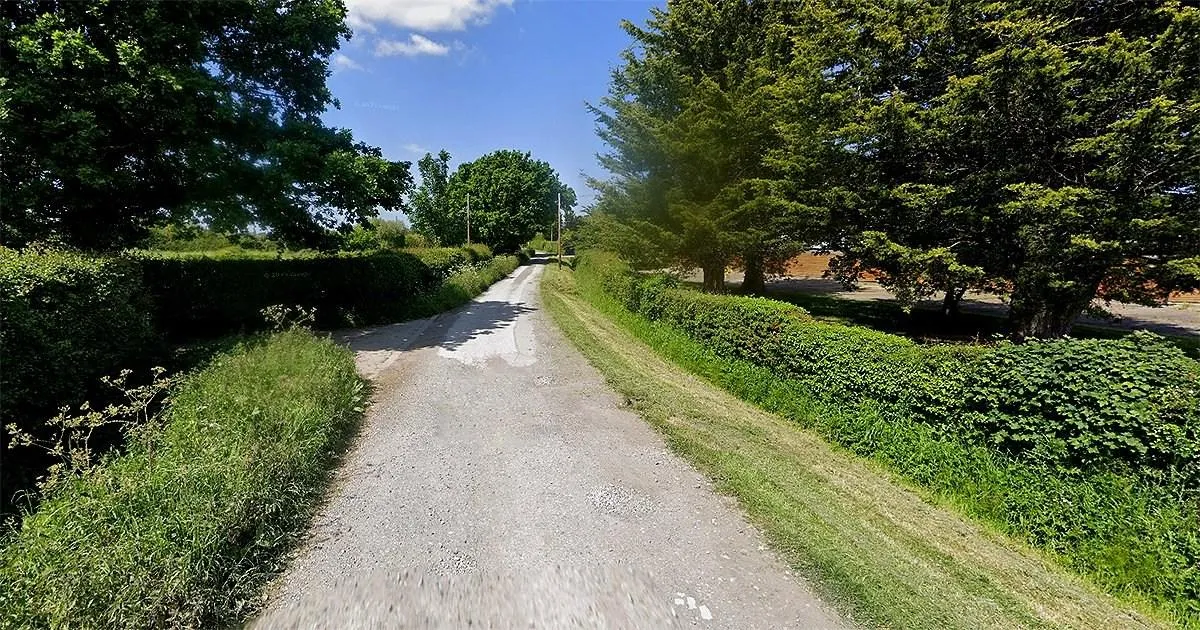
The quiet countryside lane in Kinnerton, near Chester, usually offers nothing more dramatic than hedgerows, birdsong, and the occasional passing walker. But last Wednesday morning, that stillness was shattered in the most heartbreaking way. A local dog walker, out for what should have been a routine stroll along Moor Lane, made a grim discovery: the body of a young black lurcher lying abandoned on the side of the road. The dog, just three years old, was not sleeping or resting. He was dead, and his remains were already badly decomposed, suggesting he had been there for some time before anyone stumbled upon him. The shock of finding an animal in such a state would be enough to unnerve anyone, but the circumstances surrounding this particular case have left even experienced animal welfare officers troubled. The RSPCA was quickly alerted, and officers arrived to assess the scene. It did not take long for them to realize that this was not simply a case of a lost pet who had wandered too far and tragically died. There were signs that this dog had been dumped, deliberately left in a remote spot where he might never have been found. The thought of a loyal companion ending up alone, forgotten, and decomposing on a cold roadside is the kind of thing that haunts any animal lover, and it raises difficult questions about what led him there.
The dog himself, a black lurcher, was wearing a black collar at the time he was found. That collar, simple yet distinctive, would become a crucial clue. It featured metal bone-shaped studs, a blank name tag, and pieces of blue rope attached to it. The RSPCA believes that the blue rope may have been used as a lead or even as a tether, which adds another layer of concern. Why would a dog with a collar and the apparent remnants of a lead be out alone on a remote country lane? The condition of his body made it impossible to establish an exact cause of death, which only deepens the mystery. He would have turned three in October, still young and full of life in normal circumstances. Lurchers are known for their speed, grace, and gentle temperaments, often described as wonderful companions and family pets. To imagine this particular lurcher, once perhaps running through fields or curled up in a warm home, now reduced to a forgotten carcass on the side of the road, is deeply saddening. The dog walker who found him must have been utterly shaken, and the RSPCA officer who attended the scene described the discovery as “upsetting.” It is a word that feels almost too mild for the reality of what was found, yet it captures the quiet sadness that such a discovery brings to an ordinary community.
In an age where microchips are supposed to offer answers, the RSPCA hoped that technology would help untangle this dog’s story. They scanned the microchip and traced him back to an owner living in North Wales. But instead of a straightforward reunion or a clear history, they found more questions. That first owner revealed that they had rehomed the dog when he was still a puppy. The trail led next to a second owner, also in North Wales, who said that they too had been forced to rehome him, this time because he did not get along with another pet in the household. And there the trail went cold. The person who took him on after that second rehoming has not been identified, and that is where the mystery currently rests. RSPCA Animal Rescue Officer Bethany Newis explained the frustration: “The dog was microchipped and traced to an owner in North Wales but they said they re-homed the dog as a pup. We traced the next owner, also living in North Wales, who said they had rehomed the dog because it did not get on with another pet in the home. We are now trying to trace the person who took on the dog after this.” The fact that the first two owners were honest and cooperative suggests that many people involved in this dog’s early life cared for him, but somewhere along the line, he fell through the cracks. It is a reminder that even with microchipping, a dog’s fate can become tangled in a chain of handovers, each one potentially moving farther from accountability and care.
The condition of the body, particularly the blue rope attached to the collar, has led the RSPCA to treat this case with serious suspicion. The rope could have been used as a lead, which is normal enough, but it could also have been used as a tether, suggesting the dog might have been tied up somewhere before being abandoned. The fact that his body appeared to have been dumped rather than simply left where he died does raise red flags. Officer Newis voiced these concerns plainly: “The lurcher would have been three in October and the fact that his body appears to have been dumped does raise suspicions, but sadly the body was too decomposed to establish an exact cause of death.” She also highlighted the distinctive nature of the collar as a potential memory trigger for the public. “This blue rope could have been used as a lead or as a tether and I am hoping the distinctive nature of the collar on this black lurcher may help jog people’s memories as to who may have recently owned him.” It is a clever and necessary appeal. Collars with metal bone-shaped studs are not seen every day, and a blank name tag is itself unusual. Someone, somewhere, must recognize that collar. They might have seen it on a dog in a garden, tied to a fence, or being walked along a nearby road. They might know who the final owner was, or they might have witnessed something suspicious in the days leading up to the discovery. The area around Moor Lane is a popular spot for dog walkers, which means there were likely people around, people who might have seen a stranger acting oddly or a dog being left behind. Every small detail, every vague memory, could be the piece that solves this puzzle.
This sad case is more than just one dog’s unfortunate end. It speaks to a broader issue about how animals are treated when their owners feel they can no longer keep them. In the United Kingdom, it is now a legal requirement for dogs to be microchipped, and owners are expected to keep their details up to date. But a microchip is only as good as the information attached to it, and rehoming a dog without properly transferring ownership details can create exactly the kind of dead end that the RSPCA has hit here. The first two owners did the responsible thing by passing the dog on rather than abandoning him, but somewhere along that chain, something went very wrong. It is uncomfortable to think about, but the reality is that this dog may have spent his final days alone, perhaps tied up or neglected, before dying and being dumped like rubbish. That is not the fate any animal deserves, and it is not the legacy that a young, healthy lurcher should have. People who rehome pets have a moral responsibility to ensure that the animal is going to a safe and loving environment, and those who take in a pet take on a duty of care that does not end when the animal becomes inconvenient or difficult. The phrase “does not get on with another pet” is a common reason for rehoming, and while it is sometimes a legitimate issue, it can also be an excuse used far too casually. This dog’s story should serve as a reminder that every pet is a living, feeling being, not a piece of property to be passed around until someone finds them to be too much trouble.
The RSPCA is now appealing to the public for any information that could help them trace the final owner of this black lurcher and understand what happened to him. Officer Newis has urged anyone who recognizes the collar, or who saw anything suspicious around the Moor Lane area, to come forward. “The area is a popular dog walking spot so we are keen to hear from anyone who may have seen anything suspicious who can help with our enquiries,” she said. That appeal is not just about solving a crime or closing a case file. It is about giving a lost animal some dignity. It is about answering the questions that his first owners, his second owners, and the dog walker who found him all carry with them. It is about making sure that whoever is responsible for his death, whether through direct action or through neglect, is held accountable. But it is also about something softer and perhaps more important: reminding ourselves that every dog deserves to be remembered, even a black lurcher found dead on a quiet lane with a studded collar and a piece of blue rope. His life may have ended in obscurity and suspicion, but his story has touched the hearts of those who heard it. Anyone with information is urged to contact the RSPCA, and the charity’s team will follow every lead. In the meantime, the image of that lonely roadside remains, a quiet testament to the bond between humans and animals, and the terrible things that can happen when that bond is broken. If you know something, if you saw something, if you recognize that collar, speak up. A dog cannot speak for himself, but perhaps someone can speak for him now.