


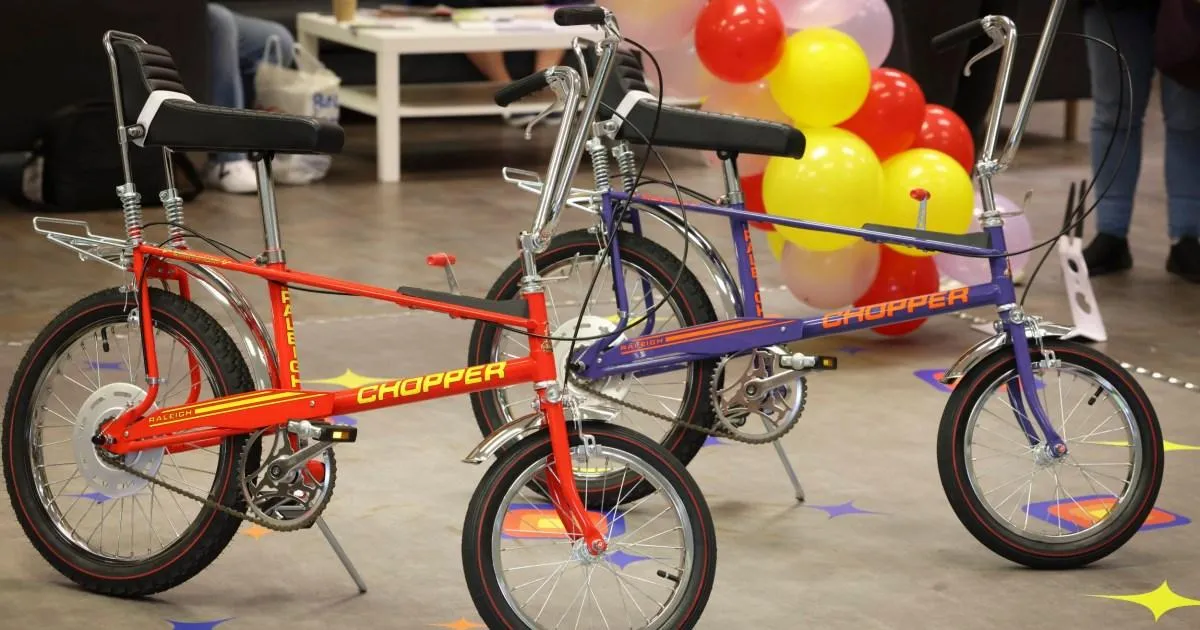
The story of Raleigh is, in many ways, the story of British manufacturing itself—a narrative of immense pride, cultural significance, and the heartbreaking reality of economic shifting tides. Founded in 1887 in the heart of Nottingham, the company grew from a local enterprise into an industrial titan that defined the golden age of cycling. For generations, Raleigh wasn’t just a company; it was a household name. To walk down a street in the 1970s was to see a sea of Raleigh Choppers, those iconic, high-backed bikes that became a rite of passage for millions of children. Today, however, the brand faces a somber reality: its Dutch parent company, Accell Group, has announced that Raleigh is set to enter administration, marking a dark chapter for a business that once stood as a symbol of British engineering excellence.
The descent into administration, which is essentially a legal protective measure designed to save a business from total liquidation, comes after years of valiant but ultimately unsuccessful attempts to navigate a changing market. In 2012, Raleigh was acquired by the Netherlands-based Accell Group in a deal worth approximately €60 million. While the acquisition was intended to secure the brand’s future in an increasingly globalized economy, the path forward proved perilous. Accell, one of Europe’s largest bicycle distributors, recently admitted that despite exhaustive efforts to restructure and stabilize the firm’s finances, they simply could not find a viable way to keep the company’s current operations afloat.
For Jonas Nilsson, the CEO of Accell Group, this development is more than just a line on a balance sheet; he has described it as a “deeply sad and frustrating” culmination of years of hard work. The administration process provides a brief 10-day window of protection, legally shielding the company from creditors while they frantically seek out rescue options or potential buyers. It is a moment of profound uncertainty, not just for the shareholders and lenders who have invested so much, but for the employees, suppliers, and long-standing partners who have built their livelihoods around the brand. The weight of this situation is heavy, echoing the sentiment of many who feel a genuine sense of loss regarding the potential disappearance of such an iconic piece of history.
To understand the scale of this downturn, one must look at the stark contrast between Raleigh’s past and its recent financial records. At the height of its influence in the 1970s, the company was an absolute juggernaut, employing over 13,000 people across the nation. Its Nottingham sites were the beating heart of the local economy, with thousands of staff members working in sprawling facilities that eventually transitioned into what is now the University of Nottingham’s Jubilee Campus. By contrast, the company’s most recent financial accounts from 2023 painted a sobering picture, reporting a pre-tax loss of over £30 million. By that time, the workforce had dwindled to roughly 130 people, reflecting a painful contraction that has unfolded over the last several decades.
The physical footprint of the company has shifted alongside its fortunes. From the massive, bustling factories of the past to the more modest headquarters in Eastwood and the subsequent move to Durban House in 2024, the brand has been trying to find a smaller, more sustainable home in a world that has moved on from the era of mass-market British manufacturing. Yet, despite these attempts to downsize and streamline, the economic pressures—ranging from global supply chain disruptions to shifting consumer habits and intense international competition—proved too great. The news serves as a poignant reminder that even the most cherished brands are not immune to the ruthless math of modern business.
As we await further updates on what this administration means for the remaining staff and the future of the Raleigh name, the public is left to reflect on the legacy of a company that gave so much to British culture. Whether the brand can be rescued or if this is the beginning of the end for Raleigh as we know it remains to be seen. Regardless of the outcome, the image of those bright, shiny Choppers remains etched in the collective memory of a nation—a testament to a time when Raleigh was synonymous with freedom, adventure, and the promise of the open road. It is a stark reminder to cherish the institutions that shape our childhoods, for even the giants of industry can eventually find themselves at the mercy of the changing winds.