

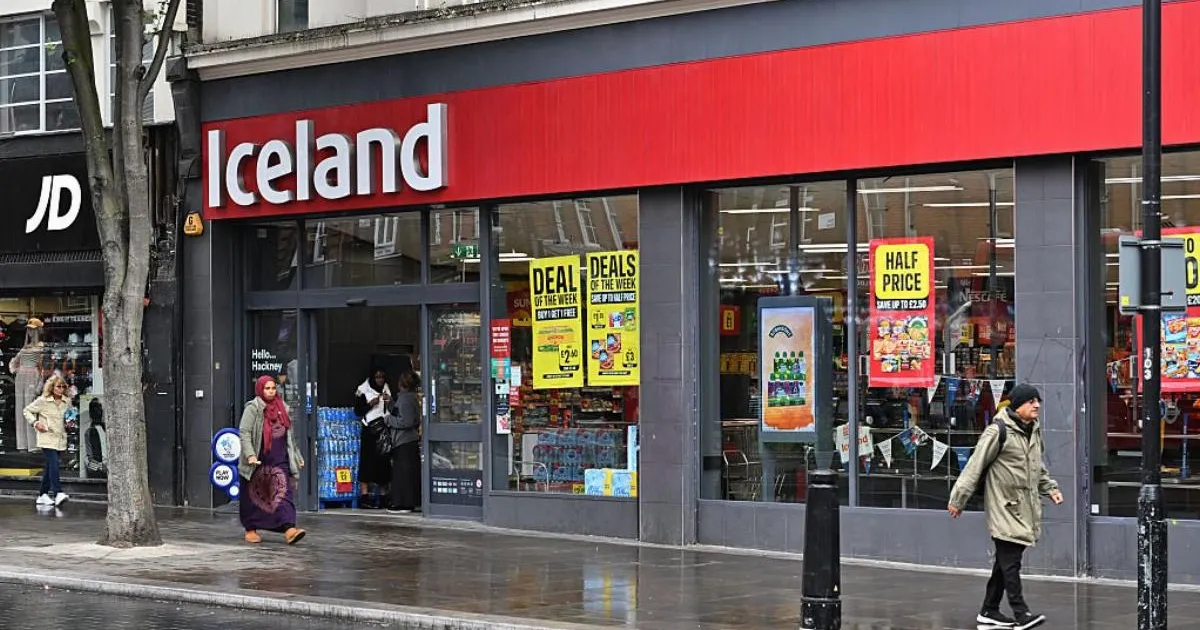
The recent public discourse surrounding the state of British policing has reached a boiling point, moving from the halls of Westminster into the aisles of our local supermarkets. Sir Malcolm Walker, the founder of the frozen food giant Iceland, has recently waded into a heated national debate, echoing claims that the UK police force currently operates under a problematic “two-tier” system. This term, which has gained significant traction in recent months, suggests that law enforcement applies different standards of justice depending on the race or background of those involved. For Sir Malcolm, this is not merely a theoretical political point; he feels it is a reality that has directly impacted his own staff during their daily shifts.
The controversy was ignited following a tense incident at an Iceland store in Enfield, North London. According to Sir Malcolm, a store supervisor confronted a customer who was seen opening milk bottles directly from the shop’s refrigerated display. What followed was a volatile escalation: the customer allegedly began filming the staff member, leading to accusations of racial bias. The situation spiraled quickly, and in a turn of events that Sir Malcolm describes as “madness,” it was the member of his staff who was arrested and held by police for three hours, only for the matter to be dropped later. His frustration is palpable, as he views the arrest as an over-the-top reaction to a staff member simply attempting to prevent theft or contamination in their store.
For Sir Malcolm, the Enfield incident is emblematic of a wider, systemic failure to support retail workers who are increasingly finding themselves on the front lines of public disorder. He highlights that his staff members face a harrowing reality, dealing with weekly threats involving knives and discarded hypodermic needles. He argues that many of these confrontations go unreported because there is a growing, cynical belief among retailers that calling the police makes no tangible difference. By speaking out, he is attempting to voice the frustration of shopkeepers across the country who feel that they are left to fend for themselves while the authorities prioritize political optics over the day-to-day safety of workers.
Predictably, the Metropolitan Police and the Mayor’s Office for Policing and Crime (MOPAC) have firmly rejected these allegations of bias. In their official response, the Met emphasized their commitment to policing “without fear or favour,” asserting that all operational decisions remain strictly grounded in legal principles rather than identity politics. They maintained that officers acted reasonably and proportionately in the Enfield case, which had been triggered by a report of racially aggravated harassment. After reviewing the evidence, including CCTV footage and witness testimony, the authorities concluded that the police response was handled according to protocol, leading to the dismissal of Sir Malcolm’s formal complaints.
This debate does not exist in a vacuum; it has become deeply intertwined with the broader political climate in the UK. The “two-tier” sentiment was amplified by Reform UK leader Nigel Farage, who has utilized the tragic death of 18-year-old Henry Nowak to criticize current policing strategies. Farage has argued that the current culture encourages an “anti-white” prejudice within the system. However, this rhetoric has faced fierce pushback from Prime Minister Sir Keir Starmer. During Prime Minister’s Questions, the PM sharply criticized Farage for using the death of a young man to stoke division, particularly noting that the victim’s own family had explicitly requested that their tragedy not be weaponized for political gain.
Ultimately, this clash highlights a profound and uncomfortable disconnect between how our law enforcement agencies perceive their own neutrality and how the public—or at least, specific business leaders—perceive the reality on the ground. Whether one views the “two-tier” narrative as a dangerous myth or a necessary critique of institutional bias, it is clear that public trust is being strained. As supermarket staff continue to face increased aggression, the divide between those who believe the police are failing to protect ordinary workers and those who insist the system remains fair and impartial seems wider than ever. The incident at Iceland is a microcosm of a nation struggling to define what equal justice actually looks like in an increasingly polarized society.