

The reality of a typical Friday afternoon commute shifted from routine to chaotic today as motorists across the UK found themselves caught in a sprawling gridlock. What should have been a straightforward end to the work week turned into a test of patience for thousands of drivers, as two major traffic incidents—one in the West Midlands and another in Oxfordshire—created a ripple effect that paralysed key arteries of the nation’s motorway network. For those trying to head home for the weekend or reach Birmingham Airport, the promise of a smooth journey was quickly replaced by the frustration of idling engines and stalled progress.
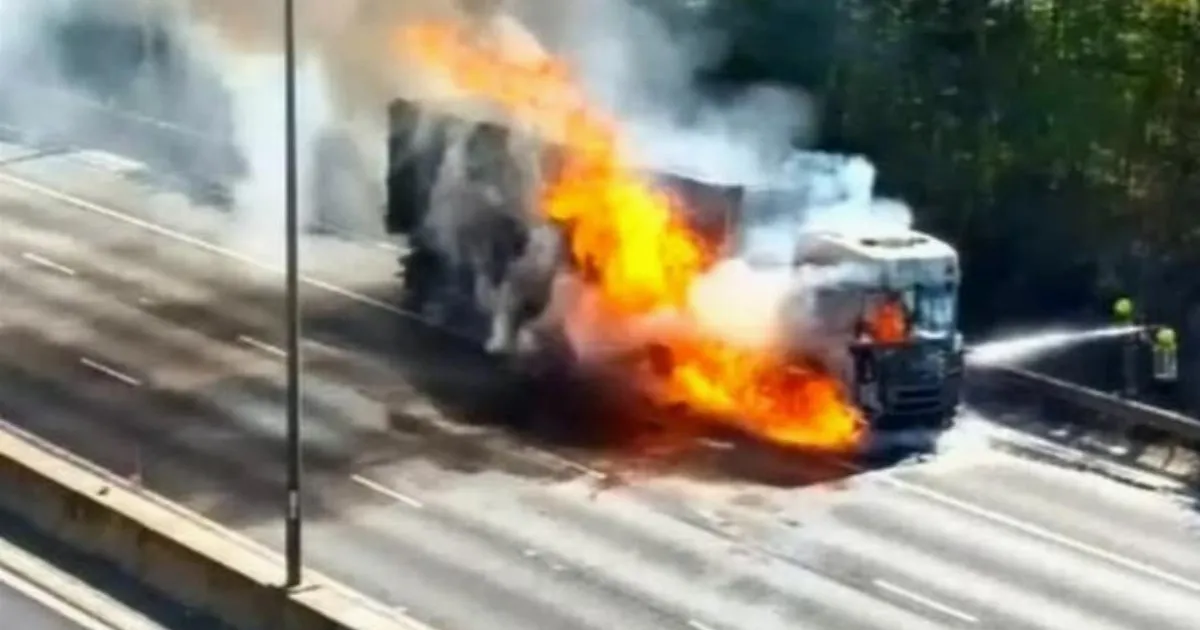
The most dramatic scene unfolded on the M6 near Birmingham, where a heavy goods vehicle erupted into flames. Witnesses described a terrifying sight as the fire tore through the lorry, effectively reducing it to a charred shell in a matter of moments. Fortunately, reports confirm that no one was injured during the blaze, a small mercy given the intensity of the inferno. However, the physical toll on the motorway itself was significant; the heat was so extreme that it compromised the integrity of the road surface. National Highways officials have indicated that emergency resurfacing work is now a top priority for this evening, prolonging the disruption for commuters.
As the smoke began to clear on the M6, the logistical nightmare was only just beginning. With two out of the four northbound lanes between junctions 4A and 5 forced to close, the traffic began to back up almost immediately. By late afternoon, motorists were facing a daunting 50-minute delay, with a wall of stationary vehicles stretching back for five miles. Birmingham Airport authorities issued urgent advisories to passengers, warning that travel times to and from the terminal were being severely impacted. The scene served as a stark reminder of how quickly the veins of our transport infrastructure can become clogged, turning a minor stretch of asphalt into a bottleneck that frustrates entire regions.
While the Midlands dealt with the aftermath of the vehicle fire, the situation on the M40 in Oxfordshire was arguably even more severe. Earlier in the day, a serious collision forced a complete closure of the northbound carriageway between junction 10 near Ardley and junction 11 near Banbury. At the peak of the incident, travelers were warned of delays exceeding two hours, leaving many stranded for much of their afternoon. Emergency services, including the Thames Valley Police, rushed to the scene shortly after 11:30 am to manage the crash, which required a significant tactical response to ensure the safety of those involved and to clear the debris.
Though the M40 has since been reopened, the echoes of such a major closure do not vanish the moment the cones are moved. Residual delays continued to plague the area long after the initial emergency response had concluded, illustrating the long “tail” of congestion that follows high-impact incidents. Even once the police and recovery vehicles have cleared a crash site, the sheer volume of diverted or stopped traffic creates a lingering wave of congestion that can take hours to dissipate fully. For those caught in it, the experience is often one of weary resignation, watching the clock tick by as they remain motionless on a road meant for speed and efficiency.
Ultimately, today’s events serve as a sobering reflection on the fragility of our daily routines. We often take for granted the thousands of miles of motorway that connect our homes, airports, and workplaces, assuming that our path will be clear as long as we leave at the right time. Yet, a single mechanical failure or a split-second mistake can disrupt the lives of thousands, reminding us that we are all beholden to the same infrastructure. As road crews prepare to patch the scarred asphalt of the M6 tonight, those who were caught in the chaos can only hope that their next journey is far less eventful, and that the roads ahead remain both open and safe.