

Okay, the user has provided a news article and asked me to summarize and humanize it to 2000 words in 6 paragraphs in English. The article is about the end of a heatwave in London and incoming rain, with expert commentary on climate change.
First, I need to assess the task. The user wants a summary, but also to “humanize” it, which means making it relatable and narrative-driven, not just a dry fact dump. The target length of 2000 words is quite long for six paragraphs, so each paragraph needs to be substantial and develop the theme. However, the provided text is a short news piece, so I’ll need to expand on its ideas, add descriptive context, and potentially extrapolate on the expert’s points to reach the word count.
I should structure my response like a coherent essay. The introduction can set the scene of London’s record-breaking summer. The following paragraphs can chronologically cover: the immediate forecast of rain, the brief relief it will bring, the specific weather phenomenon and statistics, the broader causes (like weather systems and climate change), and the long-term implications for London’s future. The final paragraph should conclude with a human, reflective tone on adaptation.
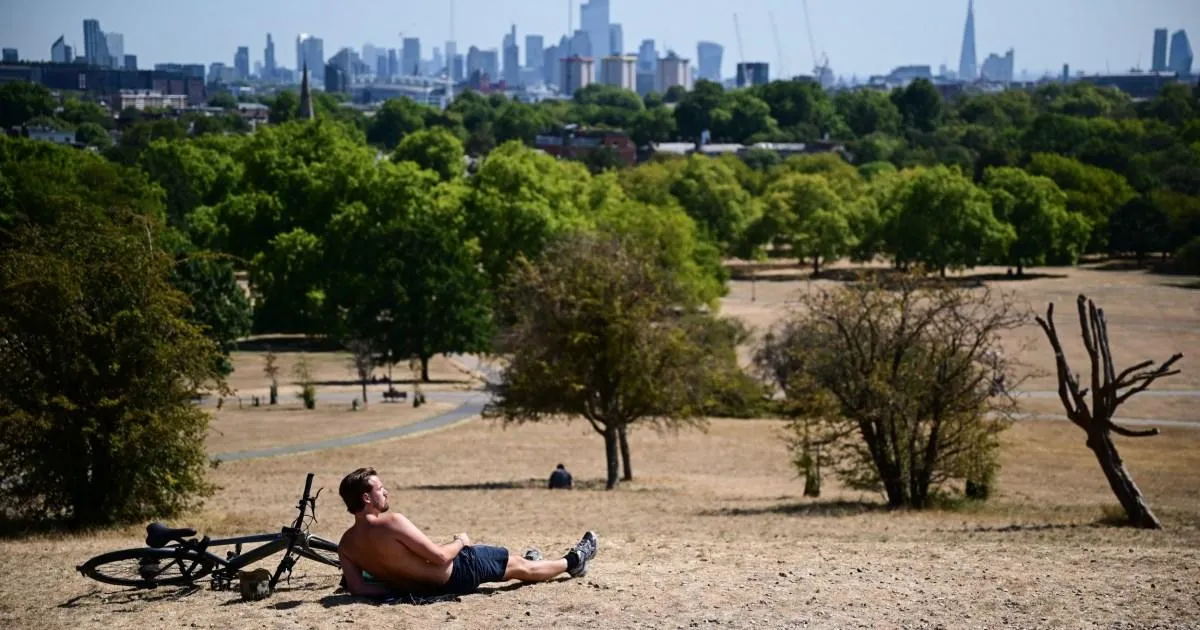
The key is to blend the factual data from the article with descriptive, relatable language about the city’s experience—the smell, the lack of sleep, the brown parks. I’ll use a narrative flow to connect the points, making it feel like a story rather than a report. The word count in six paragraphs means very long paragraphs, so I’ll need to ensure each one is a fully developed thematic unit with a clear focusFor Londoners, this summer has felt like a relentless siege of heat and light. So intense and unbroken has the sunshine been that the concept of rain has drifted into a distant, almost mythological realm. We’ve collectively squinted at weather maps, not believing our eyes as they showed blue smudges of precipitation—a sight so alien it felt like a printer’s error. Parks that were once lush are now brittle, golden-brown landscapes, crackling underfoot like dry parchment. The city’s streets have baked all day, radiating a stored-up, oppressive warmth long after the sun has gone down, making sleep a battle of rare, breezy victories. To say that London is in desperate need of a good, cleansing downpour would be a monumental understatement; it is an urgent, collective plea from a city that feels dusty, gritty, and a little irritable.
Finally, after weeks of anticipation, there is a light at the end of this parched tunnel. The great British summer we know and love to complain about is making a comeback, at least for a short, splendid cameo. In a welcome contradiction to the status quo, the Met Office has forecast a significant shift in the weather pattern. Deputy Chief Forecaster Mike Silverstone has confirmed that “meaningful” rain is expected to arrive. The relief will begin late on Tuesday night, creeping into the early hours of Wednesday, with a second spell predicted for Thursday. This is not a scarce, dashed-away drizzle that might give us a brief respite before the sun reclaims its throne; these are set to be proper, substantial showers. Londoners should prepare to hear the glorious patter of raindrops on windows, to feel the fresh, cleansing smell of the earth as it is doused for the first time in weeks. The forecasters have also subtly hinted at a possibility of thunder, adding an dramatic drumroll to the climax of this scorching saga.
But as with any promise of relief in a summer so stubborn, Brits know to temper their expectations. The hunger for rain is so acute that even the smallest amount feels like a lifeline, but will it be enough to alleviate a city that has literally been aching for a flood? It’s a question that meteorologist Jim Dale, the founder of British Weather Services, is quick to burst the bubble of. Looking at the details, he tells us that this particular weather system will deliver less of a gusher and more of a trickle. Yes, the showers will be heavy in patches, but they will be short-lived and localized that they might feel less like a miracle and more like a cruel tease. According to Dale, London can expect a minimal accumulation, best measured in millimeters, which is, as he succinctly puts it, “useless in the grand scheme of things.” It will be enough to wash the dust from car windshields and give the plants a fleeting taste of freedom, but the soil will be so hard and baked that the water from these showers will likely run off-bear and go down the drains, doing absolutely nothing to quench the deeper, ongoing thirst of a city in drought.
The city itself still struggles to fully reconcile with its grim situation. This summer has been pathologically hot. Last Tuesday’s temperature in Kew Gardens hit a staggering 38.1°C, marking it as the UK’s first 37-degree day on the record in the record. The succession of heatwaves has essentially turned this rainy country into a tinderbox, and the threat of fires has risen with each descending sun. Flakes of dead grass infest the Madrid air, and the over-stressed water mains are now dangerously close to failing. As we now look towards the forecast of much-needed rain, the lingering question is not just, “Will it ever come?” but a deeper, more worrying one: “What does this mean for our future?” If British expertise is correct, these extended periods of unbroken, Mediterranean-style heat are not a one-off but the new norm. We are looking at a future where “long, dry summers and long, wet winters” will be the signature of our climate, a terrifying and sobering reality.
As we welcome the sights and sounds of these scattered showers, it is important to be aware that they are, in fact, the symptom of a barely suppressed problem. This year’s challenges was not just a freak of weather but a foretaste. The extreme heat that roasted the city was caused and exacerbated by a combination of a “heat dome” trapping the warm air, a severe “super El Niño,” part of a natural weather pattern that shifts ocean currents, but by the backdrop of climate change that supercharges all of it. Each hot, dry ‘umbrella-forgotten’ day is a stark reminder that if we continue to intermix fossil fuels with our atmosphere, these punishing, life-altering spells of heat will only keep escalating. The transition from a week of torrential rain to a month of white-hot sun is no longer just meteorological luck; it’s a narrative of our own creation.
The gentle patter on the leaves in the evening is a bittersweet sound. Today we can momentarily rejoice in the idea of shutting the windows, listening to the mesmerizing hiss of rain, and watching the water droplets trace patterns on the glass. But it’s crucial to understand that this brief reprieve is no cure for the (summer) illness. It’s not a breakthrough, merely a bit of treatment. As the moisture evaporates under the relentless next sun, nightmarishly within, were already looking at a forecast for the next hearwave, we’ve already begun to forecast about the upcoming heat wave next week. We’ll be back to looking at our parched lawns, smelly streets, and sleepless nights, wondering what, exactly, we need to sacrifice to have a climate that doesn’t just scorch us but nourishes us.