

Here is a humanized summary of the article, presented in six paragraphs.
—
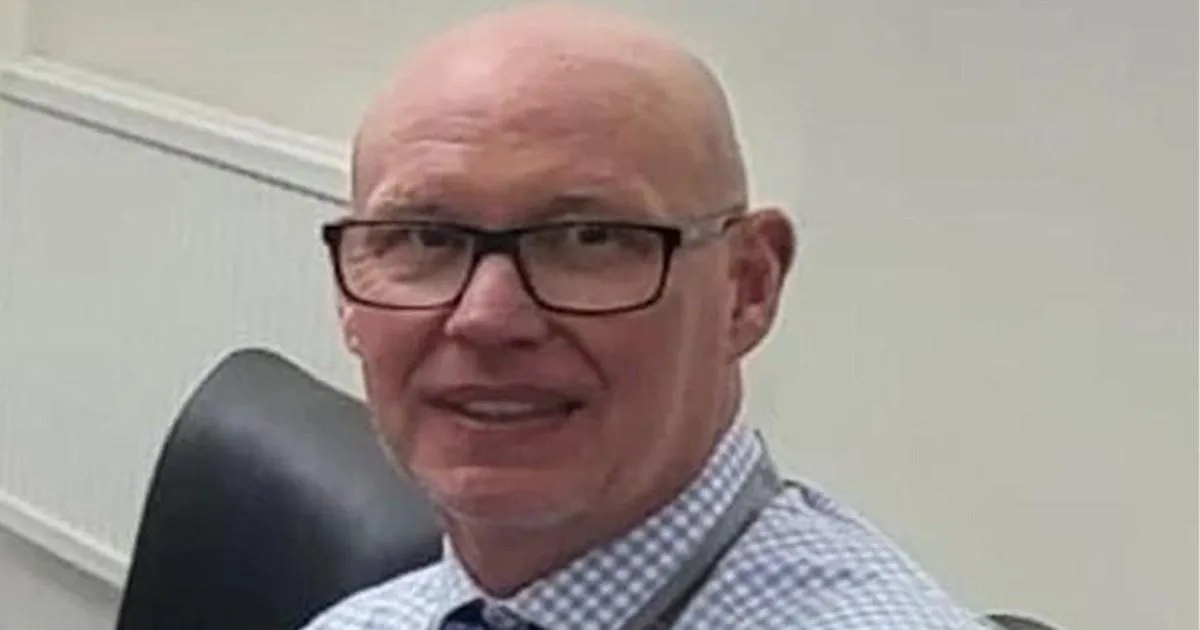
The story begins on an ordinary spring afternoon that would end in unspeakable tragedy. Michael Mullins, a 56-year-old headteacher, was doing something millions of people do every day: cycling home from work. He had spent his day at Stretford Grammar School in Manchester, guiding and caring for the young people in his charge, and now he was making his way back through the familiar streets of Altrincham. Nothing about that journey suggested that his life was about to be violently taken from him. But then Simon Richardson, a 35-year-old man behind the wheel of a large Volvo XC90, crashed into him at a junction. Richardson allegedly drove straight through give-way markers, and in that single careless and reckless moment, the life of a devoted educator was thrown into chaos, and a community would be left to grapple with a loss that defied comprehension. The court would later hear how this was no simple accident, but the beginning of a harrowing sequence of events that prosecutors would describe as murder.
What makes this case so deeply disturbing is not just the collision itself, but the shocking indifference that followed. In the immediate aftermath, the scene was one of frantic humanity. Several eyewitnesses saw the impact and did exactly what any decent person would be expected to do: they stopped their cars, ran out, and rushed to see if the cyclist was okay. They called the emergency services, desperate to help. They searched the hedgerows and the fields beside the road, scanning for any sign of the man who had been riding the mangled bike that lay clearly in the road. But he was nowhere to be found. This was a chilling mystery that lasted only until the terrible truth became clear. Michael Mullins was not lying in a ditch or hiding in the undergrowth; he was trapped underneath Richardson’s car, dragged along the tarmac beneath the wheels of the very vehicle that had just struck him. As witnesses searched for him, he was being carried further and further away, suffering unimaginable injuries, while the driver who had put him there simply drove on.
The prosecution’s case, laid out by Phil Barnes KC, paints a picture of grim knowledge and deliberate cruelty. According to the charges, Richardson knew what he had done. Visible damage to the Volvo’s bonnet and windscreen, captured on an ANPR camera as he drove away from the collision, was described as irrefutable evidence that Michael Mullins had been thrown up onto the front of the car. As Mr. Barnes put it, there was simply no way the driver could not have known that he had hit someone and that that person was very likely to be seriously hurt. Instead of stopping, Richardson turned his head, put his foot down, and fled. At times, he travelled at double the speed limit, all while Michael Mullins remained trapped beneath the car, alive but gravely injured. The prosecution asserts that for a significant portion of that dreadful journey, Richardson knew Michael was under his wheels, trapped and in agony, and yet he intentionally kept driving, treating the life beneath his car as nothing more than an inconvenience.
The details of the flight are almost too horrifying to absorb. Richardson drove on for more than a mile and a third, dragging Michael’s body against the unforgiving surface of the road. Then, in a quiet country lane, he reportedly stopped. He got out of the driver’s seat and attempted to pull Michael out from under the car. It was a fleeting, futile gesture that failed, and if it was an attempt at mercy, it was abandoned all too quickly. He got back in the car and drove on. Witnesses then described seeing the Volvo veering sharply and deliberately from side to side, as if the driver was trying to shake the body loose. The car eventually mounted a grass verge, and the prosecution says it was at this point that Richardson drove over his victim at least once more before Michael was finally dislodged. Even then, Richardson did not wait to help, did not call for an ambulance, and did not face what he had done. He simply made off, leaving behind a trail of blood that led the pursuing witnesses to a man lying on the grass, still breathing, but barely alive.
For the witnesses who followed that trail of blood, the moment of discovery must have been devastating. They had seen a crash and had been unable to find the cyclist; now they found him, broken and dying on a grassy verge more than a mile away from where he had been struck. The first man to reach him found him still breathing, but only just. His breath gave out within moments of help arriving. When medics reached the scene, there was nothing that could be done. Michael Mullins, a respected headteacher from Northwich, Cheshire, was pronounced dead at the roadside at 6:50 p.m., just forty minutes after the collision that had started this nightmare. He had been dragged, crushed, and abused beyond comprehension, all at the hands of a man who was arrested the following day, but not before engaging in yet another high-speed chase with police while driving a van dangerously through residential streets in Failsworth, Oldham. The cruelty of that arrest feels almost symbolic: a man who showed no regard for human life was finally stopped, but tragically, not before he had taken one.
This is now a case for the courts to decide, and the legal proceedings are filled with weight and grief. The prosecution argues that this is not simply a case of reckless driving, but of murder. Their contention is that Simon Richardson’s actions went far beyond a panicked flight from an accident. They believe the evidence shows that he knew Michael Mullins was dragging beneath his car, alive, and that he deliberately continued driving in order to kill him or cause him serious harm. Richardson, however, denies murder. He has also pleaded not guilty to manslaughter and to dangerous driving. As the trial continues, the court must determine the truth of those dark moments on that April evening. But regardless of the verdict, there is no erasing the human cost of this case. A man who had dedicated his life to education and to the care of others was taken from his family, his school, and his community in a manner so brutal that it is hard to comprehend. The witnesses who stopped to help did everything right, and their actions remind us of the goodness that still exists in the world. But they were powerless to prevent a death that was avoidable, and the memory of finding Michael Mullins on that grass verge, and the trail of blood that led to him, will stay with them forever. This is the story of a life lost, a family shattered, and a community grieving for a man who deserved a far gentler ending to his day.