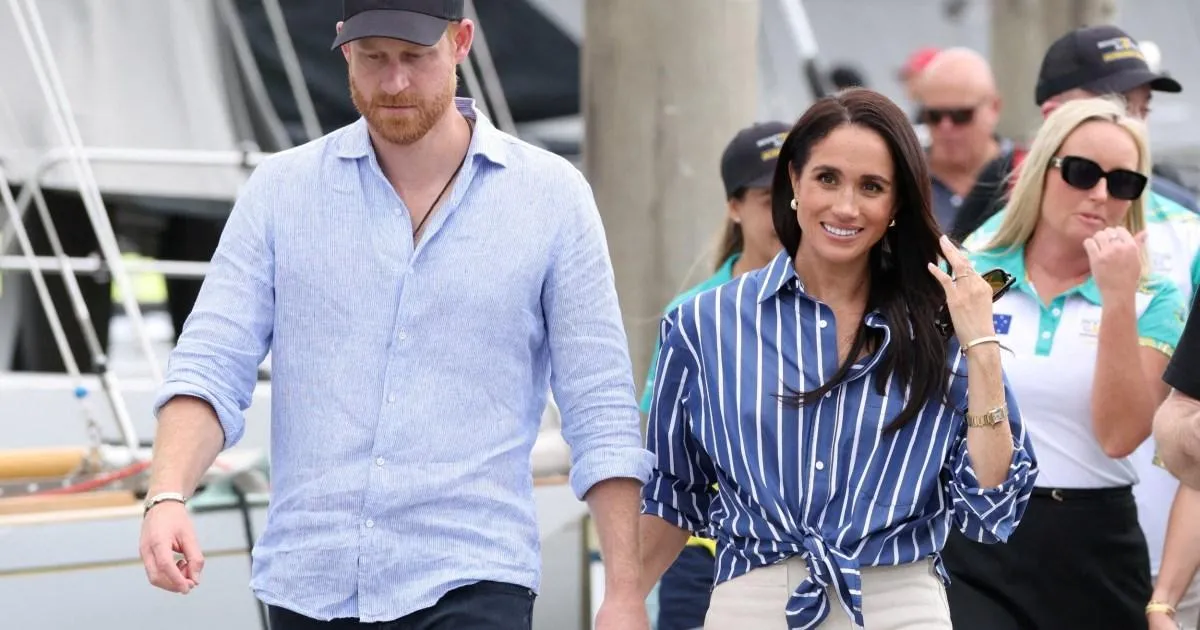
The Duke and Duchess of Sussex are back on British soil, and this time it feels different. Since making the decision to step away from the royal fold in 2020, Harry and Meghan have built a life across the Atlantic—raising their children, launching brands, and carving out an identity entirely their own. Yet in August, they quietly set up a new home in England, a gesture that spoke louder than any statement: their relationship with the UK is not over. And now, on a crisp Thursday, they are heading to Nottingham for their first joint engagements since returning. It is a moment loaded with symbolism, not least because this is the city that hosted some of their earliest royal couple appearances, back when the world was still trying to understand what a “modern monarchy” might look like. Six years on from the so-called Megxit crisis—a period that was as painful as it was public—they are stepping back into the rhythms of royal-ish duty, but on their own terms. The visit will be carefully scrutinised, dissected, and perhaps even welcomed. For Harry and Meghan, it is an opportunity to show that while their titles may no longer come with official responsibilities, their commitment to community work remains as rooted as ever. The word “quasi-royal” may not be in any official dictionary, but it is now firmly part of the Sussex lexicon—a unique space between royal tradition and independent life. Nottingham, with its rich industrial history and resilient communities, is the chosen backdrop for this next chapter. It is a choice that seems deliberate: a working city, not a palace; real people, not crowds of well-wishers behind barriers. They are arriving not as working royals, but as a couple who still believe their presence can shine a light on good work happening at the grassroots.
The schedule is modest, but its meaning is clear. Harry and Meghan will visit the Community Recording Studio, a place where young people can find their voices through music and production, often against the odds. They will stop by Himmah Hub, a food poverty action group that has become a lifeline for families struggling to put meals on the table. And they will meet Epic Partners, an organisation using sports programmes and mentoring to keep young people on track, offering them discipline, belonging, and a sense of future. These are not grand royal tours of cathedrals or military parades; they are the kind of places where the work is quiet, relentless, and often underfunded. It is fitting that the Sussexes have chosen these organisations, because they have always tried to position themselves as champions of the overlooked and the undervalued. Yet the visit is not without its tensions. A letter to Government stakeholders, authorised by the King last month, made a point of clarifying that the Sussexes remain “private citizens.” The wording struck some as a firm reminder of the boundaries drawn after the break. Harry and Meghan, who have consistently described themselves as public figures, were reportedly caught off-guard by the public airing of that status. There is an irony in the fact that they are being welcomed into community venues while simultaneously being reminded that they no longer carry the official royal stamp. Still, the engagements are expected to look, sound, and feel like royal appearances, complete with cameras, crowds, and the careful choreography that comes with a high-profile visit. The lack of official status may change the legal framework, but it does not change the public interest. Every handshake, every smile, every word spoken to a young person in a recording studio will be read as a statement. For Harry and Meghan, it is a balancing act: acknowledging their past, embracing their present, and trying to define what their future in the public eye will look like.
For Meghan, this is a particularly significant moment. It will be her first public appearance at events in the UK in four years. The last time she stood before a British audience was at the funeral of Queen Elizabeth II in 2022, a day of national mourning and collective memory. The weight of that occasion is still present in the public’s imagination—a moment when Meghan, like everyone else, was navigating grief under the glare of cameras. Now she returns to Nottingham with a different energy, not in mourning but in renewal. In 2020, she and Harry carried out their final official public royal engagement together at the Commonwealth Day service in Westminster Abbey. It was an event full of precedent and pageantry, the kind of ceremony that had marked royal life for centuries. Walking out of that service, the couple looked poised, but the world knew they were on the brink of something irreversible. Just days later, the full extent of their decision to step back would make headlines. Now, four years on, the circumstances have changed in ways nobody could have predicted. There have been children, court cases, documentaries, podcast deals, and enough headlines to fill several lifetimes. There have also been quieter moments—family holidays, birthdays, the ordinary rhythms of raising a family in Montecito. The idea of returning to the UK, even for a short visit, must stir complicated emotions. This is a country where Harry was born, where his mother is buried, and where the entire royal drama has unfolded in public. For Meghan, it is the place where her fairytale began and then fractured. Yet here she is, ready to stand alongside Harry and engage with communities, not because she has to, but because she wants to. The decision to involve her in quasi-royal visits—rather than leaving Harry to carry the flag alone—signals a shared commitment to the causes that matter to them as a family. It also signals that Meghan is prepared to re-enter the British public sphere, albeit cautiously and on her own terms.
What does the future hold for Meghan in the UK? Not, it seems, a full return to royal duties. Sources close to the couple have suggested that quasi-royal visits will be “relatively rare” for the Duchess. Her focus, understandably, is on her children—protecting their privacy, nurturing their growth, and giving them as close to a normal upbringing as possible. Then comes As Ever, her lifestyle brand, which has grown from a side project into a serious business. And beneath that, there is a creative ambition that has never really faded: rebooting her acting career. A source told The Telegraph that Meghan is “reading a lot of scripts at the moment,” with her professional priorities distinctly her own. Where Harry finds his calling in philanthropic work and public service, Meghan’s energies are divided between family, business, and the possibility of returning to the screen. The source was frank about the division of labour in the Sussex household: “Prince Harry’s is his philanthropic work and public service. Her focus is on her family and children, followed by her business, followed by rebooting her acting career.” If there is any time left after all that, Meghan would still like to do “some charity work.” It is a complicated portfolio, one that reflects the realities of a modern celebrity life rather than the narrow expectations of a traditional royal role. Rumours have already started to circulate about what her return to acting might look like. The former Suits star is said to have been in talks for a role in The Gentlemen, the hit Netflix series that has become a creative favourite. Whether those talks amount to anything remains to be seen, but the very idea sends a clear message: Meghan is not locked in the past. She is looking forward, reading scripts, imagining new characters, and, perhaps, preparing to remind the world why she was a compelling actress before she was a duchess. For Harry, the next few years will likely be defined by his foundation and his continued work with veterans, mental health groups, and the global charitable causes he has championed since he and Meghan founded Archewell. They are, in a sense, building parallel lives that occasionally intersect—each with their own projects, but still united in their larger mission.
There is something humanising about the details emerging from Meghan’s camp. The Duchess, according to a friend who spoke to Hello! magazine, is genuinely up for the visit to Nottingham. “She’s up for it. There are still causes, and there are still issues that Meghan is really passionate about supporting, and Nottingham is one of those.” That simple phrase—”she’s up for it”—does a lot of work. It suggests someone who is not reluctantly attending a duty, but actively eager to connect with communities that matter to her. It also reveals a side of Meghan that sometimes gets lost in the noise of headlines and palace gossip: a woman who believes, perhaps naively or perhaps bravely, that her presence can do good. Nottingham holds a special place in the Sussex story. It was one of the first cities to see Harry and Meghan together as a couple, back in the days when their romance was still fresh and the public was charmed by their chemistry. There is a kind of symmetry in returning there now, after all the turbulence. The friend’s words also hint at a broader truth about the couple’s approach: they are no longer trying to be royals in the old sense, but they have not abandoned the idea of service. Instead, they are weaving it into their own lives, on their own schedules. For Meghan, that means supporting causes she is passionate about while also being a mother, an entrepreneur, and perhaps an actress again. It is a lot, but she has never shied away from a full plate. The visits to the Community Recording Studio, Himmah Hub, and Epic Partners are not random; they are carefully selected to reflect issues that the Sussexes have spoken about repeatedly: youth opportunity, food insecurity, and the power of community to protect and inspire. In Nottingham, they will meet people who are doing the hard, unglamorous work of keeping society together. The cameras will be there, of course, but so will the stories of real people—young musicians finding their voice, families receiving support they desperately need, teenagers whom sports mentors kept away from trouble. In a way, this visit is about stepping back so the organisations can step forward. Harry and Meghan know that their presence can draw attention to work that might otherwise go unnoticed. That is a power they still possess, even as private citizens.
What does this all mean? It would be easy to dismiss the Nottingham visits as a public relations exercise, a way to stay relevant in a country that was once their home. But there is more nuance to it. The couple’s return to the UK—both physically and symbolically—represents a negotiated peace with the institution they left behind. They are not coming back to reclaim their old titles or roles; they are coming back to inhabit a space they have created for themselves. The King’s letter may have clarified their status as private citizens, but it cannot erase the reality that few private citizens command this level of attention. The Sussexes are public figures, whether the palace acknowledges it or not, and they have made peace with that. They have also found a way to be useful—not through official appointments, but through personal choice. The phrase “quasi-royal” captures the ambiguity perfectly: they are royal enough to draw crowds, but private enough to choose their own path. For Meghan, the UK will likely remain an occasional stop rather than a home base. Her life is in California, with her children, her brand, and her creative ambitions. Harry, meanwhile, has started to rebuild his relationship with the country of his birth, perhaps in the way that many people do after a long rupture—cautiously, seeking connection, but not fully trusting in the old structures. The couple’s joint appearance in Nottingham is not a full reconciliation; it is a tentative step forward. And in a world where royal dramas are often played out in absolutes—leave or stay, loyalty or rebellion—that tentative step is perhaps the most human thing of all. They are not avoiding the past, nor are they chained to it. They are simply showing up, in a community studio, at a food poverty hub, and among young people who need role models. Whether that makes them private citizens or something else entirely, the result is the same: a moment of connection between two people who have been through a great deal and the public that has watched, judged, and sometimes loved them. The months ahead will bring more speculation about Meghan’s acting career, Harry’s next projects, and the state of the family dynamic. But for today, all that matters is Nottingham. The couple is back, the causes are waiting, and the story continues—quieter, older, but still very much alive.