


Paragraph 1
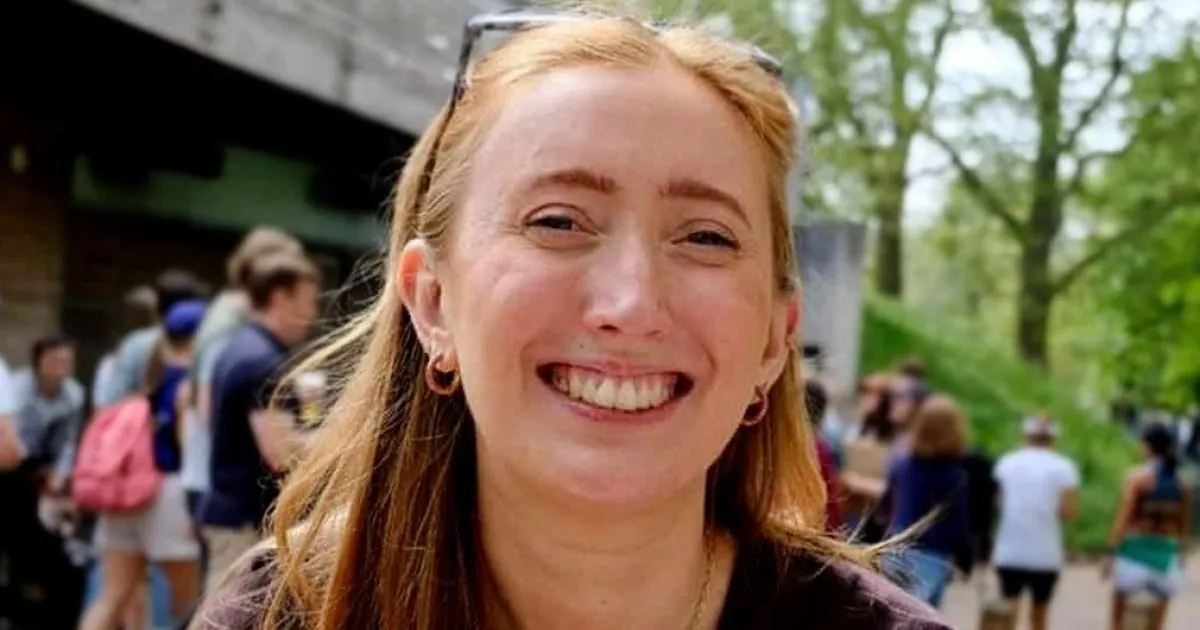
Chloe Moffat was, by every measure, a young woman on the rise. At just 26, she had carved out a place for herself as a personal assistant at the Treasury, a government department where precision, discretion, and loyalty mattered. She loved her job. She had an “exemplary record,” according to an inquest heard earlier this month, and her dedication had been recognized with a bonus and the promise of a promotion. She was a politics graduate with a future ahead of her, someone who had walked through the doors of one of the most prestigious institutions in the country and found purpose there. Her family described her as bright, hardworking, and deeply committed to the role she held. But on May 20, 2025, Chloe died by suicide, one day after an anonymous complaint was made about her. Her death has left her parents, Anne and David, shattered and searching for answers. The grief is still raw, and the questions are relentless. How could a young woman with so much to live for, so much to look forward to, have been brought so low in a matter of hours? What exactly happened in that meeting that made her believe her life was over? And why did a process meant to handle workplace concerns end up contributing to such an irreversible tragedy? The coroner’s ruling has since made it clear that the Treasury “materially contributed” to Chloe’s death by failing to follow its own HR protocols. For her parents, that finding is both a validation and a source of profound pain. It confirms that Chloe was let down by the very institution she had served with such devotion. It also means that her death was not inevitable, but the result of decisions made by others, decisions that could have been different at every turn.
Paragraph 2
The chain of events that led to Chloe’s death began with an anonymous complaint. The exact nature of the complaint was described by her parents as “office gossip,” but at the time, it carried the weight of a serious accusation. Chloe was accused of sharing sensitive information about her colleagues: discussing salaries, mentioning a co-worker’s new job, and talking about a relationship between two members of staff. On May 19, she was called into what she assumed would be a routine chat with her line manager. Instead, she found herself facing not only her line manager but also a senior manager, who presented her with the allegations. She had not been told in advance what the meeting would be about. She had not been given the chance to prepare, to gather her thoughts, or to understand the seriousness of what was being put to her. She was not reassured that it was “unlikely” she would lose her job, a job she had held for three years and loved deeply. She was not permitted to have a friend or colleague present for support. According to her mother, Anne, even Chloe’s line manager seemed taken aback by the accusations. “When her line manager heard them, she said they didn’t sound like the Chloe she knew,” Anne told The Times. “So why ambush her with a meeting like this without checking if they were vexatious, unfounded or simply not true?” It is a question that cuts to the heart of the tragedy. Why was a young woman with an exemplary record treated as though she were already guilty? Why was there no attempt to verify the complaint, no effort to protect her from the shock of the accusation, and no thought given to the emotional toll such an encounter might take? The meeting ended, and Chloe was locked out of her email account shortly afterward. She was instructed not to discuss the matter with her colleagues. In an instant, her world had narrowed to a single terrifying possibility: that she was going to be fired.
Paragraph 3
The aftermath of that meeting was devastating to witness, even from a distance. Chloe called her mother, Anne, who was in France at the time. Anne, a former head of care at a children’s hospice, had spent her career looking after others, but she could not be there for her daughter in that moment. During the call, Chloe made it clear that she believed she was going to lose her job. She also messaged a friend that day, writing, “I am going to be fired.” When she met that friend later, she broke down crying. The image is heartbreaking: a young woman, once confident and capable, reduced to tears by a process that should have been fair and supportive but instead felt like an ambush. That night, Chloe traveled to her family home in Godalming, Surrey. She and her father, David, discussed plans to visit Oxford at the weekend. On the surface, it might have seemed like a normal evening, a brief respite from the turmoil of the day. But inside, Chloe was struggling. Her father later said she believed her life had been “destroyed.” The next morning, David found his daughter dead. The medical cause of death was determined to be suicide. Assistant coroner Anna Crawford said Chloe’s state of mind and anxiety over being fired likely contributed to the decision she made to take her own life. For her parents, the pain of that discovery is unimaginable. They lost their daughter not to a sudden illness or an accident, but to a moment of overwhelming despair, triggered by a workplace meeting that should never have unfolded the way it did. The weekend trip to Oxford was never taken. The promotion she had worked for was never realized. The life she had built, the future she had imagined, all of it was swept away in a tide of fear and hopelessness.
Paragraph 4
The coroner’s findings have since shed light on just how preventable Chloe’s death may have been. Assistant coroner Anna Crawford ruled that the Treasury had “materially contributed” to her death by failing to follow its own HR protocols. The department had processes in place, procedures designed to protect employees when they are accused of misconduct, but those processes were not followed. Chloe was not given advance notice of the meeting’s purpose, which is a basic tenet of fair procedure. She was not offered the presence of a support person, which is a standard safeguard in many workplaces. She was not reassured about the likely outcome, even though it was “unlikely” she would have been dismissed over the claims. She was left to imagine the worst, and she did. The complaint against her was anonymous, and her own line manager reportedly did not recognize the Chloe described in the allegations. Yet the meeting went ahead in a manner that felt more like an interrogation than a conversation. For her father, David, the disparity between the seriousness of the meeting and the triviality of the allegations is staggering. “After her death, when we were trying to work out how bad the complaints had been for a meeting like this to be called that led to Chloe taking the drastic action she did, we finally saw the allegations and thought, ‘Was that it?’” he said. The allegations, he noted, were essentially office gossip: talk about salaries, a co-worker’s new job, and a relationship between two colleagues. Whatever truth there was to them, they did not warrant the catastrophic response that followed. Chloe was not a criminal, not a fraudster, not a traitor to her department. She was a young woman who made a mistake, if she made one at all, and who deserved the chance to explain herself, to be heard, and to be supported. Instead, she was left feeling that her career was over, her reputation ruined, and her identity as a capable, trusted professional destroyed.
Paragraph 5
In the months since Chloe’s death, her parents have spoken out with a mixture of grief, anger, and determination. Anne and David are not seeking to destroy the Treasury or to assign blame without evidence. They want answers. They want to understand why their daughter was “ambushed” by her manager over what they describe as “office gossip.” They want to know why the allegations were not checked before the meeting, why Chloe was not given any support, and why the process was allowed to spiral so far out of control. Anne’s question is particularly piercing: “When her line manager heard them, she said they didn’t sound like the Chloe she knew. So why ambush her with a meeting like this without checking if they were vexatious, unfounded or simply not true?” It is a question that speaks to a broader failure of institutional compassion. The Treasury, like many large organizations, has policies and procedures designed to ensure fairness. But policies are only as good as the people who implement them. In Chloe’s case, the people who implemented them failed. They failed to protect her, failed to support her, and failed to recognize the human being at the center of the process. Anne and David want “redress,” though they are unsure whether they will take further action. They are still navigating their grief, still trying to make sense of a loss that defies understanding. David described the loss as “unbearable,” a word that carries the full weight of a parent’s sorrow. No parent should have to bury their child. No parent should have to relive the moment they found their daughter dead, knowing that a few simple changes in a workplace process might have saved her life. The Moffats are not asking for vengeance. They are asking for accountability, for transparency, and for the assurance that no other family will have to endure what they have endured.
Paragraph 6
The Treasury has responded to the coroner’s findings with a statement of condolence and a commitment to change. A spokesperson said that the department’s “deepest sympathies” continue to be with Chloe’s friends and family as the Treasury “continues to mourn our colleague.” They acknowledged that lessons must be learned from the tragedy and said they are “working urgently to respond to the coroner’s findings.” The department has introduced “immediate changes” to its guidance, support, and wellbeing arrangements for staff accused of misconduct. A Prevention of Future Deaths report has been sent to the Treasury and to Dame Antonia Romeo, head of the civil service, and the department has said it is not contesting the coroner’s findings. The Moffats have agreed to meet with Treasury officials to share their views and to hear about the actions being taken. It is a small but significant step, an acknowledgment that the institution bears some responsibility for what happened. But for Anne and David, no amount of procedural reform can bring Chloe back. They are left with memories, photographs, and the aching absence of a daughter who should still be here. The tragedy of Chloe Moffat is not just a story about one workplace failure. It is a reminder that behind every HR case, every complaint, every meeting, there is a human being with hopes, fears, and vulnerabilities. Chloe was more than a Treasury worker. She was a daughter, a friend, a politics graduate with a promising future, a young woman who loved her job and wanted to succeed. Her death is a profound loss, and the circumstances surrounding it demand more than a corporate response. They demand a genuine reckoning with the way institutions treat their people, especially when they are at their most vulnerable. The Treasury’s changes are welcome, but they must be meaningful and lasting. Chloe’s parents will continue to ask their questions, not because they want to punish, but because they want to ensure that the answer to “Was that it?” is never again a young life cut short.