



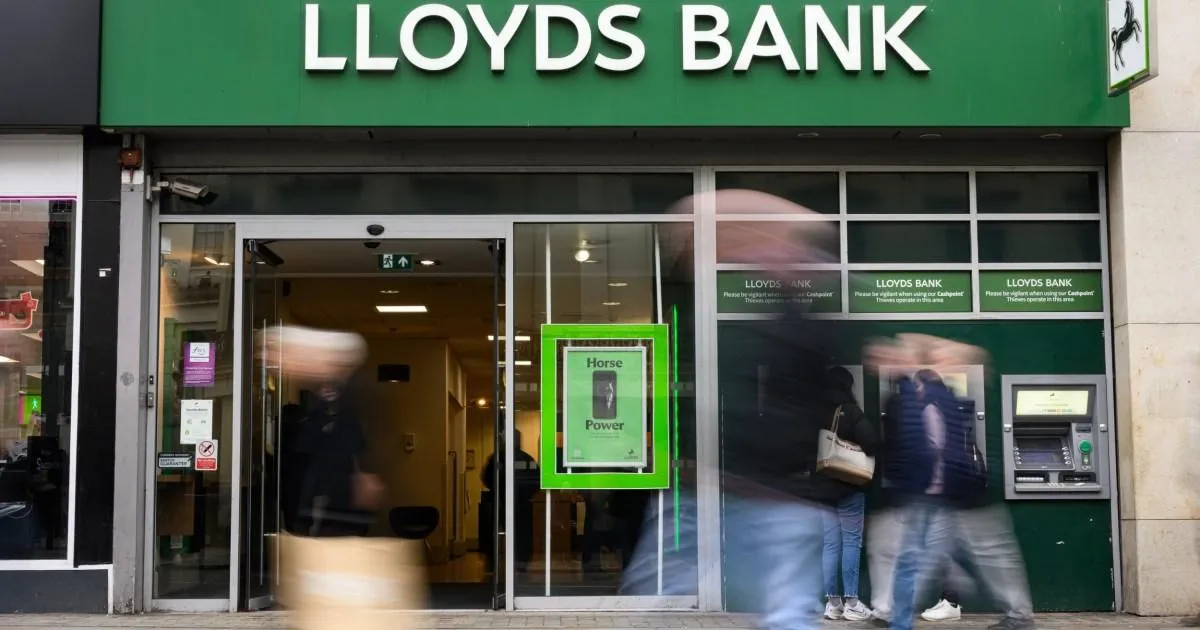
The physical landscape of the British high street is undergoing yet another significant transformation as Lloyds Banking Group has officially announced a sweeping wave of branch closures affecting its Lloyds Bank, Halifax, and Bank of Scotland networks. This expansive consolidation plan, which is slated to unfold throughout the remainder of 2026 and continue into the first half of 2027, marks a major shift in how the banking giant manages its presence in local communities. While these closures represent a strategic business decision for the institution, they underscore the broader, often difficult evolution of our town centers as they move away from traditional, face-to-face services.
The primary driver behind this wave of closures, according to the banking group, is the fundamental change in how customers interact with their finances. Lloyds points to a decisive migration toward digital banking tools, noting that the vast majority of their clients now prefer the convenience of mobile apps, websites, or telephone services over visiting a physical branch. While this shift reflects the modern necessity for speed and on-the-go accessibility, it leaves behind a significant portion of the population—particularly the elderly or those in rural areas—who rely on the personal touch and tangible support that only in-person banking can provide.
The scale of the reduction is substantial, involving dozens of locations across the United Kingdom. Specifically, 44 Lloyds Bank branches are set to close their doors in 2026, followed by another 13 in early 2027. The Halifax brand is seeing even more aggressive consolidation, with 51 locations scheduled to close before the end of 2026 and six more in 2027. The Bank of Scotland is also affected, albeit to a lesser degree, with four branches slated for closure later this year. These dates are spread across the country, from bustling urban centers like London and Birmingham to smaller towns, signaling that no region is entirely insulated from this trend.
This news arrives against a backdrop of wider decline for the traditional British high street, which has struggled to retain its relevance in an increasingly digital economy. Banks are far from the only institutions pulling back; in recent days, other major retailers and service providers have announced similar retrenchment strategies. Whether it is fashion chains entering administration or grocery brands shutting down convenience stores, the cumulative effect is a thinning of the local business ecosystem. These closures do more than just remove a convenience; they often remove a communal anchor, changing the character of the streets where we grew up and live.
As we look at these long lists of closing dates—ranging from June 2026 through the spring of 2027—it is important to recognize the human impact beyond the spreadsheets. For many small business owners and community members, the local bank branch served as a hub for deposits, expert advice, and the occasional face-to-face resolution of complex financial issues. As these doors lock for the final time, the burden falls on communities to adapt to a digital-first world, a transition that is moving faster than some social infrastructures can support. The convenience of an app is an undeniable benefit, but it comes at the cost of the tangible human connectivity that once defined our local neighborhoods.
Ultimately, this development forces a larger conversation about the future of our towns. As commerce moves online, we must consider what becomes of the empty storefronts left in the wake of these corporate decisions. While banks have a responsibility to remain profitable and efficient in a digital age, they also hold a social responsibility to remain accessible to all customers. As we move through the next year and a half, the challenge for both regulators and the banking industry will be to ensure that in our rush toward a cashless, app-based future, we do not leave those who value community banking behind.