



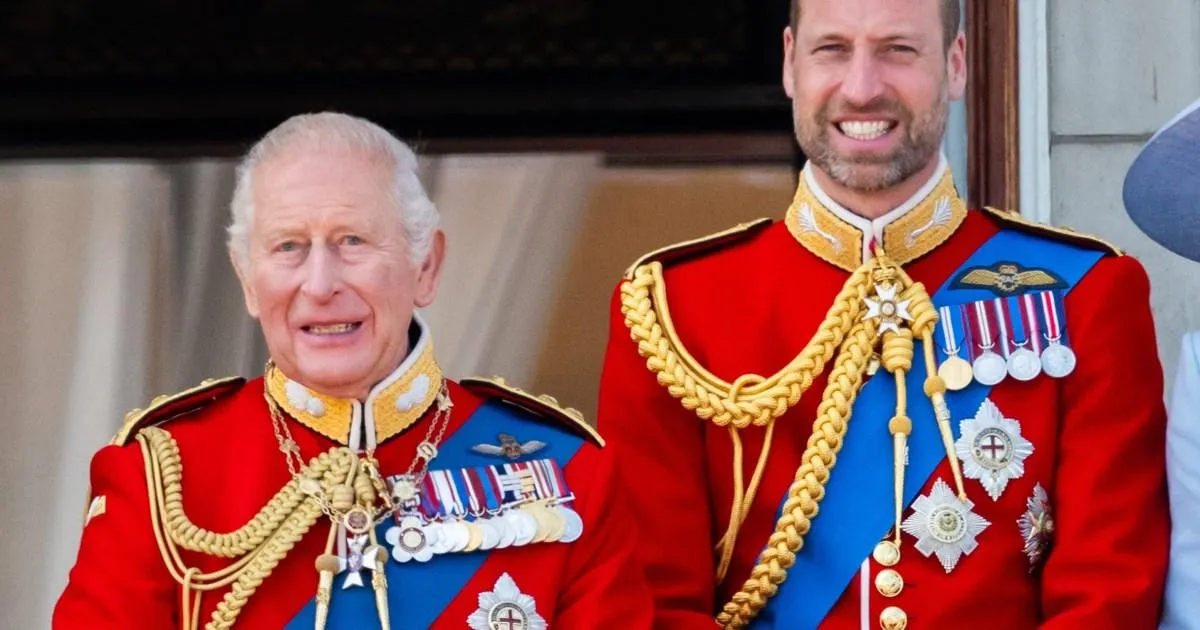
The bond between King Charles III and Prince William is often viewed through the lens of duty and protocol, but behind the scenes, it is defined by a deep, reciprocal reliance. Grant Harrold, who served as a royal butler for the King and Queen Camilla for seven years, offers a unique perspective on this evolution. Having witnessed William’s formative years firsthand, Harrold describes a relationship fundamentally rooted in mutual emotional and intellectual support. Far from a stiff, hierarchical structure, the King treats his son as a vital confidant, offering guidance on the complexities of royal life while simultaneously leaning on William for his own perspective. It is a genuine partnership between two men who share the unique, solitary burden of the monarchy.
As Prince William matures into his role as the Prince of Wales, this dynamic has shifted from a mentorship to a collaborative alliance. While King Charles spent years quietly preparing his son for the weight of the crown, William is now increasingly comfortable offering his own insights and modern outlook back to his father. Harrold notes that while the demands of the King’s new schedule have inevitably reduced their face-to-face time, the core of their relationship remains unshaken. The transition of power following the late Queen Elizabeth II’s passing has not created distance; rather, it has clarified their roles, allowing William to step forward with a newfound confidence that reflects both his father’s lessons and his own personal growth.
A critical pillar in Prince William’s life—and a key influence on the stability of the monarchy—is his marriage to Catherine, Princess of Wales. Harrold characterizes the Princess as the essential “grounding” force in William’s life, helping him maintain his composure amidst the pressure of a public existence. Much like Queen Camilla provides a stabilizing presence for the King, Kate is described as the “power behind the throne.” She is seen as an incredibly strong, self-assured individual who understands the balance required of a royal partner. By successfully navigating the transition from a non-royal background to the heart of the institution, she has bolstered the Prince’s ability to remain steady as he charts the future of the monarchy.
The shift in William’s demeanor over the years is perhaps the most visible sign of his readiness for his eventual role as King. Former royal gardener Jack Stooks, who served the family for twenty years, notes that William has become noticeably more serious since his 2011 wedding. While this could easily be misconstrued, those close to the Prince recognize it as the natural manifestation of his deepening sense of responsibility. He is no longer just a royal figurehead; he is an active participant in global issues, mirroring his father’s lifelong commitment to environmentalism and wildlife conservation. This professional alignment signifies a son who is not only following in his father’s footsteps but is prepared to carry that legacy forward with equal conviction.
Despite their shared commitment, subtle differences define the individual personalities of the King and the Prince. Stooks highlights that while William is “cut from the same cloth” as his father, there is a distinct difference in lifestyle philosophy. The King is widely regarded as a monumental “workaholic” whose dedication to his duty is famously relentless. In contrast, Prince William appears to strike a more intentional balance, carving out clear windows of time to prioritize his family life and his children. This distinction suggests that William is attempting to modernize the royal experience, holding onto the seriousness required by his station while refusing to sacrifice the personal life that keeps him human.
Ultimately, the portrait that emerges is one of a family adjusting to the pressures of the modern era with resilience and mutual respect. The King remains a guiding force, yet he is clearly comfortable allowing his son the autonomy to shape his own path. Through the calm influence of the Princess of Wales and the lessons inherited from his father, Prince William is successfully navigating the space between traditional duty and a more approachable, family-centered vision of leadership. This relationship, built on years of shared experience and a common goal, ensures that the institution remains stable, anchored by two men who have successfully learned to lean on one another as they walk the long, storied road of the British monarchy.