

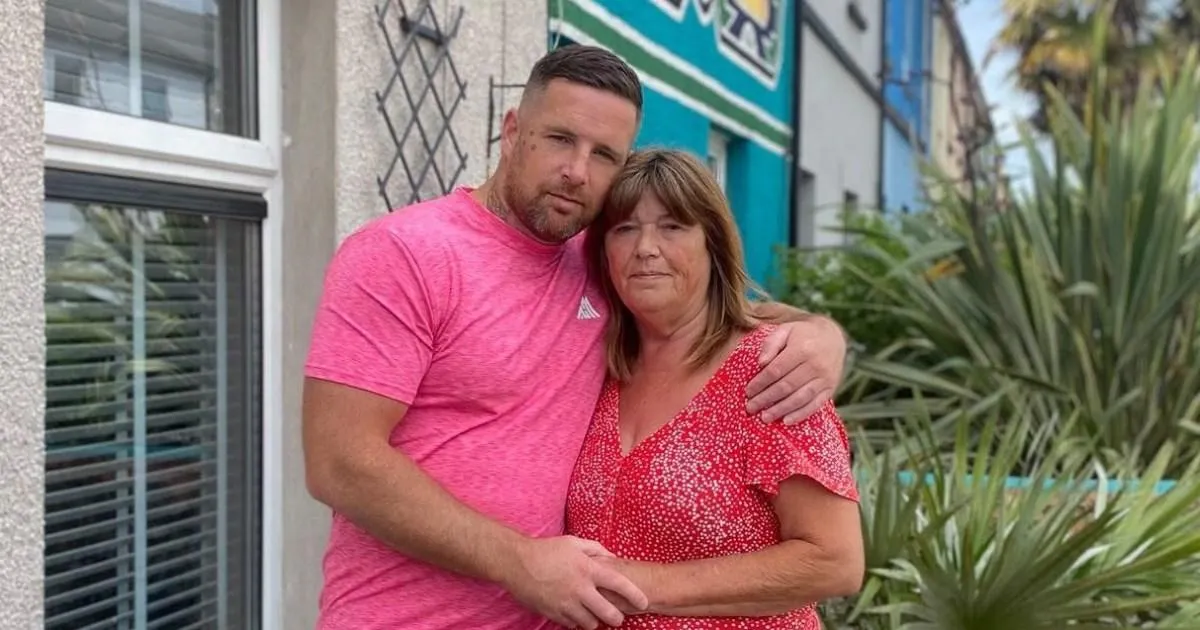
The story of 38-year-old Shaun Lloyd is a harrowing testament to the failures of the British justice system, specifically regarding the now-abolished Imprisonment for Public Protection (IPP) sentences. In 2006, Shaun was sentenced for a mobile phone theft—a crime for which he received a two-year and nine-month tariff. Yet, fourteen years later, he remains behind bars. Because he was handed an open-ended IPP sentence, he has been trapped in a revolving door of recalls, spending more than three times his original sentence in custody despite the fact that these indefinite sentences were officially scrapped in 2012. The persistence of these sentences, even for minor offenses, has left thousands of families, including Shaun’s mother, Shirley Debono, in a state of permanent mourning for the lives their loved ones were meant to lead.
The human cost of this policy is best understood through the lens of Shaun’s recent experience. After years of struggling with drug addiction—a vice he developed while navigating the prison system—Shaun had finally found his footing. He was drug-free, physically fit, and had successfully secured an apprenticeship with the railways. He was, by all accounts, turning his life around. However, his progress was derailed by a single anonymous, and allegedly malicious, phone call to the police. Despite never being arrested, questioned, or charged with a new crime, he was recalled to HMP Cardiff for failing to report a police wellness check at his mother’s home. In an instant, his stability was shattered, proving that for IPP prisoners, freedom is not a right but a precarious, easily revoked privilege.
Shirley Debono, who has become a tireless advocate as the founder of the “IPP Committee In Action,” is now publicly challenging political figures like Andy Burnham and the government. She argues that the current national uproar surrounding the early release of serious criminals, including killers and domestic abusers, is misplaced when compared to the plight of IPP prisoners. For Shirley, the injustice is visceral; the state has essentially “stolen” her son’s life. She believes it is a moral imperative for the government to include IPP prisoners in release schemes, especially those who, like Shaun, have faced no new charges or have had previous allegations dropped. To her, keeping these men in custody while fast-tracking violent offenders is a profound betrayal of justice.
The international community has finally begun to echo these sentiments, lending significant weight to the families’ struggle. Last week, the United Nations released a scathing 16-page report condemning the UK’s continued use of IPP sentences, labeling the practice as “inhumane” and a form of psychological torture. The UN’s Working Group on Arbitrary Detention highlighted the “mental anguish” caused by the perpetual uncertainty of having no fixed release date. For men like Shaun and the other four cases examined by the committee—who have collectively served 87 years behind bars for varied and often minor infractions—the UN’s findings confirm what they have felt for years: their detention is not just bureaucratic, but illegal and fundamentally cruel.
The government’s response has thus far been lukewarm, insisting that support for IPP offenders has “significantly improved” since the sentences were abolished. However, this rhetoric offers little comfort to families who see their loved ones wasting away in prison cells while the trauma of the system passes from the prisoners to their children. Shaun’s own children, aged eight and ten, have grown up with a father who is perpetually unreachable, caught in a Kafkaesque nightmare where he is treated as a guilty man despite the lack of evidence against him. Shirley believes that not only should these men be released, but they, along with their families, are owed compensation for the years and development milestones that have been forcefully snatched away by an outdated and unjust policy.
Ultimately, the case of Shaun Lloyd forces us to ask what we truly value in a justice system: vengeance or rehabilitation. As the Prime Minister weighs options for prison reform and sentencing, the voices of mothers like Shirley serve as a grim reminder that “law and order” can sometimes devolve into state-sanctioned cruelty. With the Criminal Cases Review Commission expected to decide in August whether to send Shaun’s case to the Court of Appeal, the world is watching to see if the UK will finally acknowledge the “blood on their hands” and grant these men the mercy they have been denied for over a decade. Until then, the IPP prisoners remain the forgotten casualties of a system that refuses to close the book on a failed chapter of its own history.