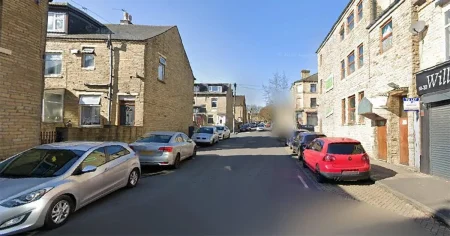


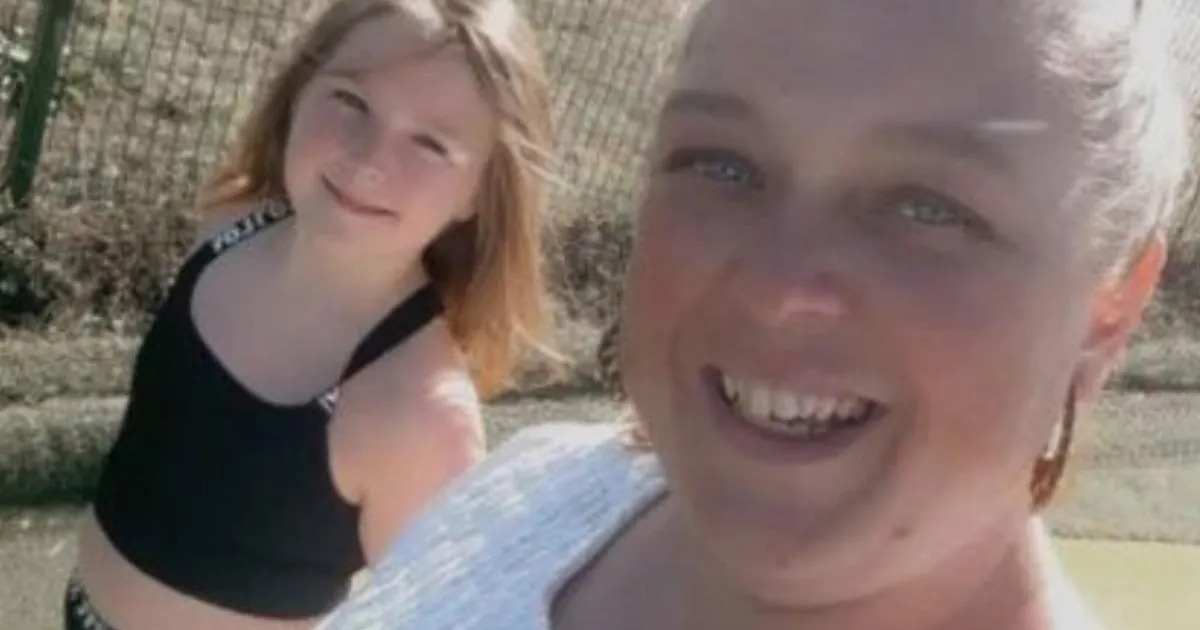
In the quiet, pre-dawn hours of a Wednesday morning, the peace of a residential street in Grangetown, Middlesbrough, was shattered by a terrifying and devastating event that would leave a community reeling and a family torn apart. As the clock struck half past five, an inferno erupted within a home on Birchington Avenue, unleashing a blaze so fierce that the very architecture of the house could not withstand it, and the local community was thrust into a desperate, heartbreaking struggle against the flames. The fire claimed the lives of two people: seven-year-old Valentina Foster, a vibrant young girl with her entire life ahead of her, and her aunt, 34-year-old Natalie McDonald, a woman in the prime of her life. The tragedy unfolded with horrifying speed, leaving a town already steeped in mourning to grapple with yet another layer of profound sorrow and a rising tide of fear regarding the potential for further gangland retribution.
The first light of that Wednesday morning revealed a scene of total devastation on Birchington Avenue. The home, once a family sanctuary, stood as a charred, smouldering shell, with its roof having completely caved in under the intense heat. The fire had taken hold with such ferocity that it seemed almost unstoppable. Eyewitnesses described an appalling scene of desperation and trauma. A 20-year-old neighbor, Ellie, recounted to reporters the sheer, overpowering intensity of the situation. “The entire house was scorching,” she said, her voice laden with the shocking memory of that morning. “I couldn’t get near the front of the house, it was that hot.” In a heroic and harrowing attempt to escape the deadly heat and smoke, Ellie witnessed a woman desperately launching herself from a second-floor window. She described seeing the woman, likely in a state of shock, crying, and staying by her side as they both waited in the uncertain light for the paramedics and the fire crews to arrive. The entire community felt the tremors of the event, as residents were jolted from their beds by the roar of the flames and the wailing of emergency vehicles. The emotional aftershocks were immediate, with neighbors describing their sense of desperation to help, but being unable to get close enough to the overwhelming heat to make any difference.
As the morning progressed, the scale of the tragedy became impossible to ignore. The fire service and police were swarming the area, with the scene cordoned off and roads closed while crews worked to ensure the fire was fully contained and to begin the grim task of investigating the cause. A 48-year-old woman was rushed for emergency treatment, and the news that followed was dire: she remained in a critical and unstable condition in the hospital, clinging to life. Three other individuals also sustained what were likely severe injuries, though their conditions were not as critical. The scope of the casualties and the chaos in which they arrived, coupled with the viciousness of the fire itself, immediately presented significant red flags to law enforcement. In the wake of this utter tragedy, two men, one aged 23 and another 31, were swiftly identified and arrested on the authority re-looking of murder. These arrests were a swift and significant escalation, given that the initial response was a fire service emergency. The confirmation that they were arrested on suspicion of assault charges rather than for a lesser fire-related offence sent a clear message that this was not being treated as a tragic accident. It was a calculated or possibly criminally reprisal event, and the community braced itself for the answers to be revealed.
Compounding the shock of this deadly blaze is the context of an almost impossible week for the town of Middlesbrough. This tragedy on Birchington Avenue came in the immediate aftermath of a horrific, catastrophic incident in a neighboring town that had already plunged the entire region into a profound and collective grief. This latest fire has effectively served as a second hammer blow, occurring just days after a devastating crash on the A66 in South Bank, Middlesbrough, which had resulted in the deaths of a truly alarming number of young people and two police officers, PC Tom Clough, 38, and PC Matthew Blades, 37. In the early hours of that prior Saturday, the two officers had been responding to an emergency, driving their marked police car in a chase of a VW Passat that was traveling in the wrong direction on the A66 in a particularly dangerous manner. In a tragic turn of events, the two vehicles collided at speed, and the impact was so severe that all five occupants of the other car—Jakub Matusiak, 23, Cole Robert Worthy, 17, Makai Saddington, 18, Theo Rae, 17, and Michael Robert Cahill, 23—were all declared dead at the scene, alongside the two officers. The sheer scale of the loss was a colossal blow to the area, an event that echoed far beyond a simple traffic accident into the realm of a national tragedy.
The emerging investigation into that weekend crash revealed the terrifying potential of a much larger, systemic criminal web within the very heart of the community. Police indicated that there were strong potential links between some of the people in the crash and “serious and organized criminal activity.” In the days following that violent crash, on the same street that makes claims of tribal warfare in the town, Cleveland Police acted decisively. In the aftermath of the proceedings, coming on the back of separate incidents and a series of reports of vehicles being driven dangerous; they had since made a series of arrests of nine men and three women, with ages ranging from 19 to 61 years, as they investigated the events like ants at the root of that tragedy. This cascade of arrests spoke to the deep interdiction in organized gang-related crime that was simmering beneath the surface of the otherwise ordinary communities, and the crash served as a brutally sudden signal of that volatile undercurrent. It was a world where those who were not just bad cops but citizens were being caught up in high-stakes initiatives with little regard for the harmless.
It is in this volatile space that Cleveland Police have been investigating the fire. With the arrest of the two men, the authorities have to reiterate the seriousness of the situation. Superintendent Emily Harrison was quick to deliver a public statement marked by caution and deep concern, affirming that they are keeping an “open mind.” While they fervently support the families from the victims—the same families who are absolutely reeling from the shock of losing a little girl and a loved one in the prime of her life—they are also faced with the possibility of a fatal connection to organized crime that they could not dismiss. “As we continue to investigate this morning’s tragic incident, we continue to support the families,” she stated. “Our thoughts remain with those families and with everyone involved… We continue to work to establish the circumstances of exactly what has happened, but we are keeping an open mind and cannot rule out any links to wider organized crime at this time. ” The concern was unmistakable. The spectres of a possible criminal connection linking the violence of the A66 to this house fire is creating a climate of intense unease and heightened alert, where the police are promising a range of supporters, gas engineers, and fire investigators to scour the scene.
As the investigation deepened, the emergency services ran a painstaking and thorough operation. On Birchington Avenue, the road remained closed, a large perimeter was in place, along with the presence of police, fire, ambulance, and Northern Gas Networks. The damage to the house was spectacular, a stark reminder in the daylight of the raw power of the fire. A family relative who, upon witnessing the extent to damage from the exterior, confirmed the desperate story that only two other individuals had managed it out of the burning house. It added a poignant and painful layer of detail to the tale, publicly acknowledging the circumstances of the survivors even as they grapple with the casualties of loss. People on the street were a ragged mix of white tents and police tape, a haunting testament to a terror that had visited a otherwise quiet suburb.
The lives of everyone in the community are, as a result, on edge. The arrests made in connection with the A66 case, in addition to this fire, bring the threat of violence to a frightening level. The case has shattered the perceived security of the people in the streets, leading people to question their safety in even the sanctity of their own homes. When children are being put to bed, the noises of a tapping at the door now carry a spike of fear. The dynamic investigative pattern has began to hint not just at a random act but a retributive crime that is woven into a violent gang war for power and control. Meanwhile, the families approach the unfolding events with an agonizing mixture of grief and trepidation, for the thought that their dear children were caught up in such a brutal web is almost their utmost. The response from the community’s emergency teams and the support networks will also be critical in the coming days to ensure they are all supported.
For the seven-year-old, Valentina, and her aunt, Natalie, the loss is incalculable. This abrupt, violent, and unconscionable end shows the harsh reality that breeds brash young lives being cut short. Those who raise these children are now in shambles, their heartbreak compounded by the fear of a deeper judgement. As a community struggles to make sense of one atropine tragedy amid another, the focus for now is on returning the necessary space for the families to grieve, an open, thorough, and intense police investigation to find the terrible truth. The united sentiment from the officers is that they are continuing to work under difficult, emotionally turbulent circumstances to find the answers, to find the justice. But with a night, come the charges that are yet to be made, the town stands, crippled, on an island of grief, waiting for the answers, bracing for the possibility that a dark cloud yet floats overhead, and to make an effort towards understanding to rebuild that lost a sense of safety and trust.