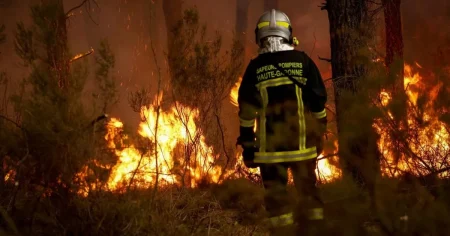

The recent unrest in Belfast has revealed a city pushed to its absolute breaking point, stripping away the veneer of routine and highlighting the raw desperation of a community in crisis. While the streets were filled with the chaotic imagery of burning vehicles and masked agitators, a jarring scene captured from above by a Sky News helicopter perfectly encapsulated the total breakdown of order. Amidst the swirling smoke and the frantic efforts to douse flames, two firefighters—men whose very purpose is to act as pillars of stability—were caught on camera locked in a physical brawl. While their colleagues fought the inferno behind them, these two engaged in a scuffle that involved shoving and even a headbutt, an act of uncharacteristic hostility that required intervention from other crew members to break up. It was a bizarre, tragic footnote to a day defined by discord, suggesting that when the pressure of society reaches a fever pitch, even those sworn to protect it can lose their composure.
This outburst did not happen in a vacuum; it occurred against the backdrop of a city reeling from a shocking act of violence earlier in the week. The unrest was ignited by a brutal assault on a man named Stephen Ogilvie, who suffered devastating injuries, including the loss of an eye, after being targeted in a senseless attack. The man accused of this attempted murder, 30-year-old Hadi Alodid, appeared in court shortly after the riots began, but his legal proceedings did little to stem the tide of anger overflowing onto the streets. The situation was weaponized online by far-right figures who circulated footage of the assault, effectively weaponizing social media to incite a wave of volatility that turned Belfast into a landscape of burning buses, gutted cars, and terrifying, unprovoked intimidation.
As the days progressed, the atmosphere in the city shifted from sporadic anger to organized, targeted hatred. Masked rioters, often shielding their identities behind balaclavas, began tearing apart the very fabric of their neighborhoods. Using sledgehammers to dismantle paving stones and pulling bricks directly from the walls of family homes, these agitators turned residential streets into combat zones. For immigrant families living in the area, the reality was nothing short of a nightmare; many were forced to flee their homes as rioters set fires to their properties, creating a climate of fear that left ordinary citizens terrified to step outside. What started as a protest quickly mutated into an explicit campaign of intimidation, leaving the city paralyzed as schools shut their doors and public transport ground to a halt.
The human toll of these few days is staggering, both in terms of physical injury and the psychological scarring of the community. At least 12 police officers were injured while attempting to manage the chaos, and 16 individuals have been arrested as law enforcement struggled to gain control of a rapidly deteriorating situation. Beyond the statistics, however, lies a deeper, more painful truth about the nature of this violence. It is not merely a political difference or a clash of opinions; as Northern Ireland Secretary Hilary Benn candidly noted, it is “racist thuggery.” When you look at the targeted nature of the attacks—focused on the color of someone’s skin and the sanctity of their home—the label is undeniable. It is a bleak reflection of societal divisions, where fear and prejudice have been allowed to supersede the basic compassion that usually holds a community together.
This period of unrest has forced those who call Belfast home to confront uncomfortable questions about their city’s trajectory. Reports of neighbors dragging terrified care workers to safety, and the sight of families huddled in the dark while their own streets are set ablaze, serve as harrowing reminders of the fragility of peace. As the political finger-pointing begins—with figures like Suella Braverman being drawn into debates over immigration policies and border histories—the people on the ground are left to pick up the pieces. Conversations about how to explain this violence to children are becoming common, as parents struggle to find the right words to describe why the world around them has suddenly turned so dark and aggressive. The confusion is palpable; for many, the Belfast they knew yesterday feels like a distant memory, replaced by a tense, uncertain present.
Ultimately, the image of the fighting firefighters serves as a powerful metaphor for our current divide: everyone is caught in the same smoke, trying to survive the same fire, yet we are forgetting who the enemy actually is. When the structures around us begin to collapse, we are left with the choice of helping one another put out the flames or adding to the disarray. Belfast is now at a crossroads, needing to find a path away from the racist narratives and senseless violence that have caused so much unnecessary destruction. As the dust settles and the investigation into the riots continues, the city faces the daunting task of healing its broken streets and, more importantly, mending the fractured trust among those who need to live side-by-side once the cameras have left and the smoke has finally cleared.