


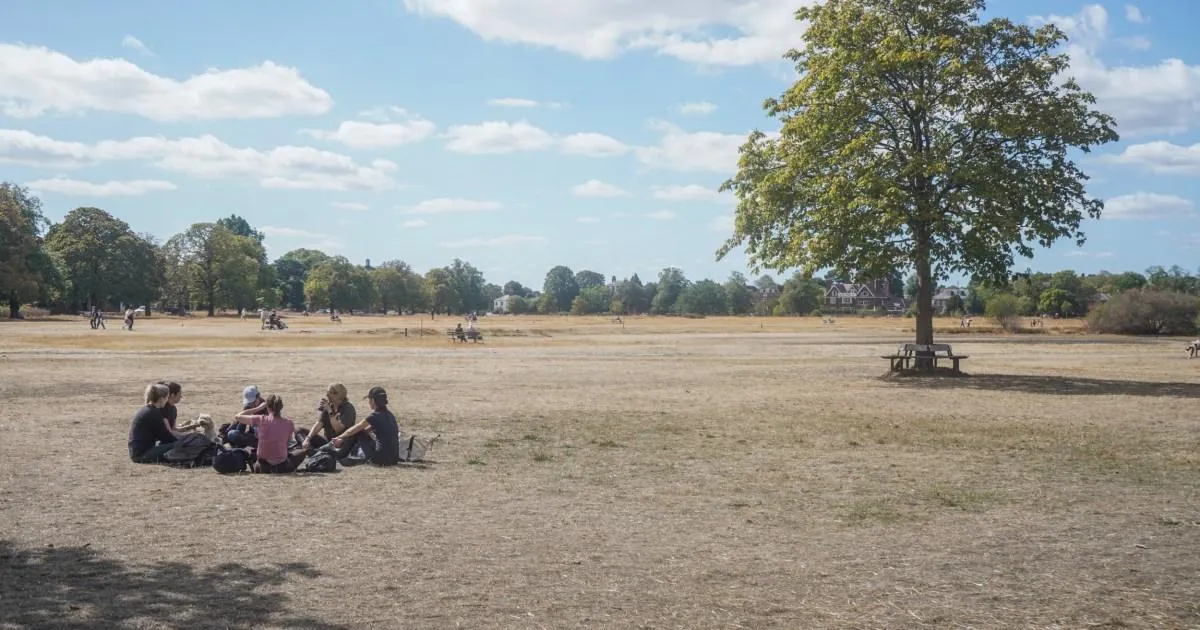
The United Kingdom is currently facing a significant environmental challenge as it grapples with the lingering effects of its hottest summer on record. New research indicates that it could take a substantial seven months of above-average rainfall to pull affected regions out of their current drought conditions. This news comes as a stark reminder that while the calendar has turned to autumn, the consequences of the long, dry summer are far from over. Nearly three-quarters of the country remain in a state of drought, a situation that has been slow to improve despite some welcome wet weather appearing in the first half of September. The problem is not simply a lack of rain, but a deep-seated deficit in the environment itself—rivers, groundwater reserves, and reservoirs all need to be replenished to their normal levels before the drought can officially be declared over.
The challenge ahead is formidable, as the Environment Agency has clarified that simply having a few weeks of rain will not be enough to reverse the severe dryness caused by the spring and summer. The numbers paint a clear picture: the nation needs to experience rainfall at 120% of its typical levels over the next seven months to make a meaningful recovery. This is a tall order, especially considering that even under the most optimistic scenarios, regions like Devon, Cornwall, and East Anglia are predicted to still be in drought status as the next spring arrives, bringing with it another cycle of traditionally drier months. The agency’s chief executive, Philip Duffy, has emphasized that the public cannot underestimate the challenge that lies ahead, urging everyone to continue conserving water to help speed up the recovery process. This is not a passive wait for nature to fix things, but an active call for collective responsibility in water usage to help the nation bounce back.
The current situation is a complex tapestry of weather patterns. While there has been some relief from the relentless sunshine, the Met Office predicts a return to drier conditions in the latter half of September. This is particularly concerning because the areas that need rain the most, especially in the south of England, are the ones that are likely to miss out. There is a glimmer of hope, however, as climate patterns like El Niño could bring a stormier autumn to the broader region. The contrast between drought and deluge is starkly illustrated by events unfolding in other parts of Europe. Torrential rain has recently caused severe flooding in eastern Spain, an area popular with tourists, leading to tragic consequences, including the death of a British national whose car was swept away by floodwater. This juxtaposition of a parched Britain with a flooded Spain serves as a powerful reminder of the extreme and unpredictable weather events that are becoming more frequent.
This environmental crisis is not just a matter of weather reports and water levels; it has profound human and political dimensions. Retired nurse Susan, a 73-year-old resident of the flooded region in Spain, described the experience as scary and tragic, highlighting the very real dangers that such weather extremes pose to everyday life. Meanwhile, back in the UK, the ongoing drought has thrust the issue of climate change back into the political spotlight. The government’s commitment to its net zero target for greenhouse gas emissions by 2050 has been reaffirmed, notably by a key political figure who had previously faced criticism for not speaking enough about the climate during the summer’s heatwaves. This renewed focus on climate policy is a direct response to the undeniable reality that the crisis is no longer a distant threat but a current and pressing issue, with the British people now feeling its direct consequences.
The political debate around how to address this crisis is itself a source of tension. While there is a commitment to the green transition, which is seen by some as an enormous opportunity to reindustrialize the nation, the very language used to describe these efforts is under scrutiny. A new report from a parliamentary committee has controversially called for the term “net zero” to be phased out, arguing that it has become a distraction and has lost its positive association due to increasingly vocal opposition. This opposition is often led by political figures who reject the scientific consensus on human-driven climate change, creating a deeply polarized environment. This suggests that even as the physical impacts of climate change become more severe, the political consensus on how to combat it remains fragile and contested.
In the end, the story of the UK’s drought is a story of interconnected challenges—environmental, human, and political. The path to recovery is a long one, measured in months of sustained rainfall and a continued commitment to water conservation. The urgent need for action is clear, not just in managing the immediate crisis but in addressing the long-term causes of a changing climate. The events of this summer, from the parched commons of London to the flooded streets of Spain, are a powerful illustration that the climate crisis is a shared reality. The solutions require not only political will and policy changes but also a fundamental shift in how we, as individuals and as a society, approach our relationship with the environment. The coming months will be a true test of resilience, as the nation works to recover from a summer of extremes while navigating the complex political and social debates about our collective future.