

**The recent revelation that the Driver and Vehicle Licensing Agency (DVLA) has banned over five hundred new number plates for the upcoming ’76’ registration might seem like a trivial piece of motoring trivia, but it actually opens a fascinating window into the delicate art of balancing public decency, legal oversight, and the deeply ingrained British love affair with personalised number plates. The revelation came as the latest batch of registrations prepares to roll out, and it has sparked a mix of curiosity and bemusement among drivers. While most of us will go our entire lives without thinking twice about the combination of letters and numbers on the front and back of our cars, there is an entire department within the DVLA that exists solely to ensure that no motorist unintentionally drives around with a particularly offensive or embarrassing phrase emblazoned on their vehicle. It is a job that requires both a creative imagination for the many ways letters can be contorted and a thick skin for the endless streams of innuendo and outright filth that people might try to slip through the system.
Twice a year, a specialist panel convenes to conduct a painstaking review of every possible plate combination that could be produced for the upcoming registration change. Their task is to identify and blacklist any sequence of characters that could be considered inappropriate, politically sensitive, or likely to provoke the public. This is no small order. The panel must consider not just the obvious swear words and racial slurs, but also the subtle visual puns, the anagrams, and the slang that might only make sense to a small demographic. For instance, last year’s batch saw the banning of combinations relating to the ongoing conflicts in Russia and Ukraine, with both “25 RUS” and “UKR” being pulled from circulation to avoid any potential offense or diplomatic incident. Similarly, references to the Middle East, including places like Gaza and Yemen, were also removed, as were standalone words like “bomb” and the rather self-explanatory acronym “STD.” The sheer scope of what must be considered is staggering, and it highlights just how many ways our brains can interpret a simple string of alphanumeric characters.
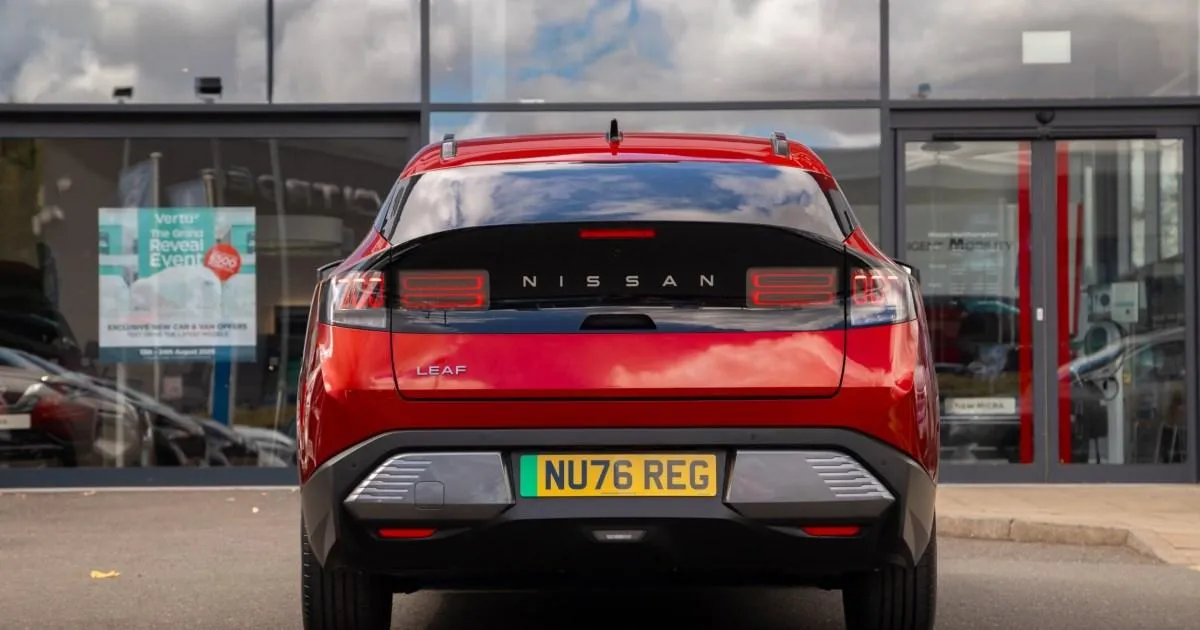
The challenge for the current batch of ’76’ plates is particularly acute due to the unique typographical possibilities presented by the numbers themselves. The number 7 can cleverly masquerade as an ‘I’, a ‘T’, or an ‘A’, while a 6 can double as a ‘B’ or a slightly malformed ‘A’. This alphabetic chameleon act provides a breeding ground for creative (and often lewd) interpretations. Consequently, the DVLA has had to be more vigilant than ever, and a total of 523 registrations have been removed from circulation. Among these are a host of combinations that might not be immediately offensive to the untrained eye, but which trigger warnings for the panel. Examples include AA76 RYN, AU76 WTZ, SH76 GED, and the somewhat menacing-sounding WW76 NKR. Then there are those that are more obvious, such as BJ76 OOB, GO76 WAR, and HH76 OMO, which sound like the beginning of a very strange acronym. Even completely innocuous-looking sequences like NA76 ZZE and NU76 SAC have been deemed too risky to be allowed on the nation’s roads.
For the average driver, the consequences of inadvertently driving around with a non-compliant plate can be surprisingly steep. While one might assume that the worst-case scenario is a sheepish explanation at an MOT station, the reality is much more severe. The police have the power to stop any motorist whose number plate they deem illegal, and the plate can be immediately confiscated on the spot. Furthermore, driving without a proper registration can result in a fine of up to £1,000, which is a hefty price to pay for a bit of unintended wordplay. Even if you manage to slip under the radar of law enforcement, an illegal plate will almost certainly cause your vehicle to fail its MOT test, forcing you to fix the problem before you can legally drive it again. It is a classic case of the authorities covering all their bases, ensuring that what you see is very much what you get when it comes to your car’s identification.
The rules, however, extend far beyond just the sequence of characters. The DVLA has strict guidelines on how number plates must be displayed, and failing to comply with these can land you in just as much hot water as having a banned sequence. For instance, you cannot rearrange or mis-space the letters to create a name or word if it makes the plate harder for ANPR cameras to read. Even the simple act of adding a set of sticky pads to secure the plate can be interpreted as an attempt to alter the characters’ appearance if not done correctly. The font itself is also governed by law – you must use the standard Charles Wright 2001 font, with legal requirements on the thickness of the characters, their size, and the spacing between them. Anything less and you risk fines and the plate being taken off the road. In 2024, police data showed that 21,683 drivers were recorded or stopped for illegal number plate offences, with the Metropolitan Police alone accounting for over a quarter of those stops. This suggests that while the DVLA might be doing their best to enforce the rules, the message isn’t always getting through to the public.
Ultimately, the ban on these 523 number plates is a reminder that even in the seemingly mundane world of vehicle registration, order must prevail against the creative chaos of human imagination. The chances are that many of the banned combinations would slip by unnoticed, but the DVLA’s job is to imagine the very worst in people and legislate for it. It is a thankless task, but one that ensures the nation’s roads don’t become a rolling showcase of poorly hidden profanity or politically charged statements. So, the next time you see a car with a personalised plate that looks like it might mean something, spare a thought for those poor DVLA panelists who have to wade through thousands of offensive possibilities so that we can all drive in peace. And if you’re thinking of getting a personalised number plate yourself, perhaps do a quick double take in the mirror first – you might just be driving on the wrong side of the law.