


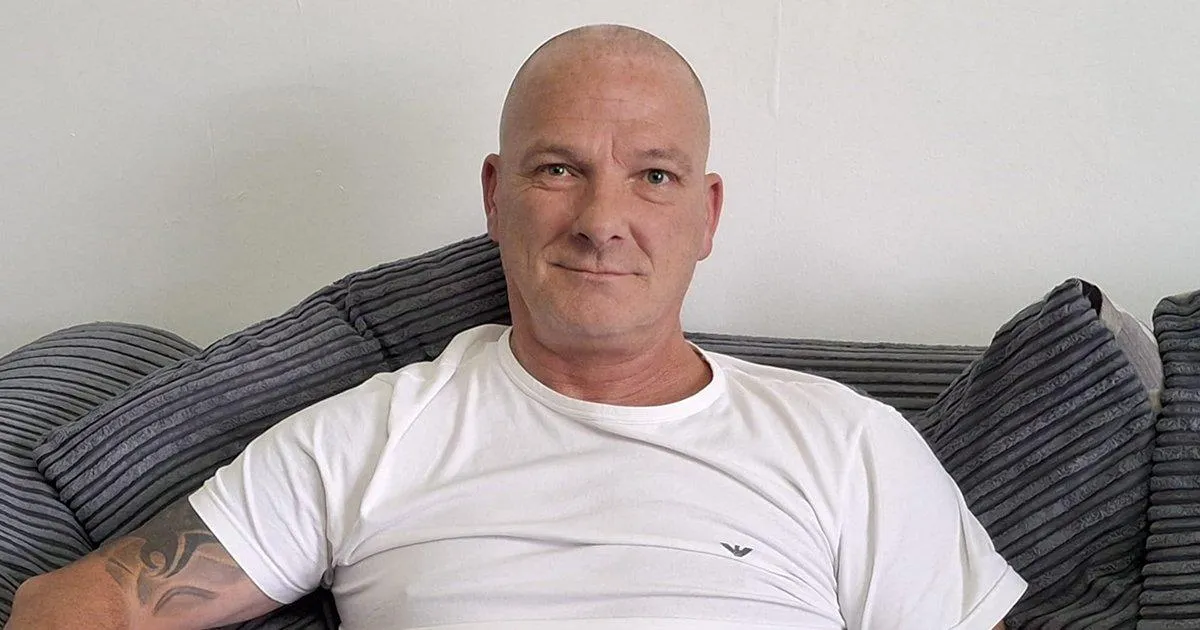
The quiet routine of a typical Thursday morning turned into a harrowing nightmare for 54-year-old Lee Ramsden, a resident of Bolton, Greater Manchester. Mr. Ramsden, who has lived with paralysis on the right side of his body since a life-altering fall nearly two decades ago, was just settling into his day. Having risen early at 6:30 a.m., he had prepared a cup of coffee and was looking forward to a peaceful start to his morning. That tranquility was shattered in an instant when a police officer appeared at his window, leading to a sudden, forceful intrusion into his home by Greater Manchester Police that left the disabled man feeling vulnerable, frightened, and deeply rattled.
The situation escalated quickly as officers descended on his property, detaining him on suspicion of a violent strangulation offence. For a man who navigates daily life with significant physical limitations, the experience of being apprehended and handcuffed was traumatic. Mr. Ramsden later described the ordeal as “terrible,” noting his genuine fear for his safety given his inability to steady himself or protect his compromised body. He alleges that in their haste to secure the scene, physical officers seemingly disregarded his specific health needs, an assertion that adds a layer of distress to an already invasive and dehumanizing experience.
As he was being transported to the police station in the back of a van, the confusion of the morning only deepened. The journey, which felt like an eternity for the bewildered man, came to an abrupt halt just 35 minutes into the drive. The officers inside the vehicle received a sudden update—a piece of information that clarified the fundamental error they had made. They had the wrong man. The shift in tone was instantaneous; the van was turned around, and Mr. Ramsden was informed that he was being taken back home. The “good news” that he was no longer under arrest did little to soothe the shock of what he had just endured.
In the aftermath of the incident, Greater Manchester Police addressed the error, explaining that they had acted in “good faith” based on inaccurate information regarding a name, address, and photograph associated with the original suspect. The force clarified that they were responding to a report of a violent offence that occurred earlier that morning. While they acknowledged the wrongful arrest of Mr. Ramsden, they pushed back against his claims regarding his treatment, maintaining that they followed established protocols for handling an individual with disabilities. They confirmed that the true suspect was eventually identified and apprehended, and that representatives of the force have since reached out to Mr. Ramsden to address his concerns.
The incident highlights the profound impact that systemic errors can have on the lives of vulnerable individuals. Despite the police department’s acknowledgment of the mistake and their attempt to rectify the situation by returning Mr. Ramsden to his home, the emotional toll of the encounter remains. For someone whose independence is already challenged by physical disability, the feeling of being suddenly seized in one’s own sanctuary is particularly jarring. It serves as a stark reminder of the gravity of police authority and the responsibility that comes with the power to deprive a citizen of their liberty, even for a brief window of time.
Ultimately, Lee Ramsden’s story is one of vulnerability and the struggle to recover a sense of security after it has been breached. While the police investigation into the violent offence concluded with the correct suspect in custody, the lasting impression on Mr. Ramsden is one of trauma rather than closure. As he works to move past the events of that June 4th morning, the episode remains a sobering example of how easily a person’s life can be interrupted by a cascade of errors. Whether through formal inquiries or personal reflection, the incident underscores the essential need for precision and empathy in law enforcement, especially when dealing with those who, like Mr. Ramsden, are at their most fragile.