

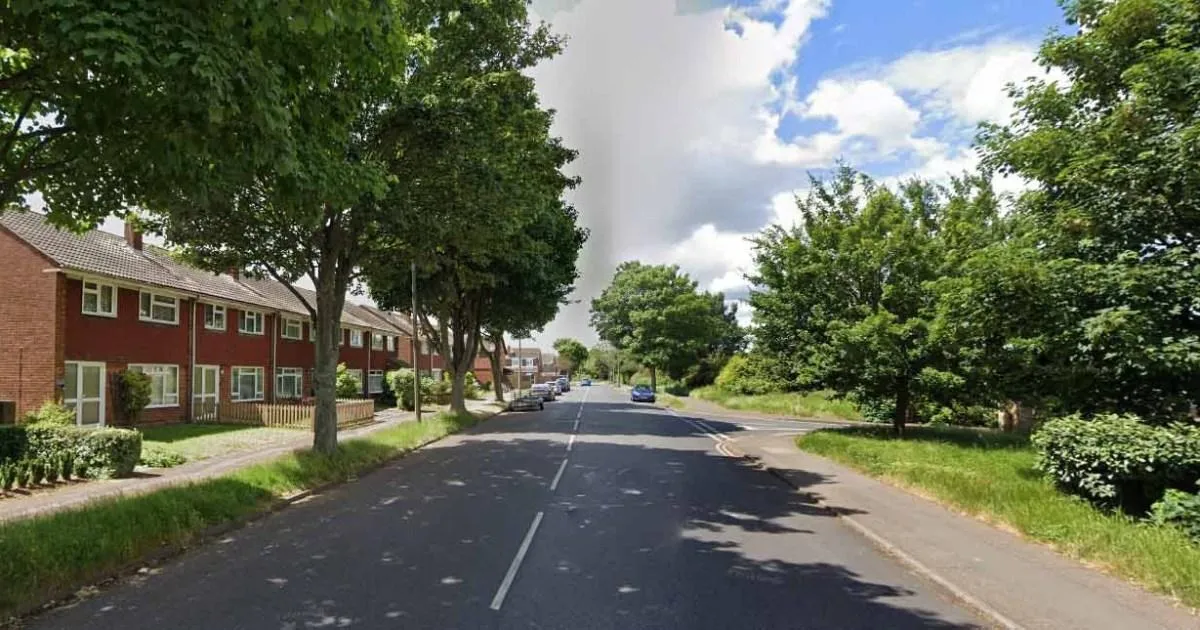
It is the kind of news that stops you mid-morning, the kind that makes you put down your coffee and simply sit for a moment in silence. In Shoeburyness, a coastal neighbourhood on the eastern edge of Southend-on-Sea, life usually moves at the pace of a seaside town: dog walkers on the beach, children heading to school, the distant sound of the sea. But on Monday 12 October, just before eight o’clock in the morning, that ordinary rhythm was shattered. Emergency crews were called to a property on Eagle Way, a residential street where neighbours know each other by name, following what police later described as “concerns for the welfare of a child.” When paramedics arrived, they found a child who had suffered injuries. Despite their desperate efforts, despite every attempt to save the little life in front of them, the child was pronounced dead at the scene. No age, no name, no photograph. Just a devastating loss, wrapped in the clinical language of an emergency response. The ambulance crew immediately alerted Essex Police, who rushed to the address, and a scene of quiet tragedy began to unfold behind the police tape. It is the kind of event that leaves a mark on a community, even one not directly connected to the family. People pass by the cordon and wonder. They stand at their windows and stare. They ask the same impossible questions over and over: what happened, how could this happen, and who was this child? The answers are not yet available, and perhaps they never will be in a way that makes sense to anyone. For now, all that is certain is that a child is gone, and a community is left to grieve in the shadow of a tragedy it did not ask for.
In the hours that followed, Essex Police moved quickly, as they always do in cases involving the death of a child. Officers began piecing together what had led to the emergency call, speaking to neighbours, gathering evidence, and trying to understand the circumstances surrounding the child’s injuries. As part of that early investigative work, a 24-year-old man from Rayleigh and a 26-year-old woman from Shoebury were arrested. Both were taken into custody, and both were questioned by detectives. The initial reports said they remained in custody, but police later confirmed that they had been released on bail while enquiries continue. That detail may sound procedural, but in a case like this, every legal step is loaded with meaning. Bail is not an ending; it is not a verdict. It is simply the point where the investigation shifts from an immediate emergency response to a longer, more deliberate process of gathering facts, awaiting forensic results, and determining what charges, if any, should be brought. The police have not released the relationship between the two arrested individuals and the child, and they have not confirmed how the child came to be injured. They have, however, issued one important reassurance: there is no wider risk to the public. In a community rattled by the news, that statement matters. It tells neighbours that they are safe, that the danger, whatever it was, is contained. But it does not make the tragedy easier to bear. It does not bring back the child. It does not erase the image of paramedics working frantically on a residential street, or the faces of officers who arrived to find something no one should ever have to find. The investigation is ongoing, and every day that passes is another day of waiting for the family, for the community, and for the professionals who have been tasked with finding the truth.
For those who live in Shoeburyness, the news lands like a stone in still water. The ripples spread far beyond Eagle Way. Parents hold their own children a little tighter. Grandparents think about their own memories of raising a family in a town that always felt safe. Even people who have no connection to the family find themselves affected, because the death of a child is one of those rare events that touches something universal. It reminds us of the fragility of life, and of the fact that, in a single moment, everything can change. The details of this case are scarce, and that makes it even harder. There is no story to cling to, no explanation to offer, no way to make sense of the senseless. There is only the stark fact of a child’s life ending far too soon. The community has responded in the way communities often do: with quiet support, with flowers left at the scene, with conversations held in hushed voices, and with a shared sense of shock. Some will gather to remember the child, even if they never knew their name. Others will offer prayers, or simply sit with their own thoughts. It is not easy to know what to do in the aftermath of a tragedy like this. There is no script, no set of instructions. But there is a quiet determination to stand with the family, to respect their privacy, and to let them know that they are not alone. That is what communities do. That is what it means to live in a place where people look out for one another, even when they do not know each other’s names.
The weight of a moment like this falls first on the emergency responders. Paramedics are trained to save lives, to remain calm under pressure, to act quickly and decisively. But they are not machines. They carry every call with them, and the calls involving children are the heaviest of all. When they arrived at the property on Eagle Way, they did everything they could. They worked without stopping, hoping against hope, refusing to give up until there was nothing left to do. Then they had to stop. They had to stand there, in the early morning light, and accept that this was one life they could not save. Police officers arrived next, not as investigators but as first responders, taking in the scene, securing the area, and beginning the difficult work of telling others what had happened. They, too, are human. They, too, will carry this with them. The phrase “welfare concerns” is often used in official statements, but it hides a much deeper reality. Behind those words is someone who was worried enough to call for help. Behind those words is a system of social services, child protection, and emergency care that exists to safeguard the most vulnerable. And behind those words is a child, whose life was cut short before it had a chance to unfold. The investigation will look at all of this. It will ask questions about what should have been done, what could have been done, and whether anything might have changed the outcome. Those are difficult questions, and they do not always have easy answers. But they must be asked, because every child deserves a full accounting of their short life, and every family deserves to know the truth.
As the legal process moves forward, the focus will shift to the painstaking work of forensic examination, post-mortem results, and the gathering of evidence. Detectives will continue to interview witnesses, examine phone records, and reconstruct the hours and days before the child’s death. The man and woman arrested in connection with the case have been released on bail, which means they are no longer in custody but remain under investigation. That is a standard part of many inquiries, but it is also a reminder that this is not a quick process. Justice, when it comes, is often slow. The police have not yet said whether any charges will be brought, and it would be wrong to speculate. What is known is that Essex Police have treated this case with the seriousness it deserves, and that they are determined to find out exactly what happened. They have also made it clear that there is no wider threat to the public, which should offer some reassurance to the people of Shoeburyness and the wider Southend area. But for the family of the child, reassurance is not enough. They are grieving. They are trying to find a way through an unimaginable loss. They may not want the attention of the public or the press, and they are entitled to their privacy. In the coming days, there will be tributes, perhaps memorials, perhaps calls for answers. There will be a post-mortem examination and a funeral. There will be a hole in the lives of everyone who knew the child, a hole that will never be fully filled. The police will continue their work, but no amount of investigative effort can turn back the clock. No verdict can undo what happened. No sentence can mend the hearts of those left behind.
In the end, this is not just a story about an investigation or an arrest. It is a story about a child, a family, and a community that has been shaken to its core. It is a story about the fragility of life and the unbearable weight of loss. It is also a story about the best of us: the paramedics who tried, the police officers who came, the neighbours who will stand together in the days ahead, and the ordinary people who will read this and feel a pang of sorrow in their own hearts. We do not know the child’s name. We do not know their age, their favourite colour, their laugh, or the way they looked when they slept. But we know that they mattered. They were loved. They were here. And now they are gone. The street where they died will never be quite the same. The people who live there will carry the memory of this day with them, perhaps for the rest of their lives. And those of us who hear about it from afar will be reminded of how precious every moment is, how fleeting life can be, and how important it is to hold the ones we love a little closer. There are no easy words for a tragedy like this. There is no way to make it better. But there is a way to be human, and that is to care, to grieve, and to hope that, somehow, the family finds the strength to go on. The investigation will continue. The questions will be asked. But in the quiet streets of Shoeburyness, the memory of a child will remain, a reminder that some losses are too great to be measured, and some sorrows are too deep to be put into words.