


Here is a humanized summary of the incident, written in six paragraphs.
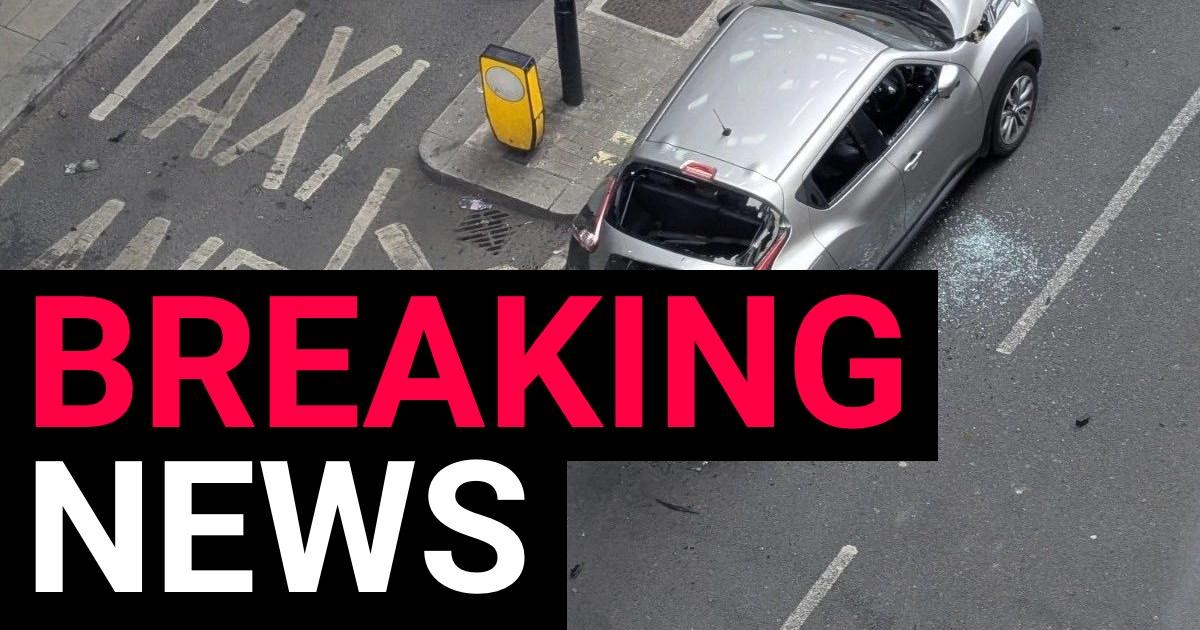
On an ordinary afternoon at King’s Cross St Pancras, one of London’s busiest and most symbolic transport hubs, the familiar chaos of commuters, tourists, and trains was suddenly replaced by something far more unsettling. A car had been left unattended outside the station, and in a city shaped by decades of security threats, that is never just a small inconvenience. It is a trigger for an immediate and decisive response. The Metropolitan Police arrived quickly, sealed off the surrounding roads, and made the difficult call to evacuate the station entirely. Thousands of people were pushed out into the streets, some without coats, many without any idea when they would be allowed back inside. Then came the controlled explosion. Those nearby heard the muffled bang, a sound that stops conversation and quickens the pulse. For a few tense moments, no one knew whether this was a real threat or a false alarm. Eventually, the authorities confirmed that the vehicle was non-suspicious, and the station was declared safe. But the disruption had already happened. Trains had been delayed, roads had been closed, and every passenger in that part of London had been reminded, whether they wanted it or not, how fragile a normal day can be.
The decision to carry out a controlled explosion is never taken lightly, but it is one that security forces in the United Kingdom have become increasingly prepared to make. To the public, the phrase “non-suspicious” sounds simple, almost anticlimactic. To the police and the bomb disposal teams, however, it represents the end of a high-stakes procedure in which assumptions cannot be made. An unattended vehicle in a location as prominent as St Pancras is treated as a potential bomb until proven otherwise. That is the reality of modern security. Officers do not have the luxury of waiting to see if a car might be dangerous. They must act as though it is, because the cost of being wrong is unthinkable. The controlled explosion was not an act of aggression; it was an act of protection. The people standing behind police barriers, watching from a distance, may have felt frustrated or frightened, but they were also witnessing a carefully planned operation designed to keep them safe. The fact that the car turned out to be harmless does not make the response excessive. It makes it thorough. In a world where threats are often invisible and unpredictable, the only way to prevent tragedy is to assume the worst and hope to be proven wrong.
The consequences of the incident were felt far beyond the immediate scene. Eurostar departures were delayed, with some pushed back by at least thirty minutes, throwing travel plans into confusion for people heading to Paris, Brussels, and Amsterdam. East Midlands Railway, which operates a crucial commuter and intercity service from St Pancras, reported significant disruption across its network. Routes to Corby, Leicester, Derby, and Sheffield were all affected, meaning that thousands of passengers waiting on platforms across central England suddenly found themselves trapped in a ripple of uncertainty. Traffic on Pancras Road was partially blocked in both directions, and the streets around the station, usually thick with buses, taxis, and private cars, became a maze of diversions and police tape. For many travellers, the day’s plans simply collapsed. A woman hoping to make a business meeting in Paris stood outside the station, refreshing her phone for updates. A student trying to get home to Sheffield stared at a departure board that refused to reveal any useful information. Families going to Leicester for a weekend visit were told to wait, and everyone understood that no further explanation was coming. The evacuation had been done for their safety, but that knowledge did not make the waiting any easier.
When police finally told customers it was safe to re-enter the station, the relief was tangible. The cordon was lifted, the barriers were moved, and people began to move carefully back toward the entrances, as if testing the ground after an earthquake. Inside, the familiar sights and sounds slowly returned: the chatter of announcements, the clatter of trolleys, the smell of fast food and diesel. But recovery would not happen instantly. The delays had already been written into the system, and every train that had been held up had a knock-on effect on the rest of the afternoon. Staff worked to reassure passengers, but there is no way to magically restore a timetable after a major evacuation. Some services continued to be cancelled or delayed for some time afterward. The car was removed, the station reopened, and the police went back to their regular duties. Yet the mystery remained. Who had left the car there? Was it an honest mistake, a broken-down vehicle abandoned in panic, or something more careless? No answer was provided. All that mattered, in the end, was that no one was hurt. The incident would become a small footnote in the city’s long history of scares and false alarms, but for those who lived through it, the memory of that controlled explosion would linger.
This kind of scenario has become a recurring feature of life in London and many other major cities around the world. It is the price of living in a society that refuses to let its guard down. Police forces often say that there is no such thing as a false alarm, only a threat that turned out not to exist. The public has absorbed this lesson, in part because past tragedies have shown what happens when warning signs are ignored. The phrase “if you see something, say something” has entered the everyday language. An unattended bag on a train platform, a phone left in a toilet cubicle, a car parked too long in a sensitive area: all of these can be enough to close a street, empty a building, or summon the bomb squad. It can feel excessive, even absurd, especially when the object turns out to be harmless. But the psychological toll of living with this kind of vigilance is real. Every alert, every evacuation, every controlled explosion chips away at the feeling of safety that ordinary people are supposed to enjoy. The police know this. They are not unaware of the frustration they cause. But their job is not to keep people comfortable; it is to keep them alive. And so the trade-off is made, again and again, in the hope that the next dramatic response is another false alarm rather than a real disaster.
In the aftermath, what stands out is not just the disruption or the security procedure, but the resilience of the people who found themselves caught up in it. Londoners and visitors alike did what people always do in such moments: they waited, they watched, and they looked out for one another. Strangers shared updates, offered each other information about alternate routes, and made nervous jokes to break the tension. The city’s pulse slowed for an hour or two, and then it beat again. King’s Cross St Pancras, which has seen far worse in its long history, proved once more that it can absorb shock and return to life. By the evening, the station was busy again, trains were running, and the same streets that had been empty were filled with people rushing to get home. The controlled explosion had become a story, something to mention in passing to friends or family. But beneath that casual telling lies a deeper truth: safety is never guaranteed, and everyday life is a gift that can be interrupted in an instant. The best we can do is trust the people whose job it is to protect us, offer patience in moments of confusion, and quietly appreciate the ordinary, unremarkable moments that make up a normal day. Tomorrow, the station will open again. The trains will run. And the memory of one afternoon of fear will slowly fade into the background, until the next time the routine is broken.