


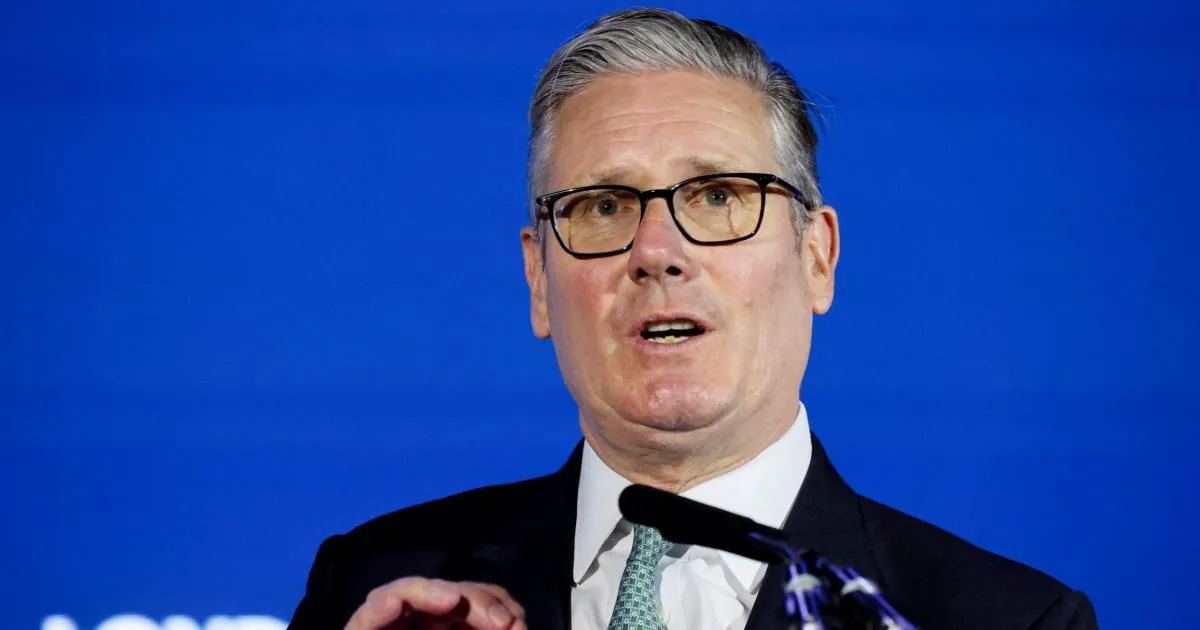
The recent interception of a Russian “shadow fleet” oil tanker in the English Channel marks a significant escalation in the United Kingdom’s commitment to curbing the financial lifelines of Vladimir Putin’s war machine. In a bold, first-of-its-kind operation led by the British government, Royal Marine Commandos and specialized officers from the National Crime Agency boarded the vessel, the SMYRTOS, during the early hours of Sunday. This decisive action, carried out under the direct instruction of Prime Minister Keir Starmer, sends a clear message that the UK is no longer content to simply observe the circumvention of international sanctions from the sidelines. The vessel has been ordered to drop anchor off the southern coast of England, where it will remain under the careful watch of security forces.
At the heart of this confrontation is the concept of the “shadow fleet”—a clandestine network of roughly 700 vessels, of which the UK has already sanctioned over 500. These tankers, often operating under opaque ownership structures, are the primary mechanism through which Russia bypasses international prohibitions to export its oil. According to Ministry of Defence figures, this shadow fleet is responsible for moving nearly 75% of Russia’s sanctioned oil, effectively providing the revenue streams necessary to sustain the brutal, ongoing conflict in Ukraine. By disrupting these logistics, the UK aims to strike directly at the economic heart of the Kremlin’s war efforts, demonstrating that these “dark” maritime operations are no longer immune to discovery or enforcement.
The operation itself was a testament to the high level of coordination and technical precision expected of the British armed forces. The mission involved a multi-layered approach, utilizing the Maritime Air Group, an RAF P-8 reconnaissance aircraft, and the naval presence of HMS Sutherland and HMS Ledbury. The success of the boarding—a dangerous and highly skilled maneuver—highlights the professionalism of the Royal Marines and law enforcement personnel. Prime Minister Starmer was quick to express his gratitude, emphasizing that the operation serves as a warning to all those who knowingly fuel Putin’s illegal ambitions: their attempts to hide in the shadows will be met with firm, state-sanctioned resistance.
This intervention did not occur in a vacuum; it fits into a broader, intensified strategy of international cooperation, particularly with French authorities. The UK’s commitment to this mission is bolstered by shared intelligence and a synchronized diplomatic approach to identifying and detaining ships that violate sanctions. In fact, this recent boarding follows a similar, successful interception by French forces earlier in June, in which the UK provided critical support. These collaborative efforts underscore a growing consensus among Western allies that the maritime transport of illicit Russian energy is a vulnerability that must be aggressively exploited to put pressure on Moscow.
Reflecting on the operation, UK officials including Defence Secretary Dan Jarvis have framed the interception as a tactical and moral victory. Jarvis praised the courage of those involved, noting that intercepting these vessels is fundamentally about undermining the financial foundations of an illegal war. Culture Secretary Lisa Nandy, speaking on the morning of the interception, reaffirmed that the Prime Minister’s mandate is for the British government to be “on the front foot.” She emphasized that while the operation was a significant technical achievement, its primary value lies in its role as a strategic blow to the Russian state’s ability to fund its aggression against Ukraine.
As the SMYRTOS sits anchored off the English coast, the incident serves as a poignant reminder of the evolving nature of modern warfare. It is no longer defined solely by traditional battlefield engagements, but also by the quiet, high-stakes games of cat-and-mouse played on the high seas. By targeting the tankers that provide the lifeblood of the Russian economy, the UK has signaled that the era of impunity for shadow fleet operators is rapidly drawing to a close. This ongoing campaign—an intersection of naval prowess, intelligence-gathering, and economic sanctions—remains one of the most effective ways for the international community to exert pressure where it hurts the most, ensuring that the cost of Putin’s war continues to rise.