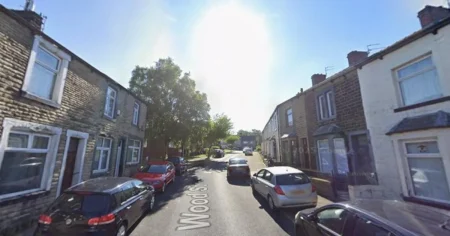
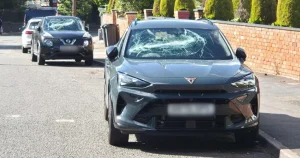


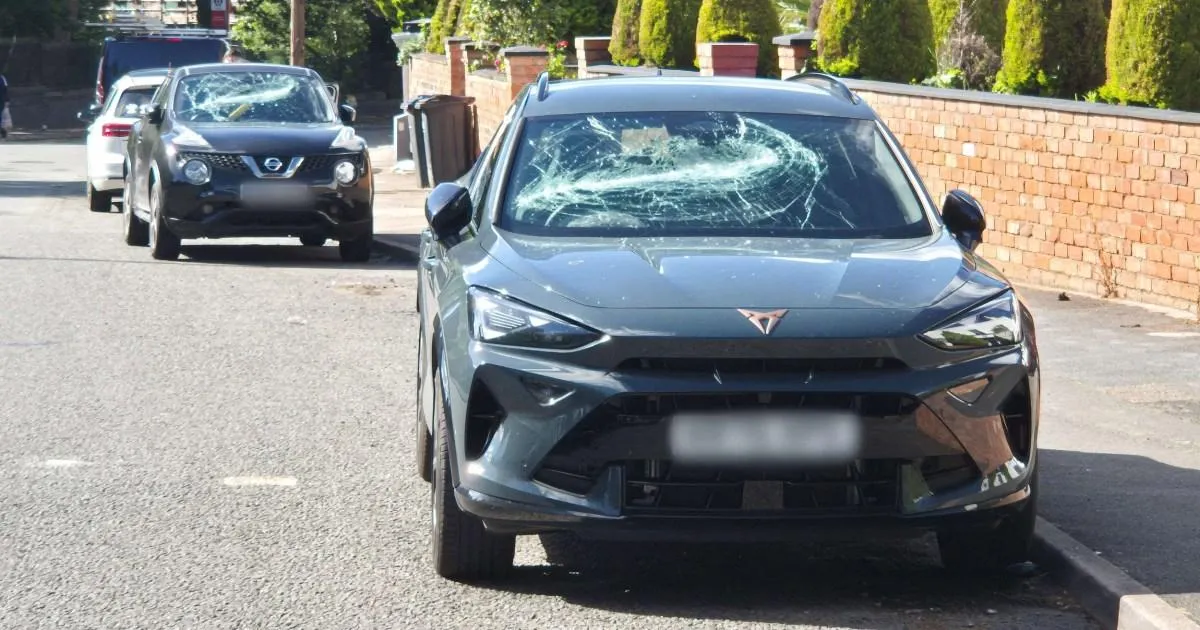
The quiet Friday morning calm of Balsall Heath, a leafy neighborhood in south Birmingham, was violently shattered around 10:00 a.m. when a chaotic act of vandalism took over Moseley Road. Residents and commuters who had parked their vehicles along the street found themselves staring at a scene of senseless destruction that defied explanation. What began as a routine start to the day quickly turned into a neighborhood nightmare, as a man armed with a crowbar systematically began smashing the windows and windscreens of parked cars. The sheer scale of the damage was immediately apparent, leaving a long line of battered vehicles with shattered glass, dents, and gaping holes where intact windows had been just moments before.
The rampage appeared to be entirely indiscriminate, showing no preference for specific car makes or models. Whether it was a high-end four-by-four or a more modest daily commuter vehicle, the attacker spared nothing in his path. Witnesses watched in disbelief as the scene unfolded, with some capturing the mayhem on their mobile phones. One circulating video clip chillingly shows a man swinging a metal crowbar with aggressive precision as other drivers desperately honked their horns in a futile attempt to stop the destruction. Eyewitness accounts quickly began to tally the wreckage, with estimates suggesting that more than 40 individual cars had been targeted during the brief, high-tension spree.
For the owners of these 40-plus vehicles, the frustration and shock were palpable. Coming out to find a shattered windscreen or an obliterated back window is a jarring experience, made significantly worse by the random nature of this attack. The street, usually characterized by its relatively peaceful residential atmosphere, became a crime scene littered with shards of safety glass and jagged metal. The psychological impact of such a violation—where one’s own car, often a symbol of independence and security, is attacked in broad daylight—rippled through the community, turning a simple errand or a commute into a logistical and emotional headache.
Responding swiftly to the frantic calls from the public, West Midlands Police arrived at the scene to restore order and investigate the situation. The presence of law enforcement brought a necessary end to the disruption, and officers were able to apprehend a 28-year-old male suspect shortly after the reports flooded in. During the arrest, authorities recovered the crowbar used in the rampage, which served as critical evidence. The individual was taken into custody on immediate charges of causing criminal damage and the possession of an offensive weapon, providing residents with at least some measure of relief that the threat had been neutralized.
In a brief statement, West Midlands Police acknowledged the severity and the public anxiety caused by the incident, confirming that they are handling the matter with the seriousness it deserves. While the investigation continues to piece together the events, the community of Balsall Heath is left to grapple with the aftermath of the debris. For many, this event is a disheartening reminder of the fragility of public order. While such outbursts of property damage are relatively rare in this part of the city, the sheer volume of vehicles affected in such a short window of time has left a lasting impression on all who witnessed or fell victim to the destruction.
Though this incident in Birmingham may seem anomalous, it mirrors a broader, unsettling trend of public vandalism that occasionally grabs headlines across the UK. Often, these acts leave neighbors asking why such extreme violence is unleashed on personal property. Whether driven by personal vendettas or, as in this case, a seemingly random surge of erratic behavior, the victim’s experience remains the same: a sudden, expensive, and stressful loss of normalcy. As the investigation moves forward, insurance companies and local mechanics will likely be busy for weeks, but the memory of that morning’s frantic honking and the sight of over 40 shattered cars will certainly take much longer to fade from the neighborhood’s collective consciousness.