

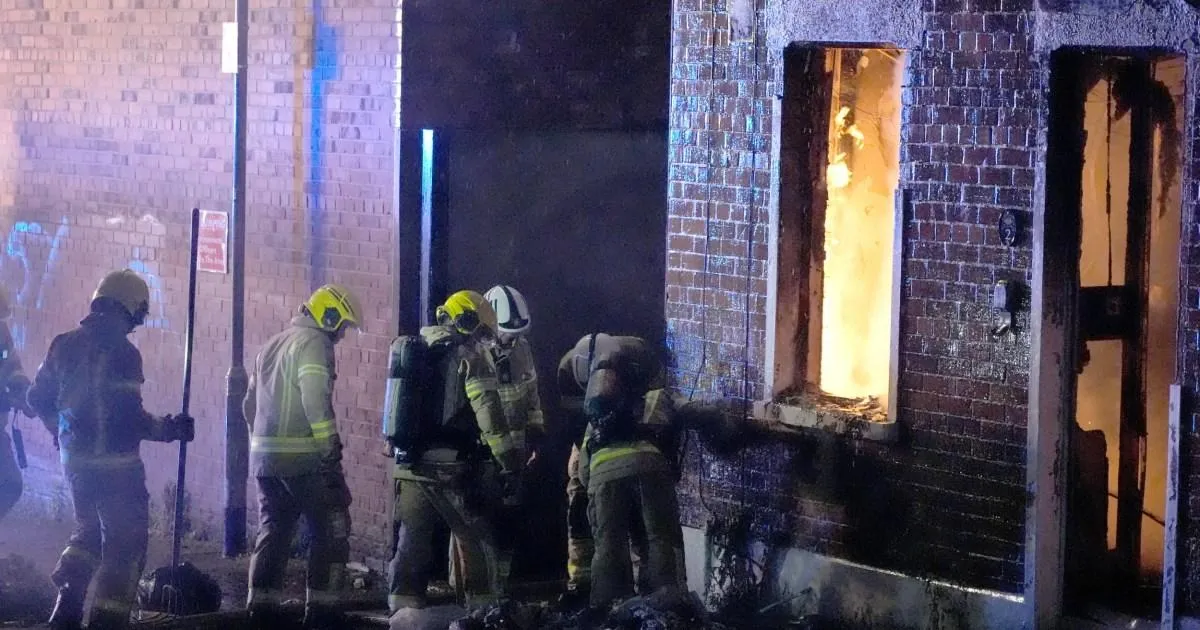
The city of Belfast awoke to a scarred and somber landscape today, grappling with the devastating aftermath of a night defined by lawlessness and fear. What began as a series of demonstrations—ostensibly sparked by public anger over a gruesome stabbing attack—quickly spiraled into an uncontrollable wave of violence. Masked individuals took to the streets, turning residential neighborhoods into battlegrounds. By the time the fires were dampened, the city had witnessed scenes of absolute chaos, with family homes set alight, public transport brought to a standstill, and businesses—including those owned by foreign nationals—deliberately targeted and destroyed.
The catalyst for this upheaval was a brutal incident on Monday night, where a man in his 40s was left with life-altering injuries following a horrific assault in central Belfast. As graphic, harrowing footage of the attack circulated online, the sense of community shock was quickly hijacked by bad actors. Amidst the tension, far-right figures, including activist Tommy Robinson, utilized social media to issue inflammatory rallying cries, falsely framing the criminal act as a broader justification for widespread civil disorder. These provocations found a receptive audience, and by Tuesday evening, the initial grief of the city had been weaponized into the reckless violence now being condemned by leaders across the political spectrum.
For the residents of Belfast, the reality of the night was not about political protest, but about survival. Emergency crews were pushed to the brink, responding to over 60 significant incidents in a matter of hours. Firefighters fought to reach burning residential streets, often hampered by roadblocks and hostile mobs. One long-term resident, Helen Williamson, who has called her South Belfast home for 58 years, voiced the collective trauma of the city, describing the terror of being evacuated as her neighborhood went up in flames. For many, like Helen, the night stripped away any sense of security, revealing that the disorder had little to do with the specific crime and everything to do with sowing division.
Political and community leaders have responded with unified condemnation, labeling the night’s events as “disgraceful” and “outright thuggery.” Northern Ireland’s First Minister, Michelle O’Neill, did not mince words, calling the targeting of family homes an act of cowardly depravity. Across the board, officials have emphasized that there is no justification for such anarchy. The frustration felt by the public regarding crime is legitimate, but as officials like North Belfast MP John Finucane pointed out, the violence has only served to deflect attention away from the victim of the original stabbing, effectively creating a secondary wave of victimization against innocent families and the city’s own infrastructure.
While the chaos was centered in Belfast, the ripple effects were felt across the UK, with similar demonstrations occurring as far away as London. Within Northern Ireland, the damage is severe: schools, shops, and public transport networks were forced to shut down, and the social fabric of the city is currently under immense strain. The suspect, a man in his 30s, remains in police custody and is scheduled to face charges of attempted murder and other serious offenses this Wednesday. However, even as the legal process begins for him, the city is left to reconcile with the actions of those who used his trial as an excuse to terrorize their own neighbors.
As the smoke clears, the people of Belfast are left to count the cost of a night that will be remembered for its pointless cruelty. The destruction of homes and the intimidation of vulnerable populations have left deep psychological wounds. While the heavy rainfall late last night helped quell the worst of the fires, the task of rebuilding the city’s sense of safety and community trust will be far more difficult. Moving forward, the hope remains that the law will be allowed to take its course without interference, ensuring that while the violence was allowed to spiral, ultimately, the hate that ignited it is not permitted to win.