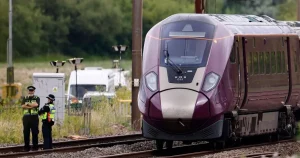


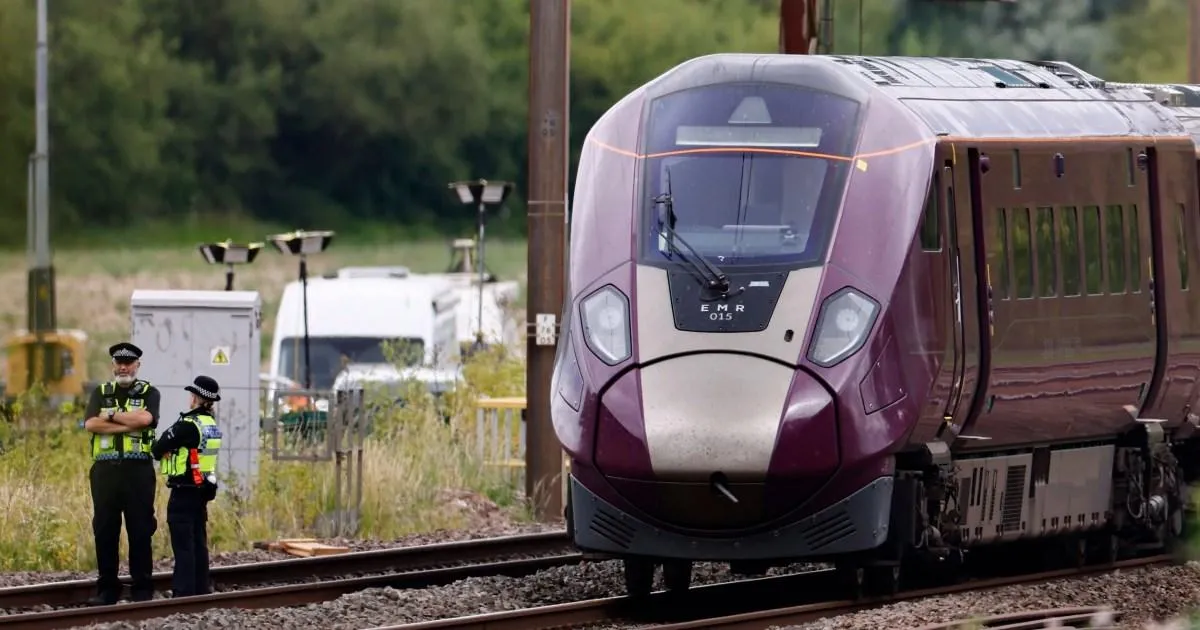
The quiet routine of a Friday evening commute near Bedford was shattered in a heartbeat, leaving a community and a nation in mourning. What should have been a standard journey home turned into a nightmare when two East Midlands Railway trains collided just after 5 p.m. The collision, which saw one train slam into the back of another that had come to a halt on the tracks, has left one person dead—the driver of the stationary train—and injured over 100 others. As investigators sift through the wreckage to understand how such a calamity occurred, the human cost is becoming clear: 11 people are listed as seriously injured, with another 22 suffering significant trauma, a stark reality for the families waiting for news.
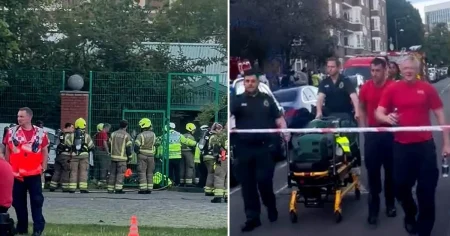
In the immediate aftermath, the scene was one of pure, visceral confusion. Passenger Dr. Pete Knapp, who survived the ordeal, spoke of the haunting sounds of screaming and crying as the sudden impact threw passengers from their seats. Recalling the terrifying moments as smoke filled the cabins, he described helping fellow passengers who were unable to speak or suffering from broken limbs. Squeezing his way out through a gap in the damaged doors, Dr. Knapp was met with a landscape of bandages and blood, a testament to a collision that occurred with enough force to derail at least one carriage and leave everyone involved profoundly shaken.
The technical investigation is now underway, and it is here that the narrative of a “tragic, isolated incident” meets the cold reality of mechanical and systemic failure. Reports indicate that the driver of the stopped train had been actively communicating with staff regarding a fault before the second train collided with it. Investigators are now scrutinizing whether a faulty signal played a role and why the second train’s automatic warning system—a critical safety net designed to trigger brakes if a driver passes a danger signal—failed to prevent the impact. Whether it was a mechanical malfunction or a failure in the communication between the tracks and the cabins remains the central, urgent question for the rail authorities.
The impact of this tragedy extends far beyond those directly involved in the crash itself. For the thousands of commuters who rely on the Thameslink and East Midlands Railway lines, the coming week promises to be one of significant disruption. Network Rail has confirmed that the recovery operation—a complex, slow, and grim task of removing mangled carriages and damaged track equipment—will continue until at least June 28. With no services running north of Luton and limited replacement bus routes, the rail network has issued a stern plea to the public: travel only if it is absolutely necessary. It is a stark reminder of how fragile our transit systems remain, and how a single point of failure can ripple through the entire infrastructure.
Leadership from the highest levels of government has joined the outpouring of grief. Prime Minister Sir Keir Starmer has publicly addressed the “hugely concerning” nature of the accident, echoing the sentiments of many who are struggling to comprehend how such a collision could happen in a modern, regulated rail environment. Meanwhile, the train drivers’ union, Aslef, moved quickly to offer condolences to the family of the fallen operator, recognizing that behind every train, there is a person, and behind every commute, there is the hope of a safe return home, which, for one family, has been irrevocably stolen.
As the recovery crews continue their tireless work at the site, the community is left to grapple with the aftermath. Passengers are processing the trauma, emergency responders are being lauded for their rapid and courageous intervention, and rail officials are beginning the monumental, and likely uncomfortable, process of determining how to prevent such a disaster from ever repeating. While the inquiries will eventually yield a forensic report, they can never fully undo the pain caused by this collision. For now, the focus remains on the grieving, the healing, and the long, slow return to whatever normalcy can be found in the wake of such a heavy, tragic day.