



For decades, the residents of Greenford, Ealing, lived under the persistent shadow of a flooding crisis that turned simple errands into logistical nightmares. Whenever heavy rain descended upon London, the local infrastructure would buckle, leaving commuters stranded, unable to reach the Underground station, and forcing homeowners to worry about the safety of their properties. Despite years of attempting to engineer expensive, man-made solutions to manage the rising water, the council struggled to find a lasting fix. It turns out that the most effective remedy wasn’t a heavy-duty drainage system or a concrete barrier, but a handful of furry, toothy, and remarkably industrious engineers who turned out to be the perfect partners for the environment.
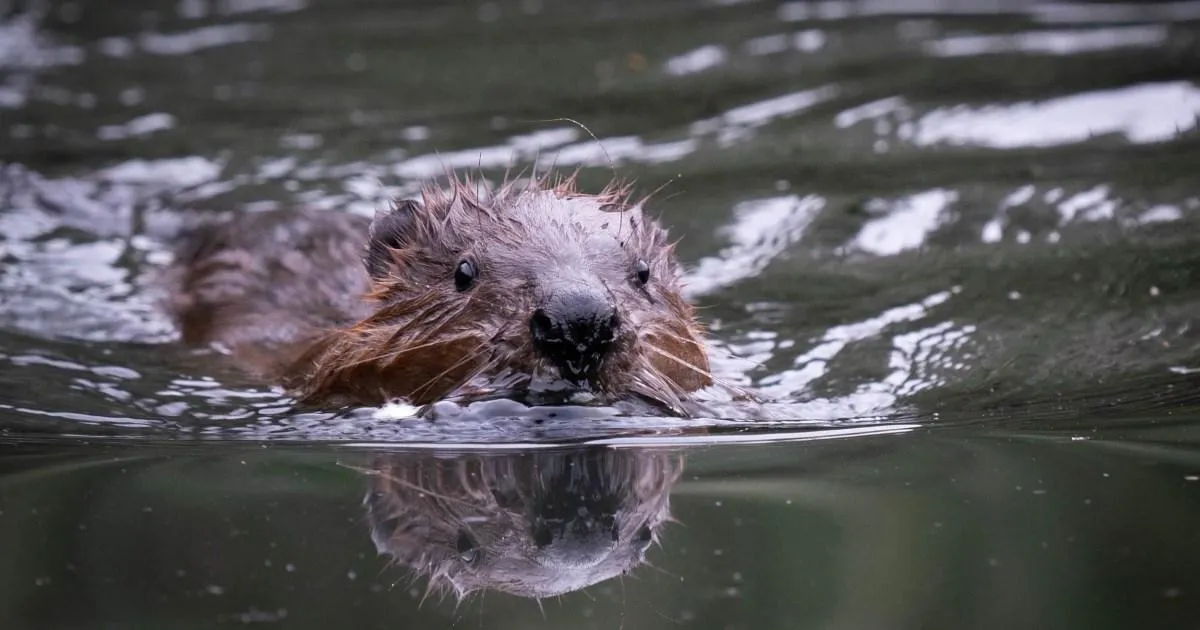
Three years ago, the landscape changed forever with the release of five beavers into the area known as Paradise Fields. These “ecosystem engineers” immediately set to work, doing exactly what evolutionary biology designed them to do: building dams and creating intricate wetland habitats. In the process, they effectively slowed the frantic pace of runoff, transforming the park into a giant, natural sponge capable of absorbing vast volumes of rainwater. The results have been nothing short of miraculous. For the first time in as long as anyone can remember, the local residential areas remained perfectly dry during the last flood season, proving that sometimes the best way to handle climate challenges is to step aside and let nature take the lead.
The comeback of the beaver is perhaps one of the most heartening tales of ecological recovery in modern British history. After being hunted to near extinction for their fur and scent glands, these creatures had been entirely absent from the UK for nearly 400 years. By the turn of the 20th century, European populations had plummeted to a mere 1,200 individuals. Today, however, that tide is turning. With protected status granted in Scotland in 2019 and in England in 2022, the beavers have moved from being an extinct memory to a flourishing presence. Estimates suggest that at least eight beavers now reside in Paradise Fields, with signs indicating that the founding mother, Willow, has successfully expanded the family, turning the park into a thriving hub of activity.
The success of the Ealing project has captured the public imagination in a way few infrastructure projects ever do. Even the legendary Sir David Attenborough featured the colony in his documentary Wild London, noting the irony of finding wild beavers living in the heart of one of the world’s busiest capitals—a reality that would have sounded like madness just a few years ago. By felling trees and rearranging the landscape, these animals haven’t just prevented flooding; they have invited the sun back into the brook, which has sparked a resurgence in fish populations and a visible boom in biodiversity throughout the area. They have become unexpected local celebrities, and as urban beaver officer Seniz Mustafa noted, the relief among the residents—who can now get to work and school without the fear of water-damaged streets—is palpable.
Local officials are now championing this approach as a blueprint for the future. Dominic Moffitt, the cabinet member for climate action in Ealing, has hailed the beavers as a powerful example of how “nature-based solutions” can tackle the escalating threats of a changing climate. Instead of viewing the problem as a battle between humans and water, the project demonstrates that we can partner with the natural world to create systems that are more resilient, more cost-effective, and far more beautiful. The Mayor of London’s office has echoed these sentiments, celebrating the fact that nature is no longer just something Londoners visit on weekends; it is becoming an active, functional part of how the city operates every day.
Looking ahead, the success in Greenford is set to ripple across the capital. With future restoration projects already in the pipeline for areas like Croydon by 2028, the “beaver effect” is becoming a legitimate strategy for urban planning in the UK. By rewilding our wetlands, we are doing more than just protecting houses and transit lines; we are stitching a broken ecosystem back together and reminding ourselves that we don’t always need to build our way out of trouble. Sometimes, we just need to provide a little space for nature to lend a hand, proving that even a city as sprawling and concrete-heavy as London can offer a home to those wild, industrious neighbors who know better than anyone how to keep the waters in check.