

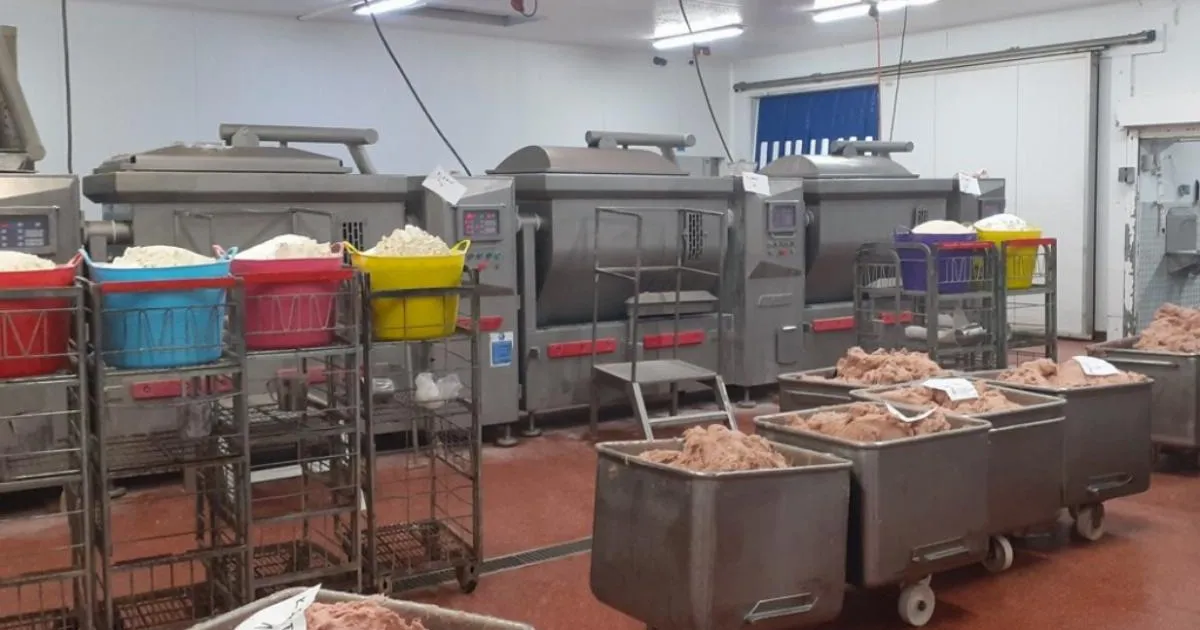
The story of Kismet Kebabs, once celebrated as the “Best Supplier of the Year” at the 2021 British Kebab Awards, serves as a startling reminder of how easily trust can be eroded in the food industry. Based in Chelmsford, Essex, the company once boasted of producing over 100 tonnes of kebab varieties each week, promising quality and consistency to restaurants and takeaways across the UK. However, the reality hidden behind those warehouse doors proved to be a far cry from the delectable products they marketed. When authorities finally pulled back the curtain, they discovered a systematic, long-term operation that prioritised profit over integrity, leaving consumers unknowingly paying for premium meat while consuming something entirely different.
The scandal came to light following a series of routine inspections by Swansea Council’s trading standards team. During a regional sampling exercise in 2020 and 2021, officials began testing the meat served in local establishments. The results were shocking. Products explicitly labeled as “lamb doner”—which should have contained a high percentage of legitimate lamb meat—were found to be little more than a cocktail of cheaper alternatives. Some samples contained as little as 51 per cent meat, with a staggering 40 per cent consisting of pure fat. What the public thought was a high-quality lamb dish was, in many instances, a misleading mixture of scraps and fillers.
When investigators descended upon the Kismet Kebabs factory in May 2021, the scale of the deception became undeniable. Despite the company’s claims to be a top-tier lamb supplier, inspectors found no lamb on the entire premises. Instead, they uncovered vast quantities of goat, mutton, turkey, and “ovine” products, alongside significant amounts of animal skin and fat. Reviewing the factory’s internal recipe cards and invoices, it was clear that the brand wasn’t just accidentally mislabeling goods; they were knowingly sourcing lower-grade, non-lamb ingredients and simply slapping a “lamb” label on the final product before it was shipped out to unsuspecting vendors and hungry customers.
The prosecutor, Lee Reynolds, later told Swansea Crown Court that this was a case of “organised, planned, unlawful activity.” The company had intentionally misled wholesalers, retailers, and the public for a sustained period, even taking deliberate steps to hide their fraudulent practices from local food safety officers. The deception was so thorough that the court noted how some of the meat content claimed on the packaging was actually comprised of “mechanically derived” waste products—essentially neck and mutton trimmings mixed with water and ice—which do not even meet the legal definition of “meat.” It was a betrayal of the trust that every consumer places in a business when they purchase a meal.
In court, the defense attorneys for Kismet Kebabs attempted to mitigate the damage, arguing that the company had provided good products for years before “taking its eye off the ball” in 2020. They suggested that the firm had made very little financial gain from the swap and argued that imposing a massive fine would only lead to the company’s liquidation, which would “benefit nobody.” While they highlighted the significant internal changes made since the investigation, the judge presiding over the case, Huw Rees, remained firm. He characterized the conduct as “endemic” and “considerable dishonesty,” noting that such widespread fraud had damaged the reputation of the food industry as a whole.
Ultimately, the law reached a compromise between justice and economic reality. Recognizing that the maximum potential fine of £24 million would destroy the enterprise entirely, Judge Rees ordered Kismet Kebabs to pay a fine of £500,000, along with nearly £260,000 in prosecution costs, giving them four years to settle the debt. As the firm continues under the shadow of this prosecution, the story stands as a cautionary tale about the importance of transparency in what we eat. It serves as a reminder to both businesses and consumers alike that a “guarantee of quality” means nothing if it is not backed by honest, traceable, and ethical practices.