



Paragraph 1: The Core Announcement and Purpose of the New Guidance
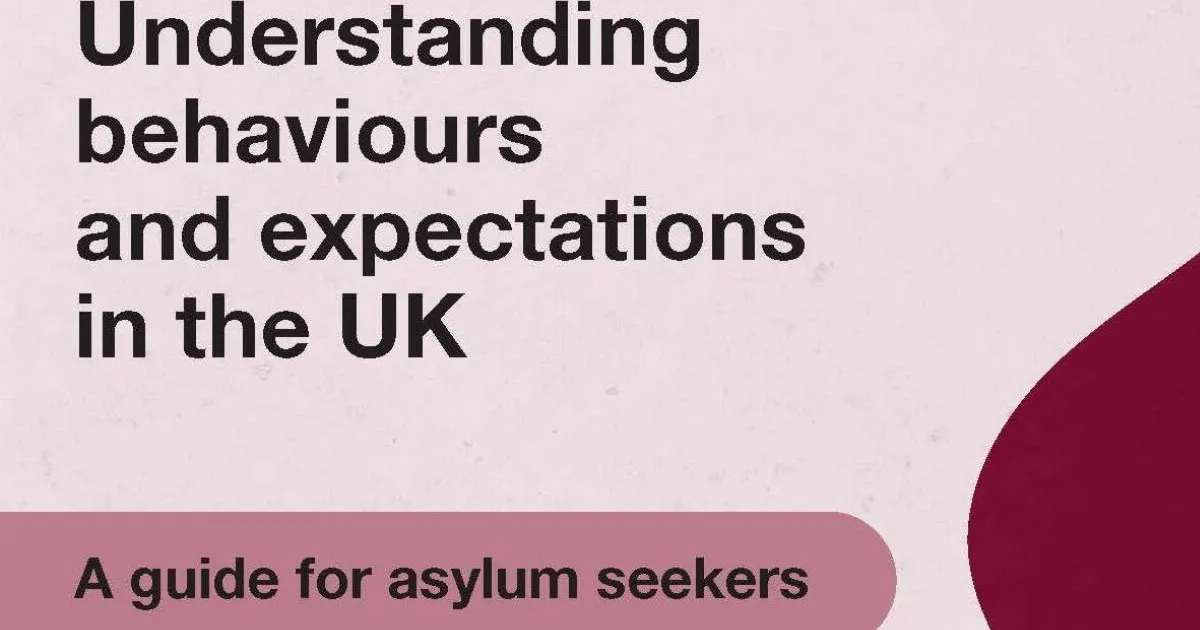
In a significant move aimed at smoothing the complex transition of newcomers into British society, the United Kingdom’s Home Office has issued a comprehensive nine-page document explicitly outlining the legal boundaries and cultural norms that govern life in the country. Titled ‘Understanding behaviours and expectations in the UK’, the guide is far from a perfunctory welcome leaflet; it is a deliberate attempt to build a bridge of understanding over what can often be a vast cultural chasm. The document arrives amid intense public and political scrutiny over immigration, particularly concerning the backgrounds of those regularly crossing the English Channel. Recognizing that asylum seekers often arrive from nations with radically different social fabrics, the Home Office has chosen to put its expectations into writing, hoping to prevent the kind of misunderstandings that lead to criminality and societal friction. Crucially, the document stresses that these rules are universal, framing them not as a special set of restrictions for refugees but as the baseline standards to which every resident of the UK—whether born here or newly arrived—must adhere. The tone is instructional yet authoritative, aiming to demystify a legal landscape that might otherwise feel opaque. By explicitly covering sensitive topics like gender equality, sexual consent, and public respect, the government is sending a clear message that the UK expects swift cultural acclimatization, effectively placing the onus of integration on the individual seeking sanctuary. It is a statement of intent, declaring that while the nation offers refuge, it does not compromise on the fundamental laws that protect its citizens. This initiative represents a proactive, bureaucratic effort to translate abstract concepts of justice and etiquette into concrete, accessible rules for a population that may have little prior exposure to these specific Western legal principles.
Paragraph 2: Severe Legal Consequences and the Intersection with Immigration Status
Delving into the harsh legal realities, the document’s primary focus is the unequivocal criminalization of sexual violence and domestic abuse, serving as a stark warning against bringing incompatible cultural attitudes into the UK. The guidance explicitly lists rape, sexual activity with a partner under the age of sixteen, and domestic abuse as serious criminal offenses that carry the full might of the judicial system. However, the document goes beyond these general legal definitions to establish a unique punitive framework specifically geared toward asylum seekers. It warns that committing these crimes will lead to immediate imprisonment, the loss of all financial support and accommodation, and—most critically—the complete derailment of any active asylum claim. This linking of criminal behavior to immigration status is the document’s sharpest weapon, making it explicitly clear that violent or coercive behavior is grounds for immediate refusal of protection and subsequent removal from the country. A Home Office spokesperson reinforced this hardline stance, articulating that the expectation of law-abiding behaviour is absolute for everyone entering the UK, and that failure to comply will trigger severe consequences, including “the refusal of their asylum claim and removal.” This section lacks any ambiguity; it is a stark contract clause in a humanitarian framework. By placing these warnings front and center, the government is addressing specific anxieties within the domestic population regarding the safety of women and children. The document accomplishes the dual function of educating the recipient on legal boundaries while simultaneously reassuring the British public that the state is actively communicating and enforcing these boundaries. Ignorance of the law is expressly preempted by this distribution, ensuring that there can be no legal defense based on a lack of knowledge about the illegality of these acts within the UK’s jurisdiction.
Paragraph 3: The Nuances of Social Etiquette, Consent, and Everyday Respect
Beyond the blunt instrument of criminal law, the guidance attempts to humanize the integration process by detailing the subtle nuances of British social etiquette, particularly the concept of “consent” and the boundaries of public interaction. In the dedicated section on ‘Sex and Consent’, the document explains in plain language that sexual activity requires an enthusiastic, unequivocal “yes” from both parties, emphasizing that this is a non-negotiable condition. It strongly asserts that rape remains rape even when perpetrated within a marriage or a relationship, directly challenging cultural norms that might view spousal rights differently. This is perhaps the most culturally disruptive aspect of the guide, aiming to dismantle deeply held patriarchal beliefs that exist in various parts of the world. The document also extends its reach into public spaces, discouraging a host of behaviors that might be misconstrued as harassment. It specifically advises against making sexual remarks, even if intended as compliments, and lists actions such as “kissing sounds,” wolf-whistling, following a person, making offensive gestures, and verbal abuse as unacceptable. This granular detail serves a vital purpose: it educates individuals on what constitutes a threat in a society that prizes personal space and physical autonomy. Furthermore, the guide champions gender equality as a bedrock principle of UK culture, protected by overarching law, and encourages respect for people’s beliefs and lifestyles, even when there is disagreement. To round off this supportive angle, the document also provides helplines and resources for those who may be victims of abuse, transforming it from a purely punitive warning into a resource for safety. This humanizing element is crucial; it acknowledges that integration is a two-way street, providing emotional and practical support alongside the rules.
Paragraph 4: Political Context and the Broader Immigration Landscape
The issuance of this behavioral guide cannot be extracted from the highly charged political environment that surrounds UK immigration policy today. The Home Office released these guidelines against a backdrop of persistently high—though recently declining—Channel crossings, which have fueled public anger and concern over border security. The government has consistently pointed to its hardline policies as the primary reason for the drop in maritime arrivals this year, framing their deterrent strategies as successful. This educational document is, therefore, another pillar in that strategy, designed to manage the population that has already arrived while simultaneously signaling to those considering the journey that the UK operates on strict legal and social principles. By codifying these expectations, the Home Office is also engaging in a form of public relations, demonstrating to the domestic electorate that they are taking proactive steps to address the cultural integration of migrants, thereby mitigating accusations that they are passive in the face of changing demographics. The guide is designed to counteract the fear and resentment that often arise when native populations perceive that newcomers do not respect local laws or customs. It is an attempt to overhauls the narrative, shifting the conversation from one of mere border protection to one of active assimilation, where the state provides a roadmap for lawful and respectful living. The context of recent protests near areas where asylum seekers were accused of sexual offenses adds an undeniable urgency to the document, suggesting that its creation was partly a direct response to high-profile incidents that have inflamed community tensions and cast a shadow over the migration debate.
Paragraph 5: The Fierce Political Backlash and Interpretation of Motives
As expected, the release of the guidance has provoked a furious political backlash, with opposition figures condemning it as an insulting and ineffective substitute for stronger deportation policies. Shadow Home Secretary Chris Philp voiced a sentiment held by many on the right, sarcastically suggesting that rather than expending effort “trying to train these mainly young, male illegal immigrants to behave in a civilised way towards women,” the homeowners should simply “deport them.” His criticism, posted on social media, reflects a zero-sum view of immigration where integration efforts are seen as a failure of border control rather than a pragmatic necessity. Philp’s remarks underscore a deep ideological divide, wherein the presence of individuals from cultures with different gender dynamics is viewed not as a management problem but as an intrinsic threat to “Western society” values. Echoing this militant stance, Zia Yusuf, the Reform Home Affairs spokesman, described the entire document as a “disgrace” in a video circulated online, aligning his party with a platform of maximum deterrence and minimal assistance. This political opposition frames the educational initiative as an absurdity, arguing that the very existence of a guide on consent implies a fundamental incompatibility of the migrant population with British norms. They argue that the government is coddling arrivals with basic decency guidelines instead of prioritizing their rapid removal. The government, conversely, defends the guide as a rational, legal necessity, arguing that providing this information is a protective measure for the public and a fair warning to migrants, offering them a clear choice between lawful residence and swift removal. This clash encapsulates the impossible political tightrope the Home Office walks, criticized by the left for its harsh deportation rhetoric and by the right for issuing what they view as futile and patronizing lectures.
Paragraph 6: Synthesizing the Human, Legal, and Political Dimensions
Ultimately, the release of ‘Understanding behaviours and expectations in the UK’ is a poignant symbol of the intricate balancing act required to manage migration, uphold the rule of law, and preserve social cohesion in a globalized world. For the asylum seeker who has endured a harrowing journey to reach safety, this document represents a cold, clear template for survival in a new legal landscape, offering a direct path towards legal compliance and, ideally, eventual acceptance. For the British government, it is a strategic tool for risk mitigation, designed to safeguard its citizens while demonstrating an active effort to enforce law and order at every stage of the immigration process. The document tackles genuine, societal needs—the safety of women in public and private spheres, the sanctity of consent, and the respect for equality—by laying them out in stark, unambiguous terms. While critics on both sides of the political spectrum will find fault with its existence, whether for being too lenient or too punitive, its practical utility lies in its educational capacity. It acknowledges that people do not shed their cultural programming upon arrival, and it takes the proactive step of trying to reprogram that, using a mixture of legal threats and social guidance. In a nation that is politically fractured over migration, this document serves as a concrete, administrative compromise, bridging the gap between the abstract ideals of sanctuary and the gritty reality of enforcing societal norms. It does not erase cultural differences, nor does it guarantee perfect behaviour, but it stands as a human effort—albeit a bureaucratic one—to ensure that those who find a home in Britain understand the unwritten social contract that holds the nation together, and the profound consequences of breaking it.