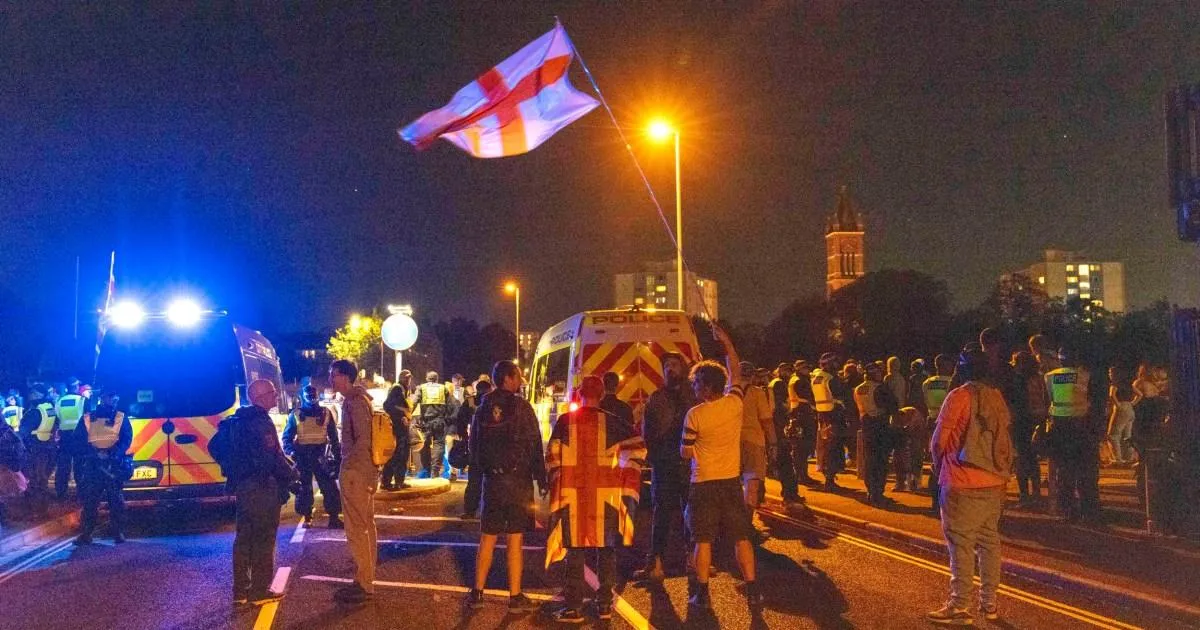
It began with a small boat drifting through the grey waters of the English Channel, and it ended with two women standing before a judge in Portsmouth Crown Court. On September 22, activist Daniel Thomas, known online as Danny Tommo, filmed himself sailing out to sea to witness dinghies packed with dozens of migrants. That footage did not remain just a video; it became fuel for an already volatile debate about immigration, borders, and national identity. Within hours, protesters had gathered in Haslar Road in Gosport, their voices raised in anger, their presence turning an ordinary seaside street into a pressure cooker. Some came because they were genuinely worried about the scale of migration across the Channel; some came because they had been stirred by online rhetoric and half-truths; and some simply came to be part of something, to feel the heat of a crowd and the adrenaline of confrontation. Police were there too, forming lines and trying to keep the peace between the protesters and the wider public. The atmosphere was tense, the sort of tension that can crack at any moment. In that crowd were Shannon Dodds, a 32-year-old woman from Gosport, and Sally Pearson, a 31-year-old mother of three. Neither of them likely imagined that a single afternoon would lead to criminal convictions, suspended prison sentences, and years of looking over their shoulders. But by the time the day ended, one had sprayed a noxious substance into the faces of two police officers, and the other had thrown a punch that caused ligament damage. The court would later hear all the details, but the human story is bigger than the charges: it is a story about fear, anger, trauma, poor choices, and the lasting consequences of a protest that went badly wrong.
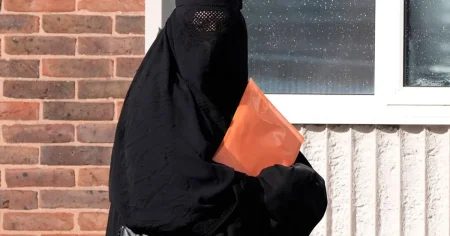
Among those caught up in the chaos was Shannon Dodds. She arrived at the protest wearing a beanie hat, a face covering, and sunglasses, clothing that made her look like just another anonymous demonstrator hiding from identification. As the police attempted to disperse the crowd, she planted herself in front of the police line with her arms crossed and refused to move. Perhaps she believed she was making a stand; perhaps she was simply too caught up in the emotion to think clearly. When officers pushed her in an effort to move her along, Dodds reacted in a way that shocked everyone, including, apparently, herself. She produced a small canister described in court as a “Walk Easy personal safety repellent” and sprayed it directly into the faces of two police constables. The officers had no idea what was hitting them. They did not know whether it was pepper spray, a chemical irritant, or something far worse. That uncertainty, as prosecutor James Kellam pointed out, must have been extremely alarming. Imagine the feeling of suddenly being unable to see clearly, your eyes burning, your throat closing, your face on fire, while a crowd surges around you and you cannot be sure if the damage is permanent. The officers washed their faces repeatedly, and fortunately the effects were short-lived. But short-lived pain can still leave long memories. A can of spray marketed for personal protection had been turned into a weapon against the very people whose job is to protect the public. Dodds would later explain, through her lawyer, that she carried the spray for her own safety and had not brought it to the protest intending to hurt anyone. But the two officers standing on the front line did not have the luxury of hearing her intentions. They only knew that their faces were burning, their eyes were watering, and their fear was real. That moment of panic and pain is what the charge of assaulting an emergency worker was really about.
Nearby, another confrontation was unfolding that would echo through the courtroom. Sally Pearson, a 31-year-old mother, found herself caught in the push and shove as police tried to regain control of the crowd. In that violent surge, she threw a punch at an officer’s face. The officer managed to raise his hand in defence, and the blow struck his hand instead of his face. But the force was still so significant that he suffered presumed ligament damage, an injury that forced him to be off work for three weeks. Judge James Newton-Price KC later repeated the officer’s own description of the punch: it was a blow of substantial force, ten on a scale of ten. That was not the accidental bump of a frightened woman trying to escape; it was a deliberate swing, the kind of punch that could easily have broken a jaw, shattered an eye socket, or caused a brain injury if it had connected with unprotected flesh. The officer’s raised hand likely saved him from far worse, but it still paid a heavy price. He had to spend three weeks away from the job he was sworn to do, nursing a damaged hand and trying to make sense of why someone he was there to protect had tried to hurt him. As if that were not enough, Pearson then shouted racial abuse at another officer as they attempted to restrain her. That abuse added a deeper wound. Police officers are not faceless symbols; they are people who go home to their families, who carry the sting of cruel words, who are shaped by their identities, their backgrounds, and their sense of belonging. Racial abuse does not simply hurt in the moment; it reminds officers that some people hate them not only for wearing a uniform, but for who they are. Pearson’s lawyer, James Wing, asked the court to consider her physical limitations, noting that she was not a prize fighter or a tall muscular man, and that the amount of force she could generate had to be taken into account. But the judge was not convinced. A punch of ten out of ten was a punch of ten out of ten, no matter who threw it. Ligament damage was ligament damage, and the officer’s three weeks away from work were three weeks that could never be given back.
When the case reached Portsmouth Crown Court, both women had to face the consequences of their choices. Shannon Dodds pleaded guilty to two counts of assaulting an emergency worker and was sentenced to ten months in prison, suspended for eighteen months. She was also ordered to complete fifty hours of unpaid work and placed under probation supervision. The sentence gave her a chance, but it also hung over her head like a sword. Any further trouble, any breach of the conditions, and she would be back in court and likely behind bars. Her lawyer, James Wing, explained that Dodds had been struggling with a drinking problem and suffered from complex post-traumatic stress disorder. He said she carried the spray for personal protection, not with the intent of attacking police. Those details matter because they paint a picture of a vulnerable woman who was not simply a hardened activist or a violent criminal. She was a person with real pain, real mental health struggles, and real vulnerabilities. Yet the judge also offered her a painful piece of wisdom. He told her that she had expressed strong feelings about the migrant issue after reading online information spread by anti-migrants. He warned her to be careful about believing everything she read online and getting stirred up by it. That warning goes beyond the courtroom. In an age where social media algorithms feed on outrage, where false stories and exaggerated claims are shared thousands of times, it is dangerously easy for someone who is already struggling to be radicalized by online anger. Dodds may have found in anti-migrant groups a way to channel her own trauma and frustration, but that channel led her straight to the front line of a protest, armed with a can of spray. The judge’s words were not cruel; they were a mirror. The internet had filled her mind with fear and fury, and the result was a day she will never forget.
Sally Pearson’s sentence was similar in its balance of punishment and mercy. She pleaded guilty to assault by beating of a police officer and racially aggravated abuse of another officer. The court sentenced her to eight months in prison, suspended for twelve months, and ordered her to complete one hundred hours of unpaid work. She was also given a probation supervision order. Her lawyer said that Pearson, who is a full-time carer for her partner, was deeply remorseful and had apologised for her actions. That remorse is important. It shows that, away from the heat of the protest, she was able to see the harm she had caused. Still, the apology could not undo the officer’s injury, could not erase the racial abuse from the other officer’s memory, and could not give back the three weeks the injured officer spent off work. The suspended sentence means that Pearson is now walking a narrow path. For the next year, she must stay out of trouble, must complete the unpaid work, must cooperate with probation. If she stumbles, the prison sentence will be activated, and the mother and carer who watched over others will find herself watched over by prison guards. Pearson’s case is a reminder that people are not simply good or bad. A person can devote their days to caring for a sick partner, can love their children, can believe in a cause with all their heart, and still make a terrible decision in a single moment. The justice system tries to balance accountability with humanity, to punish without destroying. The suspended sentence is an act of faith in redemption, but it is also a warning that faith cannot be repeated forever. Pearson’s story does not end in the courtroom; it continues in the difficult work of living with what she did, of explaining to her children why she stood in a crowd and lashed out at police, of trying to rebuild trust in a world that now sees her through the lens of that one violent afternoon.
Looking at the wider picture, the events in Gosport are not isolated. They are a reflection of a country torn by the migration debate, where small boats crossing the English Channel have become powerful symbols for people on all sides. The footage filmed by Daniel Thomas was not neutral; it was designed to provoke, to expose, to stir. And many people, already anxious and angry, were ready to be stirred. The protest in Haslar Road was not a peaceful march or a reasoned debate; it was a gathering of frustration, and in that gathering, ordinary human dynamics took over. People feel unheard, they feel frightened, they scroll through endless posts telling them the country is being destroyed, and eventually they step out the door to do something. What they do matters. Shannon Dodds and Sally Pearson are not monsters. They are neighbours, mothers, people with pain and stories of their own. But their actions caused real harm to real officers, people who had also woken up that morning with their own families, their own worries, their own hopes for a peaceful shift. The police officers who were sprayed and punched did not choose to be victims that day; they were simply doing their jobs. And underneath all the anger, there is another truth that often gets lost: the migrants in those dinghies were also human beings, fleeing danger and desperation, and they were present in the story even though the protesters did not want to see them as such. The judge’s warning to be careful of what we read online should apply to everyone, on every side of the debate. Anger is easy to find, but wisdom is harder. The court has passed its sentences, and the two women must live with them. But the rest of us also carry a responsibility: to remember that behind every headline, every protest, every viral video, there are human beings whose lives are changed by the choices we make. If we cannot summon compassion for those we disagree with, we can at least acknowledge that hatred, once unlocked, does not remain behind one closed door. It follows people home, it wounds innocents, and it leaves scars that no sentence can repair. The story of Gosport is not just about two women and two officers; it is about what happens when a community loses its ability to see the human in the stranger.